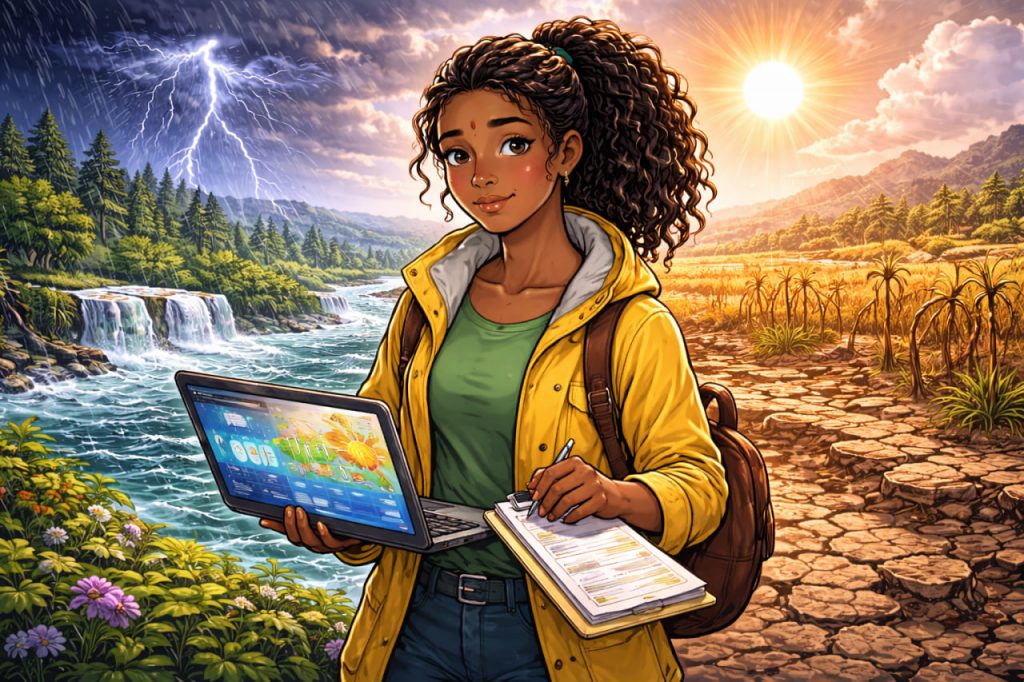
Climate change affects not only temperature but also the global water cycle. As the atmosphere warms, it can hold more moisture, altering rainfall distribution across regions. This shift does not mean that every place will simply become wetter. Instead, climate models project an intensification of contrasts: some regions are expected to experience heavier rainfall, while others face prolonged droughts. These changes influence agriculture, water security, ecosystems, and urban infrastructure. Understanding precipitation shifts is critical for long-term adaptation planning. The redistribution of rainfall is one of the most complex and impactful consequences of global warming.
Why Warming Changes Rainfall
Warmer air holds approximately 7% more moisture per degree Celsius of warming. This intensifies the hydrological cycle, increasing evaporation and atmospheric water content. Climate scientist Dr. Laura Bennett explains:
“A warmer atmosphere does not distribute water evenly.
It amplifies existing wet and dry patterns
while increasing variability.”
This means wet regions may receive heavier downpours, while dry regions may experience intensified evaporation and reduced soil moisture.
Regions Likely to Become Wetter
High-latitude regions such as northern Europe, Canada, and parts of Siberia are projected to receive increased precipitation. Warmer air masses transport more moisture toward the poles. Some tropical regions may also experience stronger monsoon systems and heavier seasonal rainfall. However, increased rainfall does not always mean stability—intense storms can lead to flooding and infrastructure strain.
Regions Likely to Become Drier
Subtropical areas, including parts of the Mediterranean, southern Africa, southwestern United States, and Australia, are projected to become drier. Rising temperatures increase evaporation, reducing surface water availability. Environmental researcher Dr. Marcus Hill notes:
“Drought risk increases where evaporation outpaces rainfall.
Even small precipitation declines
can significantly affect water resources.”
These regions may face greater challenges in agriculture and water management.
Extreme Events and Variability
Climate change not only shifts averages but also increases variability. Some regions may experience longer dry periods interrupted by intense rainfall events. This pattern raises flood risk while reducing groundwater recharge. Urban drainage systems and agricultural planning must adapt to more unpredictable conditions.
Implications for Food and Water Security
Changing rainfall patterns directly impact crop yields and freshwater supplies. Irrigation demand may rise in drying regions, increasing pressure on rivers and aquifers. Meanwhile, flooding in wetter areas can damage crops and infrastructure. Adaptation strategies include improved water storage systems, drought-resistant crops, and modernized drainage networks.
A More Uneven Water Future
Scientific models indicate that precipitation distribution will become more uneven rather than uniformly wetter or drier worldwide. Regional outcomes depend on geographic location, ocean circulation patterns, and atmospheric dynamics. Reducing greenhouse gas emissions limits the severity of these shifts. Planning for variability is essential to protect communities and ecosystems in a changing climate.
Interesting Facts
- The atmosphere holds about 7% more moisture per °C of warming.
- High-latitude regions are projected to become wetter.
- Subtropical zones face increased drought risk.
- Climate change increases rainfall intensity in many regions.
- Water cycle intensification affects agriculture and infrastructure.
Glossary
- Hydrological Cycle — the movement of water through evaporation, condensation, and precipitation.
- Evaporation — the process by which water turns into vapor.
- Subtropics — climate zones between tropical and temperate regions.
- Monsoon — a seasonal wind system associated with heavy rainfall.
- Precipitation Variability — fluctuations in rainfall patterns over time.