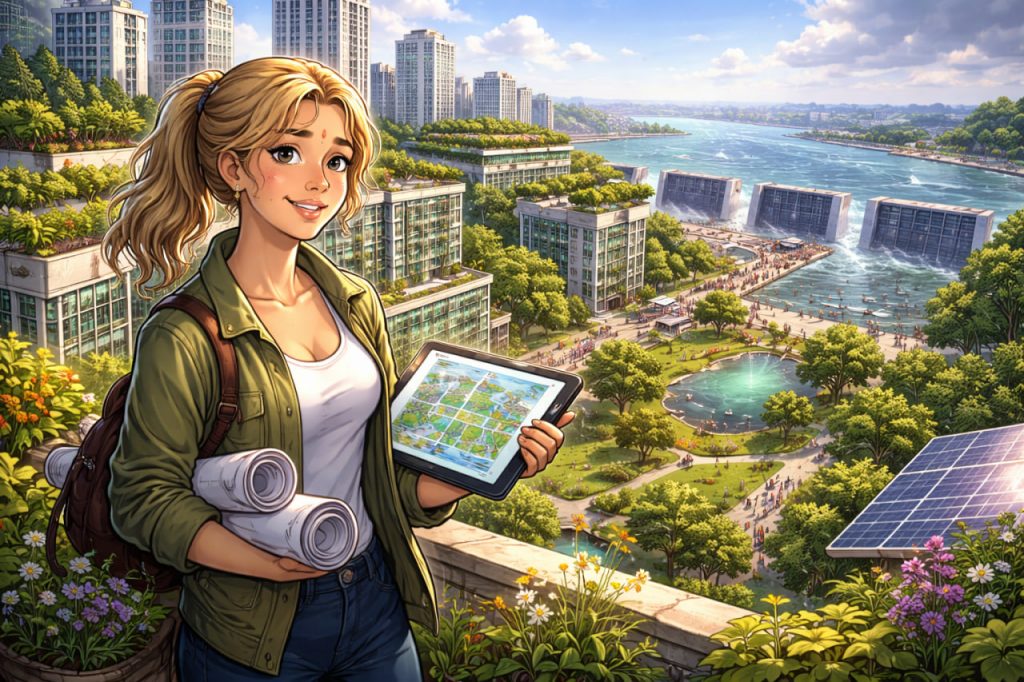
As climate change intensifies, cities around the world are facing rising temperatures, stronger storms, sea-level rise, and more frequent flooding. Urban areas are particularly vulnerable because of dense populations, infrastructure concentration, and the urban heat island effect. In response, municipalities are developing adaptation strategies designed to protect residents, reduce environmental stress, and increase long-term resilience. Climate adaptation in cities goes beyond environmental policy—it directly affects housing, transportation, public health, and economic stability. Modern urban planning increasingly integrates sustainability with disaster preparedness. The transformation of cities reflects a shift from reactive emergency response to proactive climate resilience.
Green Roofs and Urban Cooling
One widely adopted strategy is the installation of green roofs—vegetated layers placed on top of buildings. These systems help absorb rainwater, reduce heat absorption, and improve insulation. By lowering rooftop temperatures, green roofs mitigate the urban heat island effect and decrease energy demand for cooling. Urban ecologist Dr. Laura Bennett explains:
“Vegetation acts as natural climate infrastructure.
It reduces surface temperatures
and supports urban biodiversity.”
In addition to environmental benefits, green roofs can improve air quality and create small urban ecosystems.
Flood Defense and Water Management
Rising sea levels and extreme rainfall events have increased flood risks in many cities. Adaptation measures include seawalls, flood barriers, elevated infrastructure, and redesigned drainage systems. Some cities invest in nature-based solutions, such as restoring wetlands and creating permeable public spaces that absorb excess water. Engineer Dr. Marcus Hill notes:
“Modern flood protection combines engineering
with ecological restoration
to manage water more sustainably.”
Integrated water management systems reduce pressure on urban drainage networks during heavy rainfall.
Climate-Resilient Infrastructure
Cities are also redesigning infrastructure to withstand extreme weather. This includes reinforcing transportation systems, modernizing power grids, and protecting critical facilities such as hospitals. Heat-resistant materials and reflective surfaces are increasingly used in road construction. Long-term planning incorporates climate projections to prevent costly retrofitting in the future.
Urban Planning and Green Spaces
Expanding parks, tree-lined streets, and shaded pedestrian areas helps reduce heat stress. Urban forestry programs increase canopy coverage, lowering surface temperatures and improving public health. Access to green spaces also enhances social well-being and community resilience. Strategic zoning policies guide development away from high-risk flood zones.
Community Engagement and Policy Innovation
Climate adaptation is not solely an engineering challenge—it requires community involvement and policy coordination. Public awareness campaigns encourage energy efficiency and water conservation. Cities collaborate internationally to share adaptation strategies and best practices. Funding mechanisms and climate finance programs support long-term implementation.
Building Resilient Cities for the Future
Urban climate adaptation reflects a broader shift toward resilience and sustainability. While mitigation efforts aim to reduce greenhouse gas emissions, adaptation prepares cities for unavoidable impacts. Combining green infrastructure, technological innovation, and inclusive governance strengthens long-term stability. Cities that invest in resilience today reduce risks and costs in the future.
Interesting Facts
- Green roofs can reduce rooftop temperatures by several degrees.
- Urban trees lower surface heat through evapotranspiration.
- Permeable pavements help absorb excess rainfall.
- Flood barriers are increasingly designed to integrate with public spaces.
- Climate adaptation planning uses long-term environmental projections.
Glossary
- Urban Heat Island Effect — higher temperatures in cities due to dense infrastructure and limited vegetation.
- Green Roof — a vegetated roofing system that improves insulation and water absorption.
- Nature-Based Solutions — environmental strategies that use natural systems to address climate challenges.
- Climate Adaptation — adjustments made to reduce harm from climate impacts.
- Resilience — the ability of systems to withstand and recover from disruption.