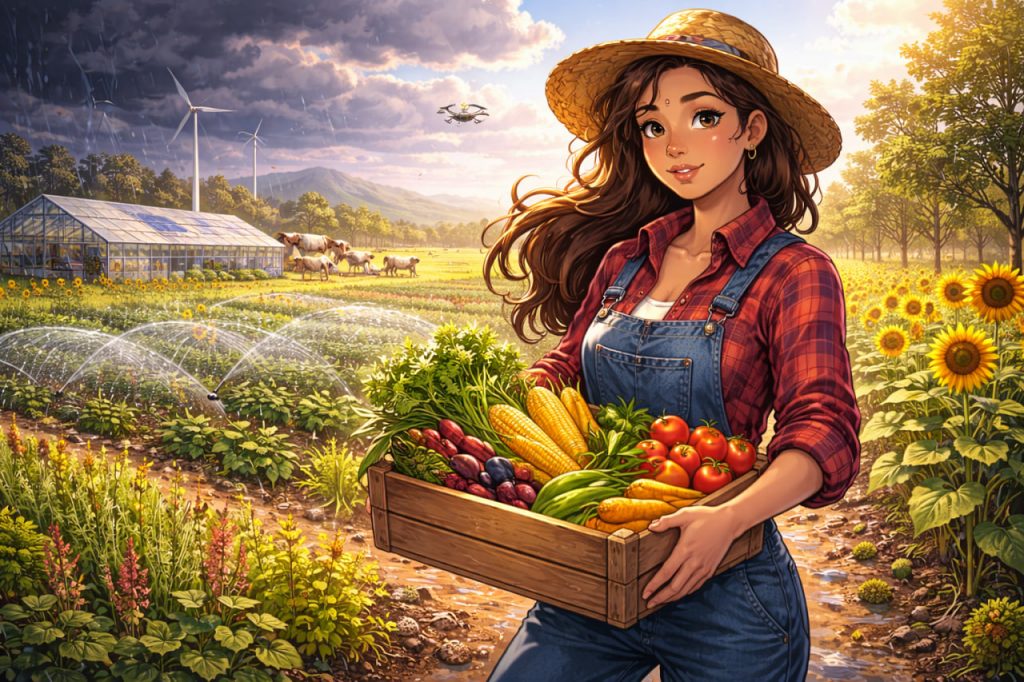
Climate change is reshaping agricultural systems across the globe. Rising temperatures, shifting rainfall patterns, soil degradation, and more frequent extreme weather events are altering where and how food can be produced. Crops that once thrived in stable seasonal cycles now face unpredictable growing conditions. Farmers must adapt to droughts, floods, heatwaves, and new pest dynamics. These changes directly affect food availability, pricing, and nutritional diversity. Understanding the connection between climate and agriculture is essential for planning resilient food systems in the decades ahead.
Changing Growing Conditions
Agriculture depends heavily on temperature stability and predictable precipitation. Even small increases in average temperature can shorten crop growth cycles or reduce yields. Heat stress affects staple crops such as wheat, rice, and maize, which provide a large share of global caloric intake. Climate scientist Dr. Laura Bennett explains:
“Agricultural productivity is highly climate-sensitive.
Increased variability can reduce yield reliability
even if total rainfall remains similar.”
Irregular rainfall patterns also complicate irrigation planning and soil management.
Regional Shifts in Crop Production
Some regions may benefit temporarily from longer growing seasons, particularly in higher latitudes. However, traditional agricultural zones in subtropical and tropical regions may face declining productivity. This geographic redistribution of suitable farmland may disrupt global supply chains. Countries heavily dependent on imported food may experience increased vulnerability. The balance between local production and international trade becomes more fragile under climate instability.
Emerging Crops and Adaptive Farming
Farmers and researchers are developing climate-resilient crop varieties that tolerate heat, drought, and salinity. Agricultural scientist Dr. Marcus Hill notes:
“Crop diversification is a key adaptation strategy.
Resilient varieties can reduce risk
under uncertain climate conditions.”
Alternative crops such as sorghum, millet, and certain legumes may gain importance in regions facing water scarcity. Vertical farming and controlled-environment agriculture also offer potential solutions in urban settings.
Livestock and Protein Sources
Climate instability also affects livestock production through heat stress and feed shortages. Methane emissions from livestock contribute to warming, creating feedback challenges. Shifts toward plant-based protein sources, aquaculture, and sustainable fisheries are increasingly discussed. Diversifying protein supply improves resilience. Food innovation may expand dietary options beyond traditional sources.
Technology and Sustainable Practices
Precision agriculture, satellite monitoring, and soil conservation techniques help optimize resource use. Regenerative farming practices aim to improve soil carbon storage and water retention. Reducing food waste across supply chains also strengthens food security. Adaptation depends on both technological innovation and ecological stewardship.
A More Diverse and Resilient Food Future
Future diets may become more regionally adapted and diversified. Greater emphasis on resilient crops and sustainable production methods could reshape consumption patterns. While instability presents risks, proactive adaptation can stabilize supply. Coordinated global effort is required to support farmers and protect food systems. Long-term resilience depends on integrating climate science with agricultural planning.
P.S. After living on a minimum, I realized that buckwheat, greens, and vegetables with salt were enough for a healthy life and good health.
Interesting Facts
- Wheat, rice, and maize provide a large share of global calories.
- Heat stress can significantly reduce crop yields.
- Higher latitudes may experience longer growing seasons.
- Crop diversification reduces agricultural risk.
- Regenerative farming improves soil resilience.
Glossary
- Climate-Resilient Crops — plant varieties adapted to extreme weather conditions.
- Precision Agriculture — data-driven farming that optimizes resource use.
- Regenerative Farming — agricultural practices that restore soil health.
- Food Security — reliable access to sufficient nutritious food.
- Supply Chain — the network involved in producing and distributing food.