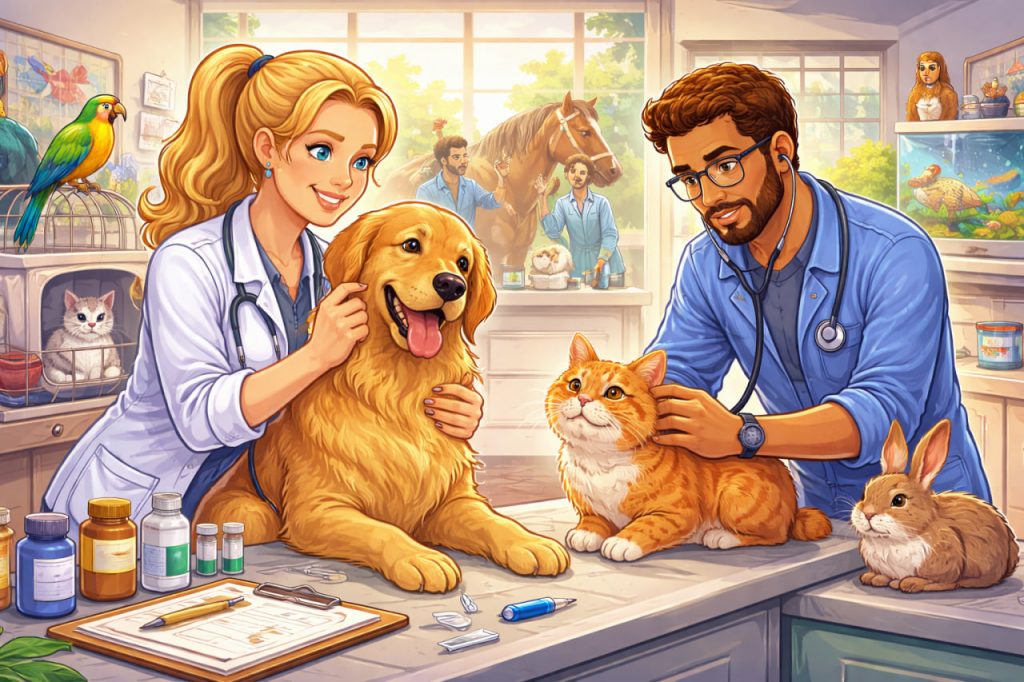
Veterinary medicine is a vital field that focuses on the health, treatment, and well-being of animals. It plays a crucial role not only in caring for pets but also in protecting livestock, wildlife, and even human health. Veterinarians are highly trained professionals who diagnose diseases, perform surgeries, and help prevent the spread of infections. In today’s world, veterinary science is more important than ever, as it connects animal welfare, food safety, and global health systems.
What Is Veterinary Medicine
Veterinary medicine is the branch of science dedicated to preventing, diagnosing, and treating diseases in animals. It covers a wide range of species, from household pets to farm animals and wild creatures.
Main Areas
- Companion animals (dogs, cats, pets)
- Farm animals (cattle, poultry, livestock)
- Wildlife and exotic species
- Public health and food safety
“Veterinarians protect both animal lives and human health through their work.”
The Role of Veterinarians
Veterinarians perform many important tasks that go far beyond treating sick animals.
Key Responsibilities
- Diagnosing illnesses and injuries
- Performing surgeries
- Vaccinating animals
- Advising on nutrition and care
- Monitoring disease outbreaks
They also educate pet owners and farmers on how to maintain healthy animals.
Veterinary Medicine and Human Health
Veterinary science is closely linked to human health through the concept of “One Health”, which recognizes that human, animal, and environmental health are interconnected.
Why It Matters
- Prevents zoonotic diseases (those that spread from animals to humans)
- Ensures food safety
- Controls epidemics
Diseases like rabies and certain flu viruses highlight the importance of veterinary work.
Technology in Veterinary Medicine
Modern veterinary medicine uses advanced technologies to improve diagnosis and treatment.
Innovations
- Digital imaging (X-rays, ultrasound)
- Laboratory diagnostics
- Telemedicine for remote consultations
- Advanced surgical techniques
These tools allow for faster and more accurate care.
Challenges in the Field
Veterinary medicine faces several ongoing challenges:
- High cost of treatment
- Limited access in rural areas
- Emerging diseases
- Ethical decisions in animal care
Despite these challenges, the field continues to evolve and improve.
Why Veterinary Medicine Matters
Veterinary care is essential for:
- Animal welfare
- Public health
- Food production systems
- Environmental balance
Healthy animals contribute to a healthier planet overall.
Interesting Facts
- Veterinarians treat many different species, not just pets
- Some specialize in surgery, dermatology, or wildlife
- Vaccination programs have saved millions of animals
- Veterinary science helps prevent global pandemics
- Animals can show symptoms very differently from humans
Glossary
- Veterinary Medicine — medical care for animals
- Zoonotic Diseases — diseases transmitted from animals to humans
- Diagnosis — identifying a disease or condition
- Vaccination — protection against infectious diseases
- One Health — concept linking human, animal, and environmental health