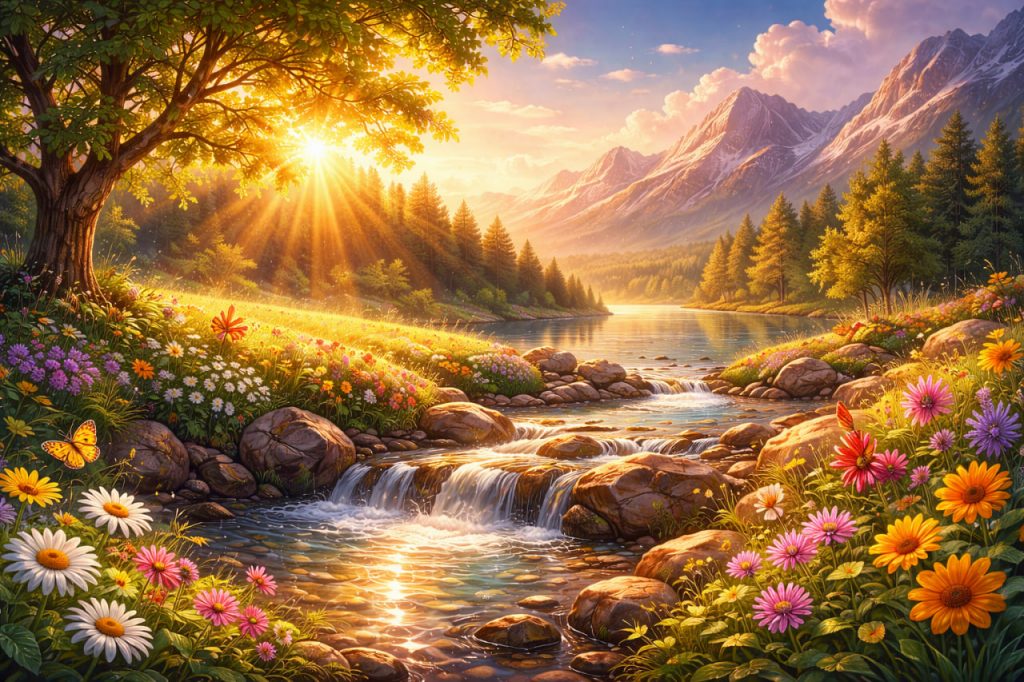
Nature under sunlight often appears more vivid, warm, and visually striking, creating a sense of harmony and beauty that people instinctively appreciate. This effect is not just emotional or subjective—it is deeply connected to how light interacts with the environment and how the human brain processes visual information. Sunlight enhances colors, creates contrast, and reveals textures that might otherwise remain unnoticed. From glowing sunsets to sparkling water and illuminated forests, sunlight transforms ordinary landscapes into extraordinary scenes. Understanding why this happens helps explain not only the beauty we see but also why natural light plays such an important role in human perception and well-being.
The Role of Light in Color Perception
Sunlight is a full-spectrum light source, meaning it contains all the wavelengths of visible light. This allows colors in nature to appear richer and more accurate compared to artificial lighting. When sunlight hits objects like leaves, flowers, or water, different wavelengths are reflected back to our eyes, creating vibrant and natural color tones. In contrast, artificial light often lacks certain wavelengths, making colors appear dull or distorted. This is why landscapes look especially alive under direct sunlight, where every shade becomes more defined and visually appealing.
Contrast and Shadows Create Depth
Another reason nature looks beautiful in sunlight is the presence of shadows and contrast. Sunlight creates clear differences between light and dark areas, adding depth and dimension to what we see. Shadows help define shapes, highlight textures, and make environments feel more dynamic. For example, sunlight filtering through trees creates patterns on the ground, while mountains appear more dramatic due to light hitting one side and shadow covering the other. This interplay of light and shadow makes natural scenes more visually engaging and realistic.
The Golden Hour Effect
One of the most visually stunning times of day is the golden hour, which occurs shortly after sunrise and before sunset. During this time, sunlight travels through more of Earth’s atmosphere, scattering shorter wavelengths and allowing warmer tones—such as reds, oranges, and yellows—to dominate. This creates a soft, warm glow that enhances the beauty of landscapes, people, and objects. The light is also less harsh, reducing strong shadows and creating a balanced, pleasing visual effect. This is why photographers often prefer golden hour for capturing natural scenes.
Reflections and Light Interaction
Sunlight interacts with surfaces like water, ice, and glass in ways that amplify beauty. Reflections create symmetry, shimmer, and movement, making scenes feel alive. For instance, sunlight reflecting off water can produce sparkling highlights, while dew on plants can act like tiny lenses that scatter light in different directions. These effects add complexity and detail to natural environments, making them more visually captivating.
The Human Brain and Emotional Response
The perception of beauty is not only physical but also psychological. The human brain is naturally drawn to bright, balanced, and colorful environments, which are often associated with safety, warmth, and life. Sunlight triggers positive emotional responses, increasing mood and enhancing the sense of well-being. This connection between light and emotion plays a key role in why sunny landscapes feel more beautiful and uplifting compared to dim or overcast conditions.
Interesting Facts
- Sunlight takes about 8 minutes to travel from the Sun to Earth.
- Human eyes are most sensitive to natural daylight conditions.
- The golden hour can last from a few minutes to over an hour, depending on location.
- Water surfaces can reflect up to 100% of sunlight at certain angles.
- Bright natural light can significantly improve mood and focus.
Glossary
- Full-Spectrum Light — light that contains all wavelengths of visible color.
- Contrast — the difference between light and dark areas in a visual scene.
- Golden Hour — a period after sunrise or before sunset with warm, soft lighting.
- Reflection — the bouncing of light off surfaces like water or glass.
- Wavelength — the distance between waves of light, determining color.