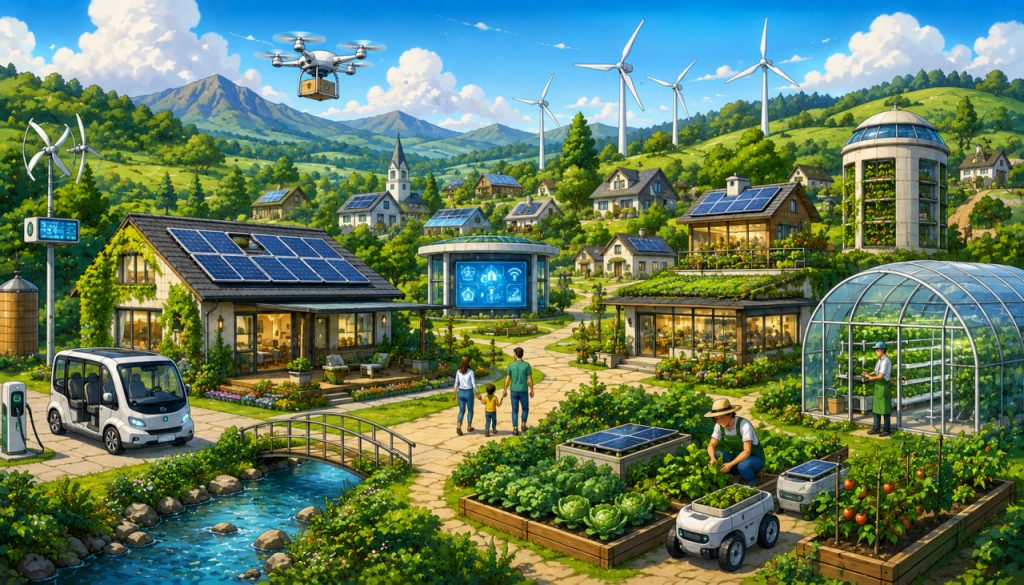
The concept of the “village of the future” combines modern technology, sustainable living, renewable energy, and smart infrastructure to create healthier and more efficient communities. While cities often dominate discussions about innovation, many experts believe the future of humanity may also depend on transforming rural areas into advanced, environmentally friendly places to live. Future villages could offer a balance between nature, technology, self-sufficiency, and high quality of life.
What Is a Future Village?
A future village is a modern rural community designed around sustainability, technology, and efficient resource management.
Such villages may include:
- Smart homes
- Renewable energy systems
- Automated agriculture
- Digital healthcare
- High-speed internet
The goal is to combine the benefits of modern innovation with the advantages of rural living.
Why Future Villages Matter
Many modern problems are linked to overcrowded cities.
Challenges include:
- Pollution
- Traffic congestion
- Stress
- High housing costs
Future villages may help by:
- Reducing urban pressure
- Supporting local food production
- Improving environmental sustainability
Renewable Energy Systems
Energy independence is one of the main features of future villages.
Possible energy sources include:
- Solar panels
- Wind turbines
- Geothermal systems
- Small-scale hydroelectric power
These systems allow communities to:
- Reduce fossil fuel dependence
- Lower emissions
- Improve resilience during crises
Clean energy is central to sustainable rural development.
Smart Agriculture
Agriculture in future villages may become highly automated and efficient.
Technologies could include:
- AI-powered crop monitoring
- Drones for field analysis
- Automated irrigation systems
- Vertical farming
These innovations help:
- Save water
- Increase productivity
- Reduce waste
Eco-Friendly Architecture
Future homes may be designed to minimize environmental impact.
Features may include:
- Energy-efficient insulation
- Recycled materials
- Smart climate control
- Green roofs
Some homes may even produce more energy than they consume.
Water Management and Recycling
Water conservation will likely play a major role.
Future villages could use:
- Rainwater collection
- Wastewater recycling
- Smart filtration systems
Efficient water use is essential in a changing climate.
Expert Insight
Architect and urban planner Bjarke Ingels has stated:
“Sustainable cities and communities should not force people to sacrifice comfort—they should improve quality of life.”
This principle also applies to future villages.
Digital Infrastructure
High-speed internet and digital connectivity are essential.
This enables:
- Remote work
- Online education
- Telemedicine
- Smart management systems
Technology allows rural areas to remain connected to global networks.
Transportation in Future Villages
Transportation systems may become:
- Electric
- Shared
- Automated
Examples include:
- Autonomous vehicles
- Electric bicycles
- Drone delivery systems
Reduced pollution and noise improve living conditions.
Healthcare and Education
Future villages may use advanced digital services.
Healthcare could include:
- Remote medical consultations
- AI-assisted diagnostics
- Health monitoring devices
Education may rely on:
- Virtual classrooms
- Interactive digital learning
Community and Social Life
Unlike large cities, future villages may strengthen social connections.
Benefits include:
- Smaller communities
- Closer human interaction
- Shared local projects
Technology may support community life rather than replace it.
Challenges of Future Villages
Despite the advantages, there are challenges.
These include:
- High initial costs
- Infrastructure development
- Technology maintenance
- Access inequality
Careful planning is necessary for success.
Why the Future Village Concept Is Important
The future village represents an alternative vision of progress.
Instead of concentrating everything in megacities, humanity may:
- Build decentralized communities
- Reduce environmental impact
- Improve quality of life
The future may involve smarter rural living rather than endless urban expansion.
Interesting Facts
- Some countries already test smart rural communities.
- Vertical farms can grow crops indoors year-round.
- Smart irrigation systems reduce water waste significantly.
- Future homes may operate almost entirely on renewable energy.
- Remote work technologies make rural living more practical.
Glossary
- Sustainability — Using resources without harming future generations.
- Renewable Energy — Energy from naturally replenishing sources.
- Smart Infrastructure — Systems using digital technology for efficiency.
- Vertical Farming — Growing crops in stacked indoor layers.
- Telemedicine — Medical care provided remotely through technology.