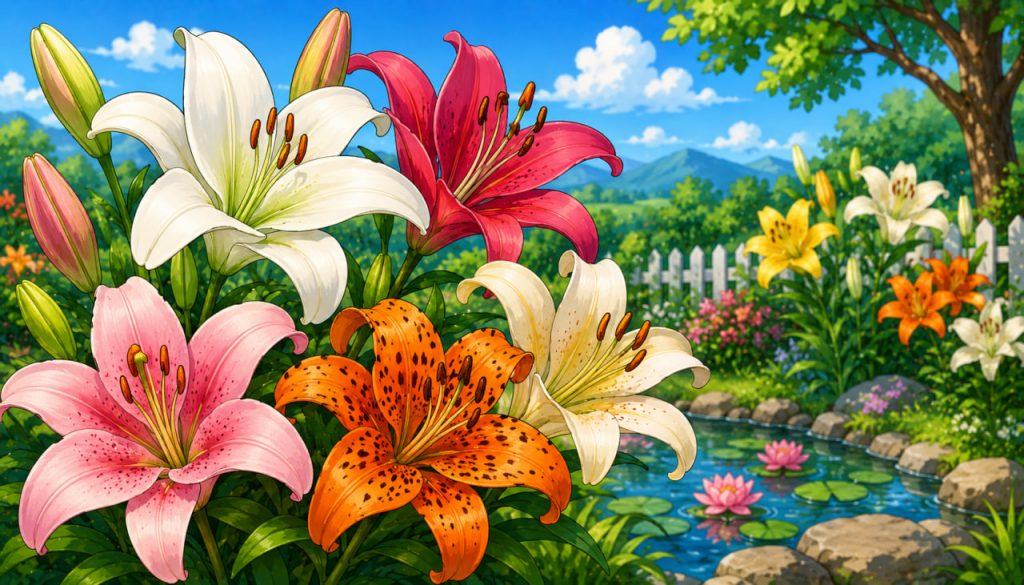
Lilies are among the most recognizable and admired flowers in the world. Known for their large petals, rich fragrance, and elegant appearance, lilies have fascinated humans for thousands of years. They appear in mythology, religion, art, royal symbolism, and modern gardening culture. Today, lilies remain some of the most popular ornamental flowers globally.
Beyond their beauty, lilies are biologically remarkable plants with complex reproductive systems, diverse species, and impressive adaptability. Scientists study lilies not only for horticulture, but also for genetics, ecology, and plant evolution.
From ancient civilizations to modern botanical gardens, lilies continue symbolizing purity, beauty, rebirth, and refinement across many cultures.
What Is a Lily?
A lily is a flowering plant belonging to the genus Lilium.
True lilies are perennial plants growing from underground bulbs.
They are known for:
- Large colorful flowers
- Distinctive petal shapes
- Strong fragrance in some species
- Tall elegant stems
Lilies naturally grow in:
- Europe
- Asia
- North America
Today, hundreds of cultivated varieties exist worldwide.
The Biology of Lilies
Lilies are flowering plants specially adapted for pollination.
Their flowers contain:
- Petals
- Stamens
- Pistils
- Nectar-producing structures
Bright colors and fragrance help attract pollinators such as:
- Bees
- Butterflies
- Moths
Some lilies evolved highly specialized relationships with specific pollinators.
Botanists consider lilies excellent examples of floral evolutionary adaptation.
Why Lilies Became So Popular
Lilies combine several characteristics that make them especially attractive:
- Large dramatic blooms
- Elegant structure
- Wide color variety
- Pleasant fragrance
- Long cultural history
Garden designer Gertrude Jekyll once described lilies as:
“Among the noblest of garden flowers.”
Their visual impact made them symbols of luxury and beauty throughout history.
Different Types of Lilies
There are many major lily groups.
Asiatic Lilies
Known for:
- Bright colors
- Hardiness
- Minimal fragrance
Oriental Lilies
Famous for:
- Strong perfume
- Large flowers
- Decorative appearance
Trumpet Lilies
Recognized by:
- Long trumpet-shaped blooms
- Strong scent
Tiger Lilies
Known for:
- Orange petals
- Dark spots
- Distinctive appearance
Each variety has unique environmental preferences and visual characteristics.
Lily Symbolism Through History
Lilies played important symbolic roles for centuries.
Different cultures associated lilies with:
- Purity
- Fertility
- Spirituality
- Royalty
- Rebirth
In ancient Greece, lilies were connected with divine mythology.
In Christianity, white lilies often symbolize:
- Purity
- Innocence
- Renewal
Royal families and noble houses frequently used lilies in heraldry and decorative art.
The Fragrance of Lilies
Many lilies produce powerful fragrances through specialized chemical compounds.
These scents evolved primarily to attract pollinators.
Fragrance intensity often increases during evening hours because certain pollinators are more active at night.
Scientists study floral scent chemistry to better understand:
- Plant communication
- Pollination biology
- Evolutionary adaptation
Some lily species are among the most fragrant flowers cultivated by humans.
How Lilies Reproduce
Lilies reproduce through:
- Seeds
- Bulbs
- Bulb division
Bulbs store nutrients underground, helping lilies survive winter conditions.
This storage system allows perennial regrowth year after year.
Commercial growers often propagate lilies through controlled bulb cultivation for ornamental flower production.
Growing Lilies Successfully
Lilies are relatively popular among gardeners because many species are adaptable.
Most lilies prefer:
- Well-drained soil
- Moderate sunlight
- Good air circulation
Overwatering may damage bulbs through fungal infection or rot.
Different species require slightly different conditions depending on climate and soil type.
Lilies and Ecology
Wild lilies contribute to ecosystems by supporting pollinators.
Their nectar attracts:
- Bees
- Butterflies
- Other insects important for biodiversity
Habitat destruction and overcollection threaten some wild lily species.
Conservation programs increasingly focus on protecting rare native populations.
Are Lilies Dangerous to Pets?
Interestingly, some lilies are highly toxic to cats.
Even small amounts may cause:
- Kidney failure
- Severe poisoning
Veterinarians strongly warn cat owners about keeping certain lily species indoors.
This toxicity makes lilies biologically interesting but potentially dangerous in some households.
Lilies in Modern Science and Horticulture
Scientists continue studying lilies for:
- Plant genetics
- Disease resistance
- Hybrid breeding
- Climate adaptation
Modern horticulture created numerous hybrid lilies with:
- New colors
- Improved resilience
- Enhanced fragrance
The global flower industry values lilies highly for bouquets, weddings, and ornamental landscaping.
Why Humans Love Flowers Like Lilies
Psychologists believe flowers may positively influence human emotions through:
- Color perception
- Natural symmetry
- Fragrance
- Evolutionary attraction to healthy environments
Lilies combine many visually appealing traits that humans naturally find attractive.
This may partly explain their enduring popularity across cultures and centuries.
The Future of Lily Cultivation
Future developments may involve:
- More climate-resistant hybrids
- Sustainable greenhouse production
- Genetic disease protection
- Improved ecological cultivation methods
As horticultural science advances, lilies will likely remain among the world’s most admired ornamental plants.
Interesting Facts
- Some lily species produce extremely strong fragrances at night.
- Lilies grow from nutrient-storing underground bulbs.
- Certain lilies are highly toxic to cats.
- Wild lilies exist naturally across several continents.
- Ancient civilizations used lilies in religious and royal symbolism.
Glossary
- Bulb — An underground plant structure storing nutrients for future growth.
- Pollinator — An organism helping transfer pollen between flowers.
- Perennial Plant — A plant that lives and regrows for multiple years.
- Hybrid — A plant produced by crossing different varieties or species.
- Horticulture — The science and practice of cultivating plants and gardens.