For more than a century, most homes relied almost entirely on centralized electrical grids. Electricity traveled from massive power plants through complex infrastructure before finally reaching households. Today, however, rapid advances in battery technology, solar energy, and smart home systems are changing this traditional model.
Home energy storage systems are becoming increasingly popular worldwide. These technologies allow homeowners to store electricity locally, reduce dependence on external grids, and improve energy resilience during outages or emergencies.
Supporters believe home batteries may become as common in future homes as refrigerators or internet routers. Combined with renewable energy systems such as solar panels, they could fundamentally transform how people produce, store, and consume electricity.
What Are Home Energy Storage Systems?
A home energy storage system is a device or collection of devices that stores electrical energy for later use.
Most systems include:
- Rechargeable batteries
- Inverters
- Smart energy management software
- Backup power controls
These systems can store electricity from:
- Solar panels
- Wind systems
- The electrical grid itself
Stored energy may later power household devices when needed.
Why Energy Storage Became Important
Traditional electrical grids face several challenges:
- Blackouts
- Peak demand overloads
- Storm damage
- Aging infrastructure
- Rising energy costs
At the same time, renewable energy sources such as solar and wind are naturally variable.
For example:
- Solar panels generate power mainly during daylight
- Wind turbines depend on weather conditions
Energy storage helps solve this problem by saving electricity for later use.
How Home Batteries Work
Most modern home systems use lithium-ion battery technology similar to electric vehicles.
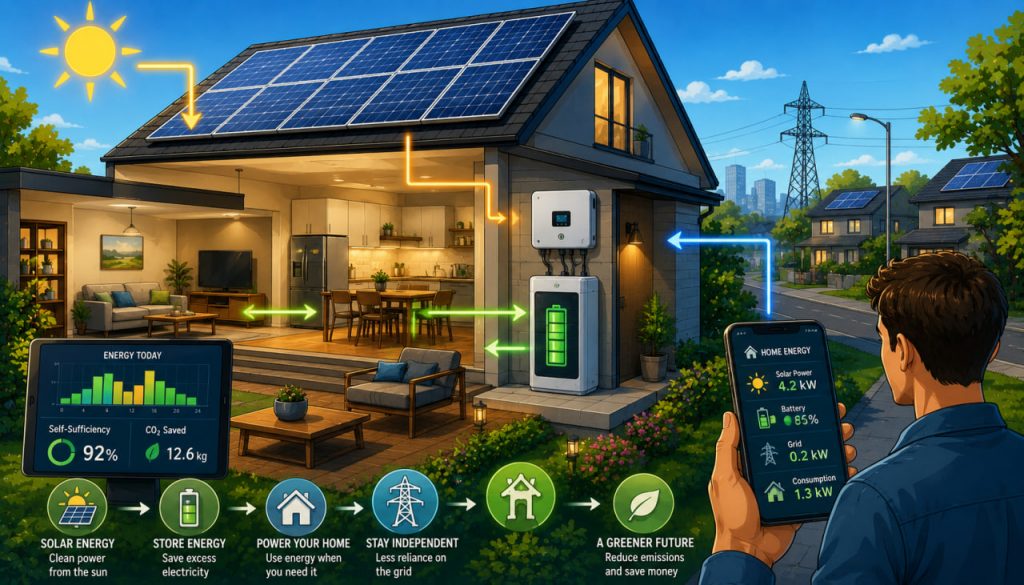
The process works relatively simply:
- Electricity is generated or purchased
- Excess power charges the battery
- Stored electricity is used when needed
Smart software automatically manages:
- Charging cycles
- Energy consumption
- Backup priorities
Some systems can even predict household usage patterns using artificial intelligence.
Solar Panels and Energy Independence
Home batteries are especially popular when combined with rooftop solar panels.
During sunny hours:
- Solar panels power the house
- Excess electricity charges the battery
At night or during outages:
- The battery supplies stored electricity
This reduces dependence on external energy providers.
Energy researcher Dr. Amory Lovins explained:
“Distributed energy systems may reshape the future of electricity as fundamentally as the internet reshaped communication.”
This decentralized model is gaining attention worldwide.
Backup Power During Blackouts
One major advantage of home storage systems is emergency backup capability.
During:
- Storms
- Grid failures
- Natural disasters
stored electricity may continue powering:
- Refrigerators
- Lighting
- Internet systems
- Medical equipment
As climate-related weather extremes increase, many homeowners value energy resilience more than ever.
Smart Homes and Energy Optimization
Modern storage systems increasingly integrate with smart home technologies.
AI-powered systems may:
- Optimize energy usage automatically
- Reduce electricity costs
- Shift consumption to cheaper hours
- Prioritize essential devices during outages
This transforms homes into intelligent energy management systems.
Some experts describe future homes as “mini power plants.”
Environmental Benefits
Home energy storage may support cleaner energy systems.
Potential environmental benefits include:
- Greater renewable energy usage
- Reduced fossil fuel dependence
- Lower grid stress
- Improved energy efficiency
Battery systems may also help stabilize national electrical grids by reducing peak demand pressure.
This becomes especially important as electric vehicles and renewable energy adoption expand.
Economic Advantages and Challenges
Home batteries may reduce long-term electricity costs, especially in regions with:
- Expensive electricity
- Time-based pricing systems
- Frequent outages
However, current systems still involve significant upfront costs.
Expenses may include:
- Battery installation
- Solar systems
- Electrical upgrades
- Maintenance
Economic viability depends heavily on local energy prices and government incentives.
Can Homes Become Fully Off-Grid?
Some homeowners aim for complete energy independence.
Off-grid homes typically combine:
- Solar panels
- Large battery banks
- Backup generators
While technically possible, fully off-grid systems remain expensive and require careful energy management.
Most people currently use hybrid systems connected partially to the electrical grid.
Battery Technology Is Improving Rapidly
Battery innovation is accelerating worldwide.
Researchers are developing:
- Solid-state batteries
- Safer chemistries
- Longer-lasting systems
- Faster charging technologies
Future batteries may become:
- Cheaper
- More efficient
- More environmentally friendly
This could dramatically expand home energy storage adoption.
Recycling and Environmental Concerns
Battery production also raises environmental questions.
Important concerns include:
- Mining impacts
- Lithium extraction
- Battery disposal
- Resource sustainability
Scientists and companies are working on:
- Battery recycling systems
- Alternative materials
- Circular manufacturing processes
Sustainable battery production will likely become increasingly important.
Energy Decentralization and the Future
Home energy storage reflects a broader shift toward decentralized energy systems.
Instead of relying entirely on giant centralized plants, future energy networks may involve:
- Millions of small producers
- Smart local grids
- Distributed storage systems
This model could improve resilience and flexibility.
Some futurists compare this transformation to how personal computers decentralized computing power.
Why Home Energy Storage Matters
Energy independence is becoming more valuable in a world facing:
- Climate instability
- Infrastructure challenges
- Rising electricity demand
Home batteries provide more than backup power — they represent a major shift in how society thinks about energy itself.
The future electrical system may become far more distributed, intelligent, and locally controlled than the centralized grids of the past century.
Interesting Facts
- Modern home batteries often use technology similar to electric vehicles.
- Some homes can operate temporarily during full grid outages.
- AI systems increasingly manage household energy automatically.
- Battery costs have fallen dramatically over the past decade.
- Future smart homes may actively sell electricity back to the grid.
Glossary
- Energy Storage System — Technology used to store electricity for later use.
- Lithium-Ion Battery — A rechargeable battery commonly used in electronics and energy systems.
- Renewable Energy — Energy generated from naturally replenishing sources such as sunlight or wind.
- Smart Grid — An advanced electrical network using digital communication and automation.
- Off-Grid — Operating independently from centralized electrical infrastructure.