Flowers are among the most beautiful and diverse structures in nature, but their colorful petals and sweet fragrances serve a purpose beyond decoration. They play a crucial role in reproduction through a process known as pollination. Without pollination, most flowering plants would be unable to produce seeds and fruits, and many ecosystems—and even human agriculture—would be dramatically different.
Pollination is one of nature’s most important biological processes, supporting biodiversity, food production, and the survival of countless species.
What Is Pollination?
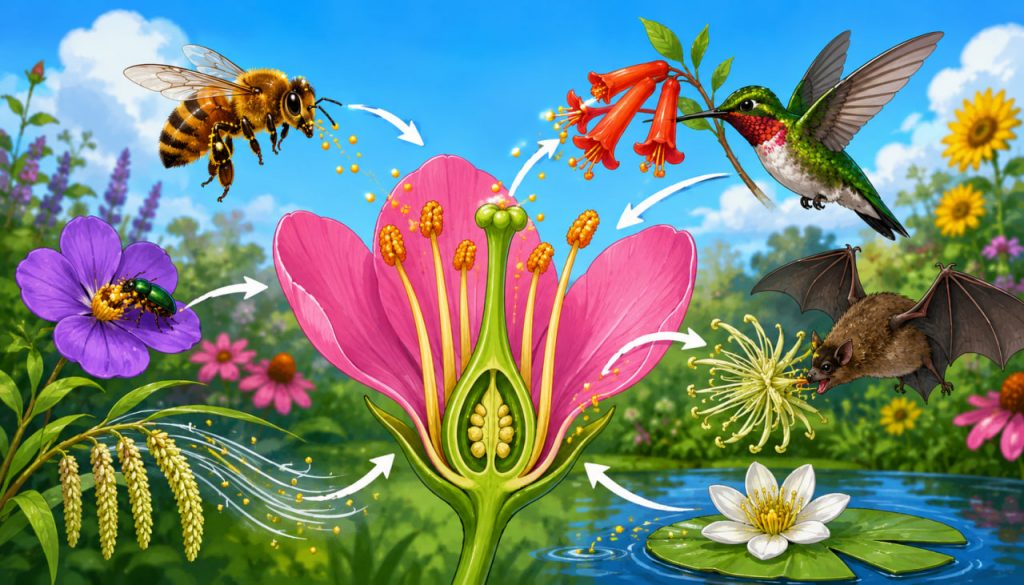
Pollination is the transfer of pollen from the male part of a flower to the female part of a flower.
The male structure, called the stamen, produces pollen grains that contain the plant’s reproductive cells. The female structure, known as the pistil, contains the stigma, style, and ovary. The stigma is the sticky surface where pollen lands during pollination.
When pollen successfully reaches the stigma, fertilization can eventually occur, leading to the formation of seeds and often fruits.
Without pollination, most flowering plants would not be able to reproduce.
Why Pollination Is Essential
Pollination is far more important than many people realize.
It enables plants to:
- Produce seeds
- Create fruits
- Maintain genetic diversity
- Adapt to changing environments
Many crops humans depend on—including apples, strawberries, almonds, pumpkins, and tomatoes—rely on pollination to produce harvestable food.
According to biologist Dr. May Berenbaum, a leading expert on pollinators:
“Pollination is one of the most important ecological services on Earth, supporting both natural ecosystems and global agriculture.”
Self-Pollination and Cross-Pollination
Flowers use two primary methods of pollination.
Self-Pollination
In self-pollination, pollen from a flower fertilizes the same flower or another flower on the same plant.
Advantages include:
- Reliable reproduction
- Less dependence on pollinators
- Ability to reproduce in isolation
However, self-pollination often reduces genetic diversity.
Cross-Pollination
Cross-pollination occurs when pollen is transferred between different plants of the same species.
Benefits include:
- Greater genetic diversity
- Improved adaptability
- Increased resistance to diseases
Many flowering plants have evolved mechanisms that encourage cross-pollination rather than self-pollination.
Pollination by Insects
The most familiar pollinators are insects.
Bees
Bees are among the most effective pollinators in nature. As they collect nectar and pollen for food, pollen grains stick to their fuzzy bodies and are transported between flowers.
Bees are responsible for pollinating many important crops and wild plants.
Butterflies
Butterflies are attracted to brightly colored flowers and help transfer pollen while feeding on nectar.
Although generally less efficient than bees, they contribute significantly to pollination in many ecosystems.
Beetles and Flies
Certain flowers rely on beetles and flies for pollination. Some plants have evolved scents that specifically attract these insects.
This demonstrates the remarkable diversity of pollination strategies in nature.
Pollination by Birds
Bird pollination is especially common in tropical and subtropical regions.
Hummingbirds are among the most famous bird pollinators. Their long beaks allow them to access nectar deep within flowers.
Bird-pollinated flowers often feature:
- Bright red, orange, or yellow colors
- Large nectar supplies
- Tubular shapes
As birds feed, pollen adheres to their feathers and beaks, enabling transfer between flowers.
Pollination by Bats
In some parts of the world, bats serve as important nighttime pollinators.
Bat-pollinated flowers typically:
- Open after sunset
- Produce strong fragrances
- Generate large amounts of nectar
Several economically important plants, including some species used for producing fruit and beverages, depend on bat pollination.
Wind Pollination
Not all flowers rely on animals.
Many plants use wind to transport pollen.
Examples include:
- Grasses
- Wheat
- Corn
- Rice
- Many trees
Wind-pollinated plants generally produce enormous quantities of lightweight pollen to increase the chances of successful fertilization.
Unlike insect-pollinated flowers, they often have small or inconspicuous blossoms because they do not need to attract pollinators.
Water Pollination
A small number of aquatic plants use water as a transport medium for pollen.
This method is relatively rare but demonstrates the adaptability of plant reproductive strategies.
Pollen floats across the water surface or moves underwater until it reaches another flower.
How Flowers Attract Pollinators
Flowers have evolved extraordinary adaptations to attract pollinators.
These include:
Bright Colors
Many flowers display vivid colors that are highly visible to insects and birds.
Interestingly, some insects can see ultraviolet patterns invisible to humans. These patterns act as visual guides leading pollinators toward nectar.
Fragrance
Many flowers release scents that attract specific pollinators.
Some fragrances appeal to bees, while others attract moths, flies, or bats.
Nectar Rewards
Nectar is a sugary liquid produced by flowers.
It serves as a reward for pollinators, encouraging repeated visits and increasing pollination success.
Threats to Pollinators
Pollinator populations face numerous challenges today.
Major threats include:
- Habitat loss
- Pesticide use
- Climate change
- Pollution
- Diseases
The decline of pollinator species can negatively affect ecosystems and food production worldwide.
Conservation efforts increasingly focus on protecting pollinator habitats and promoting biodiversity.
Why Pollination Matters for Humanity
Pollination supports a significant portion of global food production. Without pollinators, many fruits, vegetables, and nuts would become scarcer and more expensive.
Healthy pollinator populations also support natural ecosystems by enabling wild plants to reproduce and sustain biodiversity.
In many ways, pollination is one of the invisible processes that helps keep life on Earth functioning.
Interesting Facts
- More than 75% of flowering plant species rely on animal pollinators.
- Bees can visit thousands of flowers in a single day.
- Some orchids mimic insects to attract pollinators.
- Hummingbirds can beat their wings more than 50 times per second.
- Certain flowers bloom only at night to attract bats and moths.
Glossary
- Pollination — The transfer of pollen from the male part of a flower to the female part.
- Pollen — Tiny grains containing the male reproductive cells of plants.
- Stamen — The male reproductive structure of a flower.
- Pistil — The female reproductive structure of a flower.
- Nectar — A sugary liquid produced by flowers to attract pollinators.