A prolonged electricity and water outage can quickly turn an ordinary household into a difficult survival environment. Refrigeration stops, taps run dry, toilets may become unusable, mobile phones lose power, and heating or cooling systems can fail.
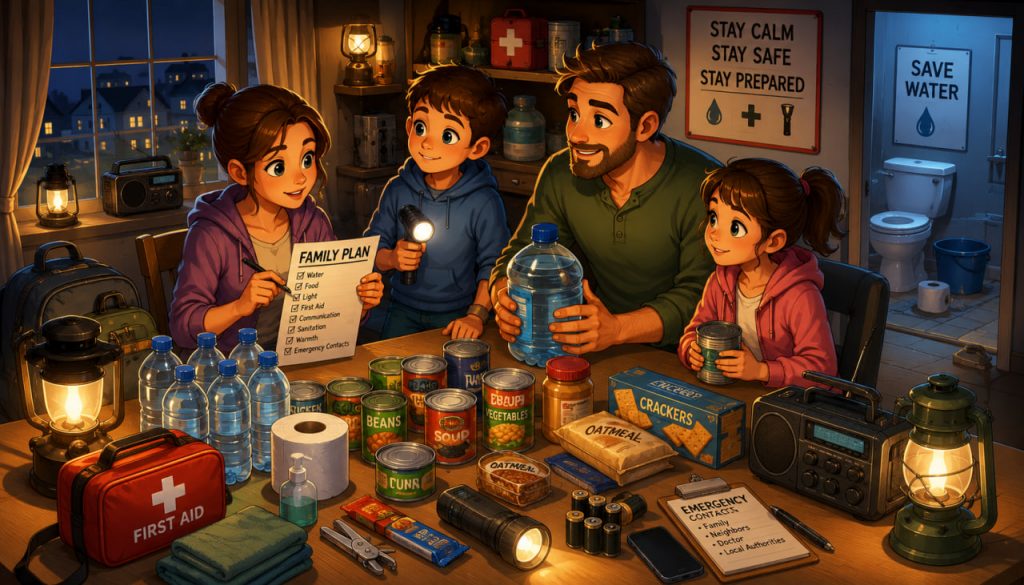
The best response is not panic or expensive survival equipment. A family needs a practical plan built around water, food, temperature control, sanitation, communication, and medical needs.
Preparation should begin before an emergency, but even families already facing an outage can reduce risks by using available resources carefully and following official instructions.
Understand What May Stop Working
Electricity and water systems are often connected. Water-treatment facilities, pumping stations, apartment-building pumps, sewage systems, and private wells may depend on electrical power.
During a long outage, a household may lose:
- Drinking water
- Refrigeration and cooking appliances
- Heating or air conditioning
- Electric lighting
- Internet access
- Mobile-phone charging
- Elevators and building pumps
- Electronic payment systems
Ready.gov recommends preparing enough essential supplies to remain self-sufficient for several days because emergency services and utility repairs may take time.
Secure Drinking Water First
Water is the most urgent household priority.
The CDC recommends storing at least one gallon, approximately 3.8 liters, of water per person per day for a minimum of three days. When possible, households should aim for a two-week supply. More may be required for hot weather, illness, pregnancy, pets, or physically demanding activity.
A family of four therefore needs at least:
- 45 liters for three days
- Around 106 liters for one week
- Around 212 liters for two weeks
This water must cover drinking, basic food preparation, brushing teeth, and limited hygiene.
Commercially bottled water is usually the simplest emergency option. Store it in a cool, dark place away from fuels, cleaning chemicals, pesticides, and direct sunlight.
Do not wait until every container is empty before looking for additional supplies. Refill safe containers whenever authorities provide access to potable water.
Know When Tap Water Is Unsafe
A water outage may be followed by low pressure, pipe contamination, or a boil-water advisory.
Follow instructions from the local water utility or emergency authorities. Depending on the incident, they may recommend bottled water, boiled water, or complete avoidance of the supply.
When authorities advise boiling, bring clear water to a rolling boil for at least one minute. At elevations above 6,500 feet, or approximately 2,000 meters, the CDC recommends boiling for three minutes.
Boiling can kill many disease-causing microorganisms, but it cannot remove fuel, toxic chemicals, heavy contamination, or radioactive substances. Water suspected of chemical contamination must be replaced with bottled water or another approved source.
Do not assume that an ordinary household filter makes contaminated tap water safe. Many pitcher and refrigerator filters improve taste but do not remove all dangerous microorganisms or chemicals.
Ration Water Without Becoming Dehydrated
Water conservation should focus on reducing waste, not dangerously limiting drinking.
Children, older adults, pregnant women, people with fever, and anyone performing physical work may need additional fluids. Do not deliberately remain dehydrated to extend supplies.
Use separate categories of water whenever possible:
- Safe drinking water for drinking and cooking
- Lower-quality clean water for washing
- Non-potable water for toilet flushing
Water used for boiling pasta or washing relatively clean vegetables may sometimes be reused for cleaning, provided it contains no dangerous chemicals.
Disposable plates and utensils can reduce washing needs. Alcohol-based hand sanitizer can save water, although visibly dirty hands still require proper cleaning.
Protect Food During the Power Outage
Keep refrigerator and freezer doors closed.
An unopened refrigerator generally keeps food cold for about four hours. A full freezer may maintain a safe temperature for approximately 48 hours, while a half-full freezer may do so for around 24 hours.
After that period, perishable food may become unsafe even when it still looks and smells normal.
High-risk foods include:
- Meat and poultry
- Fish and seafood
- Milk and soft cheese
- Eggs
- Cooked leftovers
- Cut fruit
- Prepared dishes requiring refrigeration
Food that still contains ice crystals or remains at 4°C or below may generally be refrozen safely. When food safety is uncertain, discard the item rather than tasting it.
Food poisoning during a utility outage creates an additional medical emergency when clean water and healthcare may already be difficult to obtain.
Build a No-Cook Food Supply
Choose foods that can be eaten without refrigeration and require little or no water.
Useful household options include:
- Canned beans, vegetables, fish, and meat
- Nut or seed butter
- Crackers and crispbread
- Dried fruit
- Shelf-stable milk
- Ready-to-eat cereals
- Energy bars
- Baby food and formula when needed
- Pet food
- Manual can opener
Ready.gov recommends canned foods, dry mixes, and other staples that do not require refrigeration, cooking, water, or special preparation.
Eat refrigerated perishables first, followed by frozen food, and preserve shelf-stable products for later.
Cook and Heat Safely
Never use a charcoal grill, camping stove, barbecue, or fuel-burning generator inside a home, garage, basement, enclosed balcony, or near an open window.
These devices can produce carbon monoxide, an invisible and potentially fatal gas. A generator must remain outdoors and well away from doors, windows, and ventilation openings. Ready.gov specifically warns against using generators indoors and recommends carbon-monoxide detectors with battery backup.
Do not use a gas oven to heat a room. Candles also create fire risks, particularly around children, pets, curtains, and unstable furniture.
Battery-powered lanterns and headlamps are safer than open flames.
Manage Toilets and Sanitation
If the sewage network remains operational, a toilet can often be flushed manually by pouring non-potable water directly into the bowl. Local instructions take priority because damaged sewers can back up into buildings.
When toilets cannot be used, a temporary emergency toilet can be made with a sturdy bucket, heavy waste bags, absorbent material, and a secure lid. Waste should be sealed and stored away from food, children, animals, and living areas until authorities provide disposal instructions.
Preserve hygiene through:
- Regular hand cleaning
- Separate waste and food areas
- Covered rubbish containers
- Cleaning of food-preparation surfaces
- Careful disposal of diapers and medical waste
Safe sanitation prevents gastrointestinal infections from spreading through the household.
Maintain Communication and Essential Power
Use mobile phones primarily for important communication. Reduce screen brightness, activate battery-saving mode, turn off unnecessary wireless functions, and avoid continuous video use.
A practical emergency power kit can include:
- Charged power banks
- Battery-operated radio
- Spare batteries
- Car charging adapter
- Rechargeable lanterns
- Printed emergency contacts
- Paper maps
- Small solar charger
Keep at least one phone available for emergency calls rather than allowing every device to reach zero charge.
Families should agree on a meeting point and an out-of-area contact in case local networks become unreliable.
Protect Vulnerable Family Members
Some people face greater risks during utility failures.
Create a specific plan for anyone who depends on:
- Refrigerated medication
- Powered medical equipment
- Electric mobility devices
- Home oxygen systems
- Regular medical treatments
- Temperature-controlled living conditions
Contact healthcare providers, pharmacies, equipment suppliers, or emergency services early. Do not wait until batteries, oxygen, medication, or safe indoor temperatures are nearly exhausted.
Older adults, infants, and people with chronic conditions may be affected by heat or cold sooner than healthy adults.
Decide When Staying Home Is No Longer Safe
Leaving home may become necessary when:
- Drinking water cannot be obtained
- Indoor temperatures become dangerous
- Sewage enters the building
- A medically dependent person loses essential equipment
- Fire or carbon-monoxide risks increase
- Authorities issue an evacuation order
- Violence or serious disorder develops nearby
Prepare one portable bag per person containing identification, medication, water, basic food, clothing, a flashlight, hygiene supplies, chargers, and essential documents.
Evacuation is safer when planned early rather than attempted after every household resource has been exhausted.
Expert Perspective
Emergency-management agencies consistently promote an all-hazards preparedness approach: families should not prepare only for one specific disaster but for the loss of essential services that many disasters can cause.
Ready.gov emphasizes water, non-perishable food, lighting, communication, medication, alternative charging, and household planning as the foundation of an emergency kit.
Public-health guidance adds another essential principle: stored supplies are only useful when families understand how to prevent contamination, food poisoning, carbon-monoxide exposure, and dehydration.
Interesting Facts
- A refrigerator may become unsafe for perishable food after only about four hours without power.
- A full freezer usually stays cold longer than a half-empty one because frozen items help maintain the internal temperature.
- Water can look completely clear and still contain harmful microorganisms.
- Boiling kills many germs but does not remove toxic chemicals.
- Apartment buildings may lose tap water even when the municipal supply continues because upper floors depend on electric pumps.
- Card payment terminals and cash machines may stop working during widespread outages.
- A manual can opener is one of the most easily forgotten emergency-kit items.
- A headlamp is especially useful because it leaves both hands free for cooking, repairs, or childcare.
Glossary
- Potable Water — Water considered safe for drinking and food preparation.
- Non-Potable Water — Water unsuitable for drinking but potentially usable for flushing or cleaning.
- Boil-Water Advisory — An official instruction to boil tap water before using it for consumption.
- Rolling Boil — Vigorous boiling in which bubbles continuously break the water’s surface.
- Perishable Food — Food that can quickly become unsafe without refrigeration.
- Shelf-Stable Food — Food that can be stored safely at room temperature while unopened.
- Carbon Monoxide — A colorless, odorless, poisonous gas produced by incomplete fuel combustion.
- Power Bank — A portable battery used to charge phones and other small electronic devices.
- Emergency Kit — A collection of supplies prepared for a disaster or prolonged service interruption.
- Rationing — Controlled use of a limited resource to make it last longer.
- Sanitation — Practices that safely manage waste and maintain hygienic living conditions.
- All-Hazards Preparedness — Planning for common consequences of many emergencies rather than only one specific event.