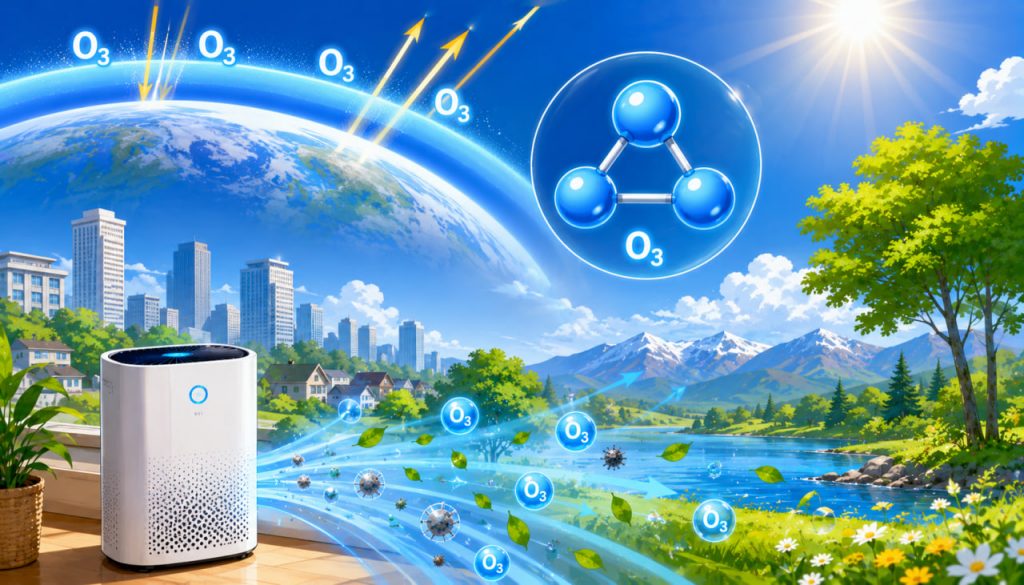
Ozone is a unique molecule composed of three oxygen atoms (O₃) and is known for its distinctive sharp smell, often noticed after thunderstorms. It plays a complex role in Earth’s atmosphere and has both beneficial and harmful impacts on the environment and human health. Understanding ozone’s properties and applications is crucial for environmental science, public health, and modern air purification technologies.
What Is Ozone?
Ozone is a triatomic molecule, formed when oxygen molecules (O₂) are split by energy sources such as ultraviolet (UV) light or electrical discharges. This highly reactive gas exists naturally in two regions of the Earth’s atmosphere:
- Stratospheric Ozone (Ozone Layer):
Found approximately 10–50 km above the Earth, it absorbs most of the Sun’s harmful ultraviolet radiation, protecting living organisms from DNA damage and skin cancer. - Tropospheric Ozone (Ground-Level Ozone):
Found near Earth’s surface, it can form from pollution and chemical reactions between volatile organic compounds (VOCs) and nitrogen oxides (NOx) in sunlight. Ground-level ozone is considered a pollutant with potential health risks.
Ozone Formation and Natural Occurrence
Ozone can form through natural and anthropogenic processes:
- Natural Sources:
- Lightning produces electrical energy that splits oxygen molecules into individual atoms that combine with O₂ to form O₃.
- UV radiation in the stratosphere converts O₂ into O₃, maintaining the ozone layer.
- Human-Made Sources:
- Industrial activities and vehicle emissions release NOx and VOCs, which react under sunlight to create ozone in urban environments.
- Ozone generators are used in air and water purification technologies.
Benefits of Ozone
Ozone is a powerful oxidizing agent, which gives it several beneficial applications:
- Stratospheric Protection:
The ozone layer shields living organisms from ultraviolet B (UVB) and ultraviolet C (UVC) radiation, which can cause skin cancer, cataracts, and genetic damage. - Air and Water Purification:
Ozone can neutralize bacteria, viruses, and chemical pollutants. It is widely used in water treatment plants, food processing, and sterilization. - Industrial Applications:
- Deodorization of spaces and materials
- Removal of chemical contaminants
- Preservation of food by reducing microbial contamination
- Environmental Cleaning:
In controlled applications, ozone can help break down pollutants in wastewater and neutralize unpleasant odors in indoor spaces.
Risks and Health Concerns
Despite its usefulness, ozone is a highly reactive molecule, and exposure to elevated ground-level ozone can pose health risks:
- Respiratory Effects:
Ozone can irritate the lungs and airways, causing coughing, throat irritation, shortness of breath, and exacerbation of asthma or other lung diseases. - Cellular Damage:
Its strong oxidative properties may damage sensitive tissues in the lungs and eyes over prolonged exposure. - Environmental Impact:
High ozone concentrations contribute to smog formation, damaging crops, forests, and urban green spaces.
Safe Applications in Homes
Modern air purification technologies sometimes use low levels of ozone for sterilization and deodorization. Safety tips include:
- Using devices designed to minimize ozone production.
- Avoiding direct inhalation during operation.
- Ensuring proper ventilation in rooms with ozone-generating devices.
Experts recommend that ozone levels indoors remain below 0.05 ppm to prevent irritation while still benefiting from its antibacterial properties.
Expert Perspective
Environmental chemist Richard Shaughnessy notes that while ozone is highly effective in sterilization, uncontrolled exposure is dangerous. Effective indoor air systems carefully balance purification benefits while minimizing ozone risks, emphasizing filtration and ventilation alongside any low-level ionization or ozone use.
Interesting Facts
- Ozone has a distinct “fresh” smell, often noticed after thunderstorms or near photocopiers.
- A single molecule of ozone contains three oxygen atoms, unlike the more common O₂.
- Stratospheric ozone is critical for life on Earth, but ground-level ozone is considered a pollutant.
- Ozone can be generated artificially via UV light, corona discharge, or electrochemical methods.
- Water treatment facilities sometimes use ozone to disinfect drinking water without chemical residues.
- High ozone exposure has been linked to increased hospital visits for asthma and respiratory conditions.
Glossary
- Ozone (O₃): A molecule composed of three oxygen atoms; reactive and with strong oxidizing properties.
- Stratosphere: The layer of the atmosphere located 10–50 km above Earth’s surface.
- Troposphere: The lowest atmospheric layer, where weather occurs and human activity affects air quality.
- UV Radiation: Ultraviolet light from the Sun; can be harmful in high doses.
- Oxidizing Agent: A substance that can accept electrons from other compounds, often breaking down pollutants.
- Volatile Organic Compounds (VOCs): Organic chemicals that easily vaporize and can react with nitrogen oxides to produce ozone.
- Nitrogen Oxides (NOx): Pollutant gases from combustion that contribute to ozone formation.