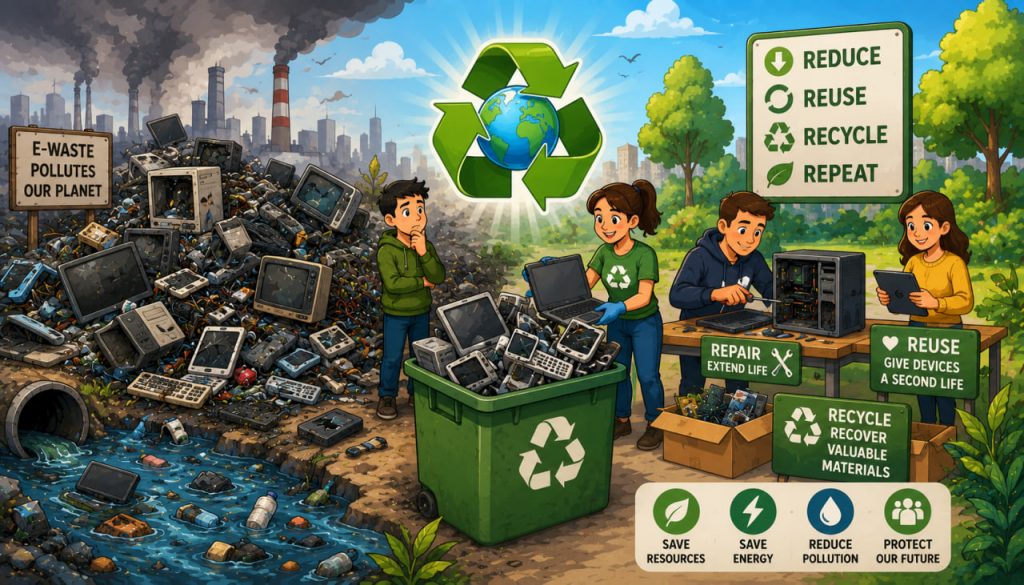
Modern life depends heavily on electronics. Smartphones, laptops, televisions, gaming consoles, tablets, smart appliances, and countless other devices have become essential parts of everyday life. As technology advances rapidly, however, another problem continues to grow: electronic waste, often called e-waste.
Every year, millions of tons of discarded electronic devices enter the global waste stream. Many of these products still contain valuable materials that could be recovered, while others contain hazardous substances that may harm the environment if improperly disposed of.
As the world becomes increasingly digital, understanding electronic waste has become more important than ever. The issue affects not only environmental sustainability but also resource management, public health, and the future of technological development.
What Is Electronic Waste?
Electronic waste refers to discarded electrical or electronic devices that are no longer wanted, functional, or economically useful.
Examples include:
- Smartphones
- Computers
- Laptops
- Televisions
- Printers
- Household appliances
- Batteries
- Networking equipment
Some devices are discarded because they no longer work, while others are replaced simply because newer models become available.
Electronic waste is one of the fastest-growing waste streams in the world.
Why Is E-Waste Increasing?
Several factors contribute to the rapid growth of electronic waste.
One major factor is technological innovation.
New products are released frequently, often offering:
- Better performance
- Improved energy efficiency
- New features
- Enhanced connectivity
Consumer demand for the latest technology can shorten the lifespan of older devices.
Other contributing factors include:
- Falling electronics prices
- Increased global access to technology
- Growing populations
- Expanding digital infrastructure
As a result, more electronic products enter and leave the marketplace every year.
Valuable Materials Hidden Inside Electronics
Many people view discarded electronics as garbage, but they often contain valuable resources.
Electronic devices may include:
- Gold
- Silver
- Copper
- Aluminum
- Palladium
- Rare earth elements
These materials are essential for manufacturing modern technology.
Recovering them through recycling helps reduce the need for mining and conserves natural resources.
For example, a large quantity of gold can sometimes be recovered from electronic waste more efficiently than from certain gold ores.
The Environmental Risks of Improper Disposal
While electronics contain valuable materials, they can also contain potentially hazardous substances.
Examples include:
- Lead
- Mercury
- Cadmium
- Certain flame retardants
If electronics are improperly dumped or burned, these materials may enter the environment.
Potential consequences include:
- Soil contamination
- Water pollution
- Air pollution
- Risks to wildlife
Responsible recycling helps prevent these materials from being released into ecosystems.
How Electronic Recycling Works
Modern recycling facilities use specialized processes to recover useful materials.
The general process often involves:
- Collection
- Sorting
- Disassembly
- Material separation
- Resource recovery
Mechanical systems can separate plastics, metals, and electronic components.
Advanced facilities may also use chemical and metallurgical processes to extract valuable elements.
The goal is to maximize material recovery while minimizing environmental impact.
The Importance of Repair and Reuse
Recycling is important, but extending the lifespan of electronics can be even more beneficial.
Repairing devices often reduces environmental impact because manufacturing new products requires significant energy and resources.
Many organizations encourage:
- Device repair
- Refurbishment
- Component replacement
- Second-hand markets
Keeping electronics in use longer reduces the overall volume of waste generated.
This approach is often referred to as part of the circular economy.
What Is the Circular Economy?
The circular economy is an economic model designed to reduce waste and maximize resource efficiency.
Instead of following the traditional pattern:
Make → Use → Dispose
the circular economy promotes:
Make → Use → Repair → Reuse → Recycle
This strategy helps keep valuable materials in circulation for longer periods.
For electronics, the circular economy can significantly reduce environmental pressure and resource consumption.
Electronic Waste and Global Challenges
Electronic waste is a global issue.
Developed and developing countries alike face challenges related to collection, recycling, and resource recovery.
Some regions possess advanced recycling infrastructure, while others struggle with limited facilities and inadequate waste management systems.
International cooperation is increasingly important because electronics are manufactured, sold, used, and recycled across global supply chains.
Effective solutions often require collaboration among:
- Governments
- Manufacturers
- Consumers
- Recycling companies
- Environmental organizations
Expert Perspective
Environmental scientist Ruediger Kuehr has emphasized that electronic waste should be viewed not merely as a disposal problem but as a valuable resource stream.
His work highlights a critical modern reality:
“E-waste is not just waste—it is a resource.”
This perspective has become increasingly influential among policymakers and sustainability experts.
New Technologies for E-Waste Recycling
Researchers continue developing innovative recycling technologies.
Emerging approaches include:
- Robotic disassembly systems
- AI-assisted sorting
- Advanced metal recovery methods
- Improved battery recycling
- Automated material identification
These technologies may improve recycling efficiency and increase recovery rates for valuable materials.
As electronic devices become more complex, advanced recycling solutions will become increasingly important.
What Consumers Can Do
Individual actions can contribute significantly to reducing electronic waste.
Consumers can:
- Repair devices when practical
- Recycle electronics responsibly
- Donate functioning equipment
- Purchase durable products
- Use certified recycling programs
Even small decisions can help reduce environmental impact and conserve valuable resources.
Responsible disposal is particularly important for batteries and devices containing rechargeable power systems.
The Future of Electronic Waste Management
As technology continues advancing, electronic waste management will remain a major environmental challenge.
Future solutions are likely to focus on:
- Better product design
- Easier repairability
- Increased recycling efficiency
- Sustainable manufacturing
- Resource recovery innovations
Many experts believe the future of electronics depends not only on creating new devices but also on managing existing resources more effectively.
Conclusion
Electronic waste is one of the defining environmental challenges of the digital age. As societies become increasingly dependent on technology, the volume of discarded electronics continues to grow. Yet e-waste is not merely a disposal problem—it is also a valuable source of reusable materials.
Through responsible recycling, repair, reuse, and improved product design, it is possible to reduce environmental impacts while conserving critical resources. The future of sustainable technology will depend on how effectively the world manages the electronics it no longer uses.
Interesting Facts
- Electronic waste contains valuable metals including gold, silver, and copper.
- E-waste is among the fastest-growing waste streams worldwide.
- Many smartphones contain dozens of different chemical elements.
- Recovering metals from recycled electronics can reduce the need for mining.
- Some modern recycling facilities use robots to help dismantle electronic devices.
- Extending a device’s lifespan often reduces environmental impact more effectively than immediate replacement.
Glossary
- Electronic Waste (E-Waste) — Discarded electrical and electronic devices.
- Resource Recovery — The process of extracting useful materials from waste products.
- Circular Economy — An economic model focused on reuse, repair, refurbishment, and recycling.
- Rare Earth Elements — A group of metals used in many advanced electronic technologies.
- Refurbishment — Restoring a used device to working condition.
- Recycling Infrastructure — Facilities and systems used to collect, process, and recycle waste materials.