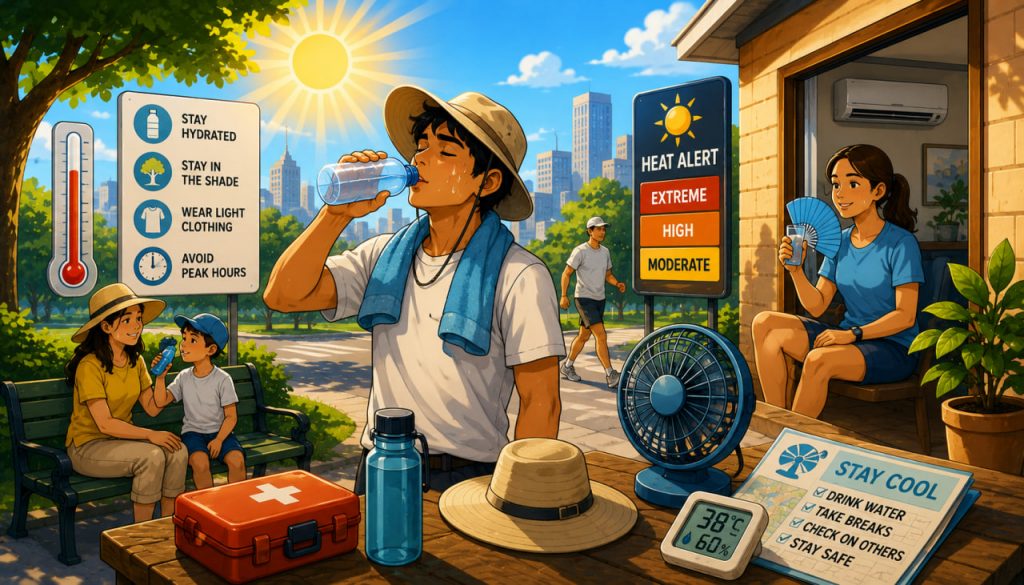
Extreme heat is one of the deadliest weather hazards in the world. Unlike hurricanes, earthquakes, or floods, heatwaves often develop gradually and without dramatic visual signs. However, they can cause dehydration, heat exhaustion, heat stroke, cardiovascular problems, and even death, particularly among vulnerable populations.
As climate change increases the frequency and intensity of heatwaves in many regions, understanding how to protect yourself has become more important than ever. Whether you are at home, working outdoors, traveling, or exercising, following evidence-based heat safety recommendations can significantly reduce health risks.
Preparation, hydration, and recognizing early warning signs are essential for surviving extreme heat safely.
What Is Considered Extreme Heat?
Extreme heat occurs when temperatures rise well above the normal range for a particular region and remain elevated for several days.
However, temperature alone does not determine danger.
Meteorologists also consider:
- Humidity
- Wind speed
- Sun exposure
- Nighttime temperatures
- The Heat Index, which combines air temperature and humidity to estimate how hot conditions actually feel to the human body.
High humidity makes it much harder for sweat to evaporate, reducing the body’s ability to cool itself naturally.
As a result, even moderate temperatures can become dangerous when humidity is high.
Why Extreme Heat Is Dangerous
The human body maintains an internal temperature of approximately 37°C (98.6°F).
When exposed to excessive heat, it cools itself primarily by sweating.
If sweating becomes insufficient because of dehydration, high humidity, or prolonged exposure, body temperature can rise rapidly.
This may lead to:
- Heat cramps
- Heat exhaustion
- Heat stroke
- Organ failure
- Cardiovascular stress
Heat stroke is a medical emergency requiring immediate treatment.
Without rapid cooling, it can become life-threatening.
Stay Hydrated
Hydration is the most important defense against heat-related illness.
Drink water regularly throughout the day, even if you do not feel thirsty.
During extreme heat:
- Carry a reusable water bottle.
- Drink small amounts frequently.
- Increase water intake during physical activity.
- Replace electrolytes if sweating heavily for extended periods.
Limit beverages that may contribute to dehydration, including excessive alcohol consumption.
For most healthy adults, water remains the best choice.
Waiting until you feel thirsty often means dehydration has already begun.
Avoid the Hottest Part of the Day
Outdoor temperatures typically peak between 10:00 a.m. and 4:00 p.m.
Whenever possible:
- Schedule outdoor work early in the morning.
- Exercise after sunset.
- Rest in shaded areas.
- Reduce unnecessary physical activity during peak heat.
If outdoor work cannot be avoided, take frequent cooling breaks.
Employers in many countries increasingly adjust work schedules during heatwaves to reduce health risks.
Dress for Hot Weather
Proper clothing can significantly improve comfort.
Choose:
- Loose-fitting garments
- Lightweight fabrics
- Breathable materials
- Light-colored clothing
- Wide-brimmed hats
Natural fabrics such as cotton or moisture-wicking technical materials help improve airflow and cooling.
Dark clothing absorbs more solar radiation and may increase heat gain.
Keep Your Home Cool
Indoor temperatures can become dangerous during prolonged heatwaves.
Helpful strategies include:
- Close curtains during the day.
- Use blinds to block direct sunlight.
- Open windows at night when temperatures fall.
- Use fans to improve air circulation.
- Spend time in air-conditioned buildings if available.
If your home becomes excessively hot, consider visiting:
- Public libraries
- Shopping centers
- Community cooling centers
These locations often provide temporary relief during severe heat events.
Recognize Heat Exhaustion
Heat exhaustion develops when the body loses excessive water and salts.
Common symptoms include:
- Heavy sweating
- Weakness
- Fatigue
- Headache
- Dizziness
- Muscle cramps
- Nausea
Treatment involves:
- Moving to a cool location.
- Drinking cool water.
- Removing excess clothing.
- Applying cool, wet cloths.
- Resting until symptoms improve.
Ignoring heat exhaustion increases the risk of heat stroke.
Heat Stroke: A Medical Emergency
Heat stroke occurs when the body’s cooling system fails.
Symptoms may include:
- Body temperature above 40°C (104°F)
- Confusion
- Slurred speech
- Loss of consciousness
- Hot skin
- Rapid pulse
Unlike heat exhaustion, sweating may decrease or stop.
Heat stroke requires immediate emergency medical care.
While waiting for medical professionals:
- Move the person into shade.
- Remove unnecessary clothing.
- Cool the body using wet towels, cool water, or ice packs applied to the neck, armpits, and groin.
Do not delay calling emergency services.
Protect Vulnerable Groups
Some people are more susceptible to heat-related illness.
Higher-risk groups include:
- Older adults
- Infants and young children
- Pregnant women
- Outdoor workers
- Athletes
- People with heart disease
- Individuals with chronic illnesses
Certain medications may also reduce the body’s ability to regulate temperature.
Check regularly on elderly relatives, neighbors, or anyone living alone during heatwaves.
Community support can save lives.
Cars Become Dangerous Quickly
Never leave children or pets inside parked vehicles.
Even when outdoor temperatures appear moderate, the interior of a vehicle can become dangerously hot within minutes.
Opening windows slightly provides very little protection.
Temperatures inside parked vehicles may rise by more than 20°C (36°F) in a short period.
This creates life-threatening conditions.
Expert Perspective
According to Dr. Kristie Ebi, Professor of Global Health and Climate Change at the University of Washington, heatwaves represent one of the fastest-growing public health risks associated with climate change.
She emphasizes that most heat-related illnesses are preventable through preparedness, hydration, early warning systems, and community awareness.
“Extreme heat is a silent hazard, but with proper preparation many deaths and illnesses can be prevented.”
Her research has helped shape international guidance on climate adaptation and heat-health action plans.
Preparing for Increasing Heatwaves
Climate scientists project that many parts of the world will experience more frequent and intense heatwaves in the coming decades.
Communities are responding by investing in:
- Urban tree planting
- Cooling centers
- Heat warning systems
- Reflective building materials
- Green roofs
- Improved emergency planning
At the individual level, maintaining emergency supplies, staying informed about weather forecasts, and recognizing early symptoms remain the most effective strategies.
Extreme heat is often underestimated because it develops gradually, but it can be one of the most dangerous natural hazards. Staying hydrated, keeping cool, limiting outdoor activity during peak temperatures, and recognizing warning signs can dramatically reduce the risk of serious heat-related illness.
Interesting Facts
- Heatwaves cause more weather-related deaths globally than many other natural hazards.
- The human body can lose more than one liter of sweat per hour during intense heat.
- Urban areas are often several degrees warmer than nearby rural regions because of the urban heat island effect.
- High humidity makes sweating less effective at cooling the body.
- Trees can lower surrounding temperatures by providing shade and cooling the air through evaporation.
- Air-conditioned public buildings often serve as community cooling centers during heat emergencies.
- Heat warnings issued by meteorological agencies have helped reduce heat-related deaths in many countries.
Glossary
- Heatwave — A prolonged period of unusually high temperatures.
- Heat Index — A measure that combines air temperature and humidity to indicate perceived heat.
- Heat Exhaustion — A heat-related illness caused by excessive loss of water and salts through sweating.
- Heat Stroke — A life-threatening condition in which the body’s temperature rises uncontrollably.
- Dehydration — A condition resulting from excessive fluid loss.
- Humidity — The amount of water vapor present in the air.
- Electrolytes — Minerals such as sodium and potassium that help regulate body functions.
- Urban Heat Island — A phenomenon in which cities become warmer than surrounding rural areas.
- Thermoregulation — The body’s process of maintaining a stable internal temperature.
- Cooling Center — A public building where people can seek relief during periods of extreme heat.