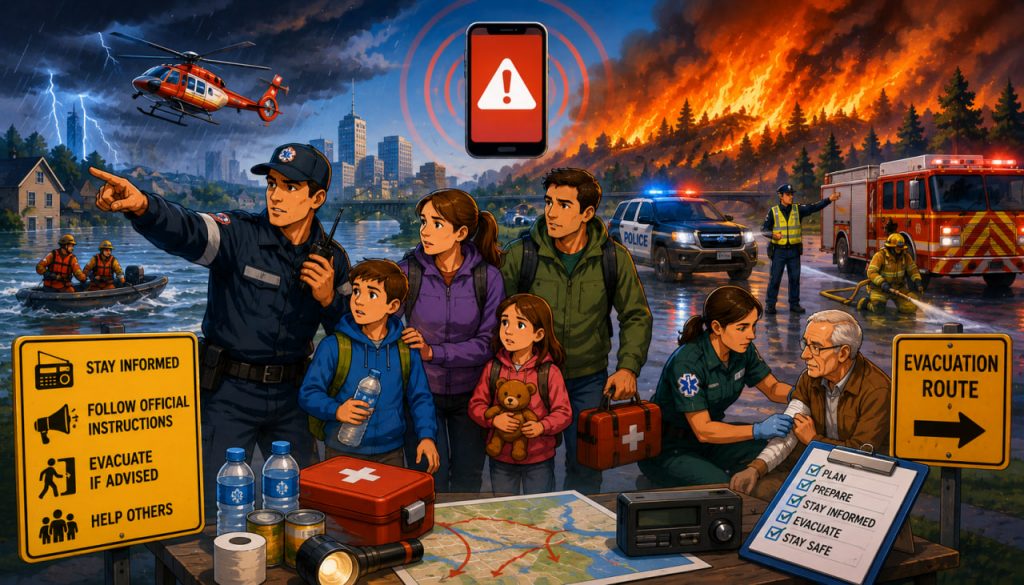
Natural disasters, pandemics, large-scale industrial accidents, armed conflicts, and other major crises can overwhelm the normal capabilities of governments and emergency services. In such situations, authorities may declare a state of emergency to gain temporary legal powers that allow them to respond more effectively to extraordinary circumstances.
Although the term often sounds alarming, a state of emergency is not necessarily a sign of social collapse. In many countries, it is a carefully regulated legal mechanism designed to protect public safety, coordinate emergency response, and restore normal conditions as quickly as possible.
Understanding how emergency regimes work helps citizens know what to expect, what rights may be temporarily affected, and how to prepare responsibly during a crisis.
What Is a State of Emergency?
A state of emergency is a temporary legal status declared by a government when exceptional events threaten public safety, national security, public health, or essential infrastructure.
Unlike ordinary laws, emergency powers allow authorities to respond more rapidly to urgent situations that require immediate action.
Events that may trigger a state of emergency include:
- Major earthquakes
- Floods
- Hurricanes
- Wildfires
- Industrial accidents
- Nuclear incidents
- Disease outbreaks
- Terrorist attacks
- Large-scale civil unrest
- Armed conflicts
The primary purpose of a state of emergency is to protect lives, reduce damage, and restore normal conditions—not to replace ordinary government permanently.
Why Governments Declare Emergencies
Normal legal procedures can sometimes be too slow during rapidly developing crises.
Emergency declarations allow authorities to:
- Mobilize emergency services quickly.
- Coordinate military and civilian resources.
- Evacuate endangered populations.
- Restrict access to hazardous areas.
- Accelerate disaster relief.
- Allocate emergency funding.
- Protect critical infrastructure.
These temporary powers help governments react efficiently when delays could cost lives.
Who Can Declare a State of Emergency?
The legal process differs between countries.
Depending on national constitutions and laws, emergency declarations may be issued by:
- Presidents
- Prime ministers
- National legislatures
- Regional governors
- Local authorities
Many democratic countries require legislative approval if emergency measures continue beyond a limited period.
This oversight helps prevent unnecessary or prolonged use of extraordinary powers.
What Restrictions May Be Introduced?
Emergency measures vary according to the type of crisis.
Possible temporary restrictions include:
Movement Restrictions
Authorities may close dangerous areas or limit travel.
Mandatory Evacuations
Residents may be ordered to leave high-risk locations.
Curfews
Temporary nighttime movement restrictions may be introduced.
Public Gathering Limits
Large events may be postponed or canceled.
Transportation Controls
Roads, airports, railways, or ports may operate under special procedures.
Resource Management
Essential supplies such as fuel, food, or medical equipment may be prioritized.
Not every state of emergency includes all of these measures. The specific restrictions depend on the nature and severity of the crisis.
Rights and Freedoms During Emergencies
A common misconception is that a state of emergency automatically suspends all civil rights.
In reality, democratic legal systems generally allow only limited and temporary restrictions.
Many constitutional protections remain in force.
International human rights agreements emphasize that emergency measures should be:
- Necessary
- Proportionate
- Temporary
- Subject to legal oversight
Some fundamental rights, such as protection from torture or slavery, generally remain protected even during emergencies under international law.
Examples of Emergency Situations
History provides many examples where emergency powers have been used.
These include:
Natural Disasters
Major earthquakes, hurricanes, volcanic eruptions, and floods often require rapid emergency declarations.
Public Health Emergencies
During severe disease outbreaks, governments may introduce temporary health measures to reduce transmission.
Industrial Accidents
Chemical spills, dam failures, or nuclear incidents sometimes require immediate evacuation and environmental monitoring.
Wildfires
Large forest fires may result in emergency declarations to mobilize firefighting resources and protect communities.
Each emergency requires different legal and operational responses.
How Citizens Should Prepare
Preparation before an emergency is one of the most effective ways to reduce risks.
Experts recommend maintaining:
- Drinking water
- Non-perishable food
- Flashlights
- Batteries
- First aid supplies
- Essential medications
- Important documents
- Portable phone chargers
Families should also develop an emergency communication plan in case mobile networks become overloaded.
Knowing local evacuation routes can save valuable time during rapidly developing disasters.
Preparedness reduces panic and allows emergency services to focus on those in greatest need.
The Role of Emergency Services
A state of emergency involves cooperation among many organizations.
These may include:
- Fire departments
- Police
- Emergency medical services
- Civil protection agencies
- Public health authorities
- Military support units
- Utility companies
- Volunteer organizations
Modern emergency management relies on coordinated communication and clearly defined responsibilities.
Technology now plays a major role through:
- Satellite monitoring
- Weather forecasting
- Geographic information systems (GIS)
- Emergency alert systems
- Drone reconnaissance
These tools improve situational awareness and response efficiency.
Common Misconceptions
Several myths surround emergency declarations.
Myth: A state of emergency means society has collapsed.
False.
Most emergency declarations are precautionary legal measures designed to improve coordination.
Myth: All personal freedoms immediately disappear.
Incorrect.
Only specific legal restrictions relevant to the emergency are usually introduced.
Myth: Emergency declarations always last indefinitely.
In most democratic countries, emergency powers are time-limited and require periodic review or renewal.
Expert Perspective
Emergency management expert Dr. Samantha Montano, an assistant professor specializing in disaster preparedness and emergency management, emphasizes that effective emergency response depends not only on government action but also on community preparedness.
She has noted that successful disaster response begins long before an emergency occurs through planning, education, and resilient infrastructure.
“Prepared communities recover faster because preparedness reduces vulnerability.”
Her work reflects the growing consensus among emergency management professionals that public awareness is one of the strongest tools for reducing disaster impacts.
The Future of Emergency Management
Climate change, urbanization, and increasing technological complexity are creating new challenges for emergency management worldwide.
Governments are investing in:
- Artificial intelligence for disaster prediction
- Advanced weather monitoring
- Earth observation satellites
- Early warning systems
- Smart evacuation planning
- Improved public communication platforms
These innovations aim to provide earlier warnings, faster coordination, and more effective disaster response.
A state of emergency is not intended to create fear but to provide governments with temporary legal tools for protecting lives and restoring stability during extraordinary events. Well-prepared communities, informed citizens, and effective emergency planning remain the strongest foundations of public safety.
Interesting Facts
- Many countries have constitutional limits on how long emergency powers may remain in effect.
- Modern emergency alert systems can send warnings directly to mobile phones.
- Satellite technology is widely used to monitor floods, hurricanes, and wildfires in real time.
- Emergency management often involves cooperation between dozens of government agencies.
- Community preparedness programs have been shown to improve disaster resilience.
- Some countries conduct nationwide emergency drills every year.
- Early warning systems have significantly reduced disaster-related fatalities in many parts of the world.
Glossary
- State of Emergency — A temporary legal framework allowing governments to respond to extraordinary crises.
- Evacuation — The organized movement of people away from dangerous areas.
- Curfew — A temporary restriction on movement during specified hours.
- Emergency Management — The coordination of resources and actions before, during, and after disasters.
- Critical Infrastructure — Essential systems such as electricity, water, transportation, and communications.
- Civil Protection — Government organizations responsible for disaster preparedness and response.
- Disaster Resilience — The ability of communities to prepare for, withstand, and recover from emergencies.
- Early Warning System — Technology that alerts people before or during hazardous events.
- Public Health Emergency — A serious event that threatens the health of a population and requires coordinated action.
- Emergency Response — Immediate actions taken to protect people, property, and the environment during a crisis.