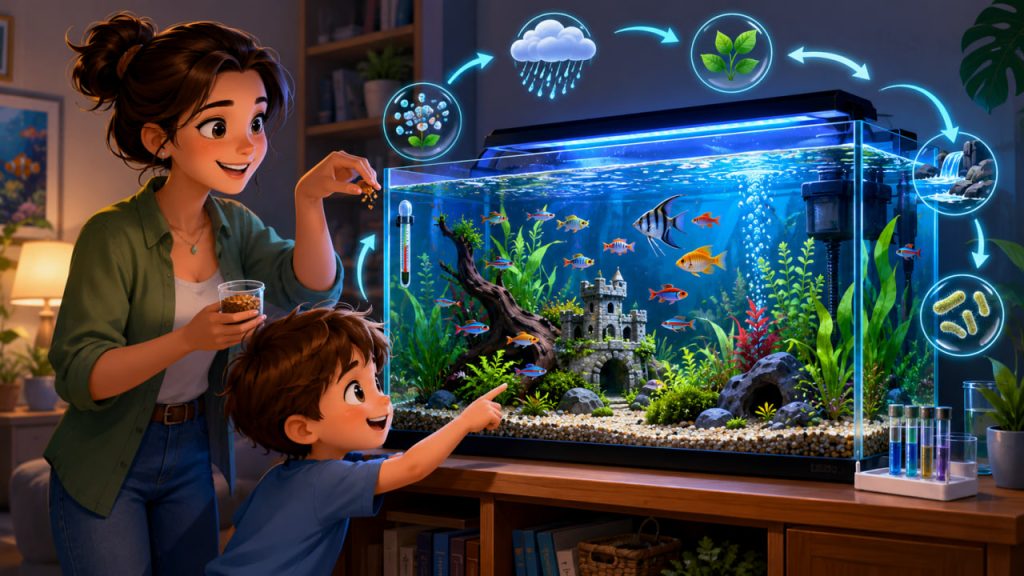
A home aquarium looks peaceful, beautiful, and simple from the outside. Clear water, colorful fish, green plants, soft lighting, and quiet movement can make any room feel more alive.
But a healthy aquarium is not just a glass box filled with water. It is a small living ecosystem. Fish, bacteria, plants, substrate, filter media, oxygen, light, temperature, and food all work together.
The biggest beginner mistake is buying fish before understanding how an aquarium actually works. A successful tank starts with planning, patience, and respect for the biology inside the water.
Choose the Right Aquarium Size
Many beginners think a small aquarium is easier. In reality, very small tanks are often harder to maintain.
A small volume of water changes quickly. Temperature, waste levels, oxygen, and water chemistry can become unstable faster than in a larger aquarium.
For beginners, a medium-sized tank is often more forgiving than a tiny bowl or micro-aquarium. A larger tank gives fish more swimming space and gives the water system more stability.
A bigger aquarium does not automatically mean more difficulty. Often, it means more balance.
Before buying, consider the space in your home, the weight of the filled tank, nearby electrical outlets, and access for cleaning.
Understand the Nitrogen Cycle
The nitrogen cycle is the foundation of aquarium health.
Fish produce waste. Uneaten food and plant debris also break down in the water. This creates ammonia, which is toxic to fish.
Beneficial bacteria convert ammonia into nitrite, which is also toxic. Then another group of bacteria converts nitrite into nitrate, which is less harmful and can be controlled through water changes and live plants.
This process is called cycling the aquarium.
A new tank should not be filled with fish immediately. It needs time for beneficial bacteria to grow in the filter, substrate, and surfaces.
An aquarium is ready for fish only when it can process waste safely.
Rushing this step can lead to sick fish, cloudy water, stress, and sudden losses.
Filtration Is Not Optional
A good filter is one of the most important parts of a home aquarium.
The filter performs three main functions.
Mechanical filtration removes visible particles. Biological filtration provides a home for beneficial bacteria. Chemical filtration can help remove certain dissolved substances when needed.
For most beginner aquariums, biological filtration is the most important. The filter should run continuously because beneficial bacteria need oxygen-rich water flowing through them.
Do not wash filter media under hot tap water or replace everything at once. This can destroy the bacteria colony and destabilize the tank.
Your filter is not just equipment. It is part of the aquarium’s life-support system.
Temperature and Fish Compatibility
Different fish need different temperatures.
Tropical fish usually require a heater and stable warm water. Cold-water species need cooler conditions. Mixing fish with different temperature needs creates stress and health problems.
Compatibility is also about behavior, size, water preferences, and social needs.
Some fish are peaceful. Some are territorial. Some need to live in groups. Some grow much larger than they look in pet shops. Some species may eat smaller tank mates.
Before buying any fish, research:
- Adult size
- Temperature range
- Group size
- Temperament
- Diet
- Tank size needs
- Water preferences
Never choose fish only because they look beautiful. Choose fish that can live well together.
Do Not Overstock the Tank
Too many fish create too much waste.
Overstocking leads to poor water quality, stress, aggression, oxygen problems, disease outbreaks, and more maintenance.
Pet shops may show many fish in one tank, but those tanks are usually temporary holding systems with strong filtration and frequent care.
A home aquarium needs a stable, long-term stocking plan.
Begin with fewer fish than you think you need. Add fish slowly. Give the aquarium time to adjust after each addition.
A lightly stocked tank is usually healthier, cleaner, and easier to manage.
Water Changes Keep the System Healthy
Even with a good filter, aquariums need regular water changes.
Water changes remove nitrate, dissolved waste, and other buildup. They also refresh minerals and improve overall stability.
Many beginners wait until water looks dirty. This is a mistake. Harmful substances can build up even when the water appears clear.
A common routine is changing part of the water weekly or every two weeks, depending on tank size, stocking level, plants, and filtration.
Always use a water conditioner if your tap water contains chlorine or chloramine. Match the new water temperature as closely as possible to the tank water.
Clear water is not always healthy water. Testing and maintenance matter more than appearance.
Feed Less Than You Think
Overfeeding is one of the fastest ways to damage water quality.
Fish have small stomachs. Uneaten food sinks, decays, and increases ammonia and nitrate.
Most aquarium fish do well with small portions that they can finish quickly. It is better to feed lightly and consistently than to dump in too much food.
Use high-quality food appropriate for the species. Some fish need flakes, pellets, frozen foods, algae wafers, vegetables, or specialized diets.
A hungry-looking fish is not always hungry. Many fish will beg for food even when they do not need more.
Live Plants Can Help
Live aquarium plants are not only decorative.
They absorb nutrients, provide hiding places, improve oxygen balance during the light period, and make the tank feel more natural.
Beginner-friendly plants include Java fern, Anubias, Vallisneria, hornwort, water sprite, and some easy Cryptocoryne species.
Plants also help reduce stress for fish by creating shelter and visual barriers.
However, plants need proper lighting and may need nutrients. They should also be chosen according to the fish. Some fish dig, uproot, or eat plants.
A planted aquarium can be more stable and visually beautiful, but it still needs care.
Lighting Should Be Balanced
Aquarium lighting affects fish behavior, plant growth, and algae.
Too much light can cause algae problems. Too little light can weaken plants.
Most aquariums do well with a regular day-night cycle. Using a timer is helpful because it keeps lighting consistent.
Do not leave aquarium lights on all day and night. Fish need periods of darkness. Plants also benefit from a natural rhythm.
A balanced lighting schedule makes the tank easier to manage and more comfortable for its inhabitants.
Algae Is a Signal, Not Just a Problem
Almost every aquarium gets some algae.
A small amount is normal. Too much algae usually signals imbalance: excess light, too many nutrients, overfeeding, poor maintenance, or direct sunlight.
Instead of only scraping algae away, look for the cause.
Reduce lighting time. Feed less. Improve water-change habits. Avoid placing the aquarium where strong sunlight hits it. Consider live plants that compete with algae for nutrients.
Algae control is not about making the tank sterile. It is about restoring balance.
Expert Perspective
Experienced aquarists often say that fishkeeping is really waterkeeping.
That idea is one of the most useful lessons for beginners. Healthy fish usually come from healthy water. When water quality, temperature, filtration, stocking, and diet are right, fish are more likely to thrive.
A good aquarium owner does not simply watch the fish. They manage the ecosystem the fish depend on.
This mindset changes everything. Instead of reacting only when fish look sick, you prevent problems by keeping the water stable.
Common Beginner Mistakes
New aquarium owners often repeat the same errors.
They buy the tank and fish on the same day. They skip cycling. They add too many fish. They overfeed. They replace all filter media. They clean everything too aggressively. They mix incompatible species. They ignore test results.
Another common mistake is chasing perfect numbers with too many chemicals. Stable water is often better than constantly changing water conditions.
The best aquarium care is calm, regular, and consistent.
Basic Aquarium Checklist
Before bringing fish home, prepare the essentials:
- Aquarium tank
- Strong, stable stand
- Filter
- Heater if needed
- Thermometer
- Water conditioner
- Test kit
- Substrate
- Hiding places
- Net
- Siphon or gravel cleaner
- Appropriate fish food
- Light and timer
- Safe lid
This setup gives you control over the most important parts of the aquarium environment.
Interesting Facts
- Beneficial bacteria are among the most important living organisms in an aquarium.
- Many popular pet fish are social and should not be kept alone.
- Goldfish can grow much larger than many beginners expect.
- Live plants can help absorb nitrates and create natural shelter.
- Fish can become stressed by poor water quality even if they still appear active.
- A mature aquarium is usually easier to maintain than a brand-new one.
- Some fish recognize feeding routines and may react when their owner approaches.
Glossary
- Aquarium — A tank designed to keep fish, plants, and aquatic organisms.
- Nitrogen Cycle — The biological process that converts toxic fish waste into less harmful compounds.
- Ammonia — A toxic waste compound produced by fish and decaying organic matter.
- Nitrite — A toxic compound produced during the nitrogen cycle.
- Nitrate — A less toxic nitrogen compound controlled through water changes and plants.
- Beneficial Bacteria — Helpful bacteria that process waste inside the aquarium.
- Filtration — The process of removing particles and supporting biological waste breakdown.
- Cycling — Establishing beneficial bacteria before adding fish.
- Substrate — Gravel, sand, or soil-like material placed on the bottom of the aquarium.
- Overstocking — Keeping too many fish in one tank.
- Water Conditioner — A product that makes tap water safer by neutralizing chlorine or chloramine.
- Algae — Simple aquatic organisms that grow when light and nutrients are available.