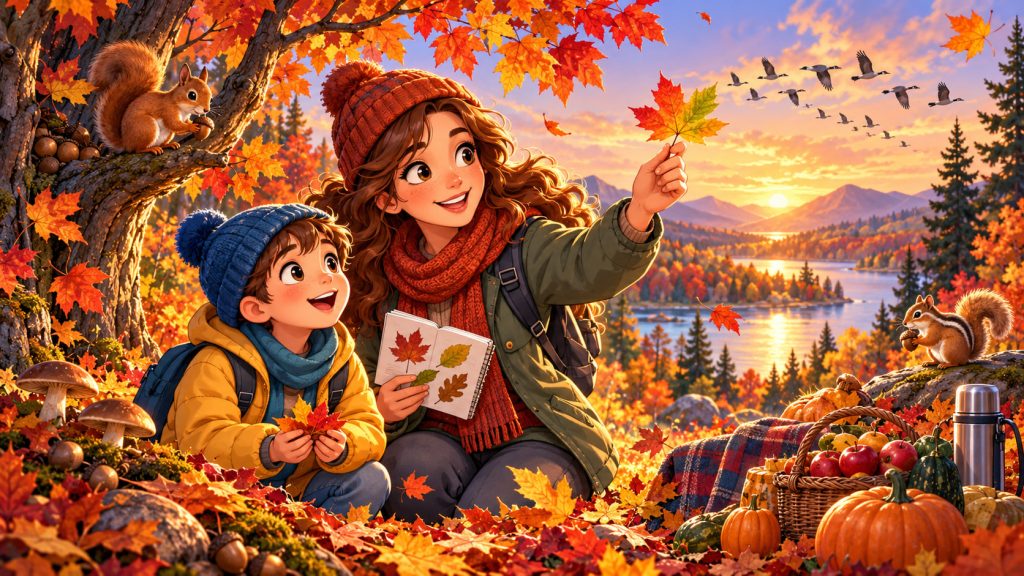
Autumn is a season of transition. Summer warmth begins to fade, daylight becomes shorter, plants slow their growth, animals prepare for winter, and landscapes can change color almost week by week.
For people, autumn often feels different from every other season. It can bring cooler air, richer foods, new routines, harvest traditions, and a noticeable shift in mood and energy.
What makes autumn unique is that both nature and human behavior respond to the same environmental signals: changing light, falling temperatures, and the approach of winter.
Why Autumn Happens
Autumn is caused by Earth’s axial tilt.
As Earth moves around the Sun, each hemisphere receives changing amounts of sunlight throughout the year.
During autumn, the Sun appears lower in the sky, days become shorter, and nights become longer.
This reduces the amount of solar energy reaching the ground.
Temperatures gradually fall, although the exact timing and intensity depend on latitude, altitude, ocean influence, and local climate.
Autumn therefore is not simply “the season when it gets cold.”
It is a large-scale response to changing solar conditions.
Why Leaves Change Color
One of the most famous features of autumn is the transformation of green leaves into yellow, orange, red, and brown.
During spring and summer, leaves contain large amounts of chlorophyll, the green pigment that allows plants to absorb light for photosynthesis.
As days shorten and temperatures fall, many deciduous trees begin preparing for winter.
They reduce chlorophyll production and gradually break down the pigment.
As the green color disappears, other pigments become visible.
Carotenoids produce yellow and orange tones, while anthocyanins can create red and purple colors in some species.
Autumn colors were partly present inside many leaves all along, hidden beneath the dominant green of chlorophyll.
Why Trees Drop Their Leaves
Leaf fall is an important survival strategy.
Leaves lose water through transpiration.
During winter, when soil may become cold or frozen, replacing that lost water becomes more difficult.
Large leaves can also be damaged by frost, snow, and strong winds.
Deciduous trees therefore form a special separation layer where the leaf attaches to the branch.
Eventually the leaf falls.
By shedding their leaves, trees reduce water loss and enter a period of lower metabolic activity.
This allows them to survive difficult winter conditions more efficiently.
Autumn Is a Season of Energy Storage
Many plants spend autumn storing energy.
Trees transfer useful nutrients from leaves into branches, trunks, and roots before the leaves fall.
Perennial plants move resources underground.
Seeds mature.
Roots continue storing carbohydrates.
This means that although the visible landscape may appear to be dying, many plants are actually preparing carefully for future growth.
Autumn is less about biological shutdown and more about strategic conservation.
Animals Also Change Their Behavior
Animals respond strongly to autumn.
Some species increase feeding because they need additional energy reserves before winter.
Others begin migration.
Birds may travel thousands of kilometers to regions with warmer temperatures or more abundant food.
Some mammals prepare for hibernation or periods of reduced activity.
Squirrels and other animals store food.
Many species also grow thicker fur or change their feeding patterns.
These behaviors are often triggered by a combination of temperature, food availability, and photoperiod—the changing length of daylight.
Migration Is One of Autumn’s Great Natural Events
Bird migration is one of the most dramatic autumn phenomena.
Millions of birds move between breeding and wintering grounds.
Some species cross seas, mountains, deserts, and entire continents.
Migration is energetically expensive, so timing is crucial.
Birds must build energy reserves before departure and find suitable resting areas along the route.
They use a combination of environmental signals for navigation, including the Sun, stars, landmarks, and Earth’s magnetic field.
Autumn migration shows how strongly animal behavior is synchronized with seasonal changes.
Forests Become Recycling Systems
Fallen leaves do not simply become waste.
They form an important layer of organic material on the forest floor.
Fungi, bacteria, insects, worms, and other organisms gradually break this material down.
Nutrients are returned to the soil.
Some become available to plants again during future growing seasons.
This decomposition process also helps build soil structure and supports enormous communities of small organisms.
A forest in autumn is therefore actively recycling the biological material produced during summer.
Autumn Changes the Human Body Clock
Humans also respond to seasonal light.
The brain uses light exposure to regulate the circadian rhythm, the internal approximately 24-hour system that influences sleep, alertness, hormones, appetite, and body temperature.
As autumn days shorten, people may receive less morning and evening daylight.
This can affect sleep timing and energy levels.
Some people feel more tired or prefer longer sleep during darker months.
For others, seasonal changes in light can contribute to significant mood changes.
The effect varies greatly between individuals and regions.
Why Autumn Can Affect Mood
Reduced daylight may influence biological systems involved in mood and sleep.
In some people, autumn and winter are associated with seasonal affective disorder, a form of depression with a recurring seasonal pattern.
However, autumn itself is not inherently negative for mental health.
Many people find cooler weather, colorful landscapes, seasonal traditions, and quieter routines psychologically comforting.
Outdoor activity remains important.
Exposure to daylight, regular exercise, social contact, and consistent sleep habits can help support emotional well-being during the transition into darker months.
Humans Naturally Change Their Food Habits
Autumn has historically been associated with harvest.
Many crops reach maturity during this period, including apples, pears, pumpkins, squash, root vegetables, grapes, nuts, and various grains.
Before modern refrigeration and global supply chains, autumn was a crucial season for collecting and preserving food before winter.
People dried, fermented, smoked, salted, and stored foods.
These traditions helped shape many cuisines.
Even today, autumn meals often become warmer, denser, and more substantial.
Soups, roasted vegetables, stews, grains, and baked foods naturally become more appealing as temperatures fall.
Why Autumn Smells Different
Many people notice that autumn has a distinctive smell.
Part of this comes from fallen leaves and moist soil.
Microorganisms breaking down plant material release volatile compounds into the air.
Cooler temperatures and higher humidity can also change how smells are perceived and how long certain molecules remain near the ground.
Smoke from fireplaces, damp wood, rain, fungi, and decaying vegetation can all contribute to the characteristic autumn atmosphere.
The seasonal experience is therefore not only visual.
It involves temperature, sound, smell, and changing light.
Autumn Weather Can Be Highly Unstable
Autumn often brings rapidly changing weather.
Warm air left over from summer can interact with colder air moving from higher latitudes.
This can create strong temperature contrasts.
Storms, heavy rain, fog, wind, and sudden cold spells can become more common in some regions.
At the same time, there may still be unexpectedly warm periods.
This variability is one reason autumn can feel less predictable than summer or winter.
Expert Perspective
Ecologists often describe autumn as a critical transition period rather than simply the end of the growing season.
Plants are reallocating nutrients, animals are changing behavior, and entire ecosystems are shifting from summer productivity toward winter survival.
Chronobiologists similarly emphasize that seasonal changes in daylight provide important biological signals for humans and other animals.
These light signals help synchronize daily and seasonal rhythms.
Autumn is therefore a period when astronomy, ecology, physiology, and behavior become visibly connected.
Autumn and Human Culture
Autumn has influenced human culture for thousands of years.
Harvest festivals developed because successful autumn harvests determined whether communities had enough food for winter.
Many cultures created traditions connected with gratitude, preservation, fire, remembrance, and preparation.
Autumn also became strongly associated with education and new beginnings because school and university years often begin during this season in many countries.
This creates an interesting contrast.
In nature, autumn often represents slowing down.
In human society, it frequently represents returning to structure, work, study, and new goals.
Why Autumn Feels So Different
No other season combines transformation and preparation quite like autumn.
Nature becomes visually spectacular while biological activity begins to slow.
Animals become highly active precisely because winter is approaching.
Plants appear to lose their leaves while quietly preserving energy underground.
People may feel more reflective while simultaneously returning to busy routines.
Autumn is unique because it is not simply an ending. It is a carefully organized transition between abundance and survival.
Interesting Facts
- Shorter daylight is one of the main signals that triggers seasonal changes in many plants.
- Yellow and orange pigments can exist in leaves before autumn but remain hidden by chlorophyll.
- Some trees produce more red pigments during autumn under certain weather conditions.
- Migratory birds can travel thousands of kilometers during a single seasonal journey.
- Fallen leaves provide habitat and nutrients for fungi, insects, and soil organisms.
- Many mammals increase food intake during autumn to build energy reserves.
- Some seeds require exposure to cold winter conditions before they can germinate successfully.
- Autumn begins at different times depending on latitude and local climate.
- Humans also respond biologically to seasonal changes in daylight.
- Traditional autumn harvest festivals developed long before modern food storage systems.
Glossary
- Autumn — The transitional season between summer and winter.
- Chlorophyll — The green pigment plants use to absorb light during photosynthesis.
- Carotenoids — Yellow and orange plant pigments found in leaves, fruits, and vegetables.
- Anthocyanins — Plant pigments that can produce red, purple, or blue colors.
- Deciduous Tree — A tree that sheds its leaves seasonally.
- Photosynthesis — The process by which plants use light energy to produce energy-rich organic molecules.
- Photoperiod — The length of daylight within a 24-hour period.
- Migration — Seasonal movement of animals between different geographical regions.
- Hibernation — A prolonged state of greatly reduced activity and metabolism used by some animals to survive difficult conditions.
- Circadian Rhythm — The internal approximately 24-hour biological cycle that regulates sleep, hormones, alertness, and other functions.
- Decomposition — The biological breakdown of dead organic material into simpler substances.
- Transpiration — The loss of water vapor from plants, mainly through their leaves.