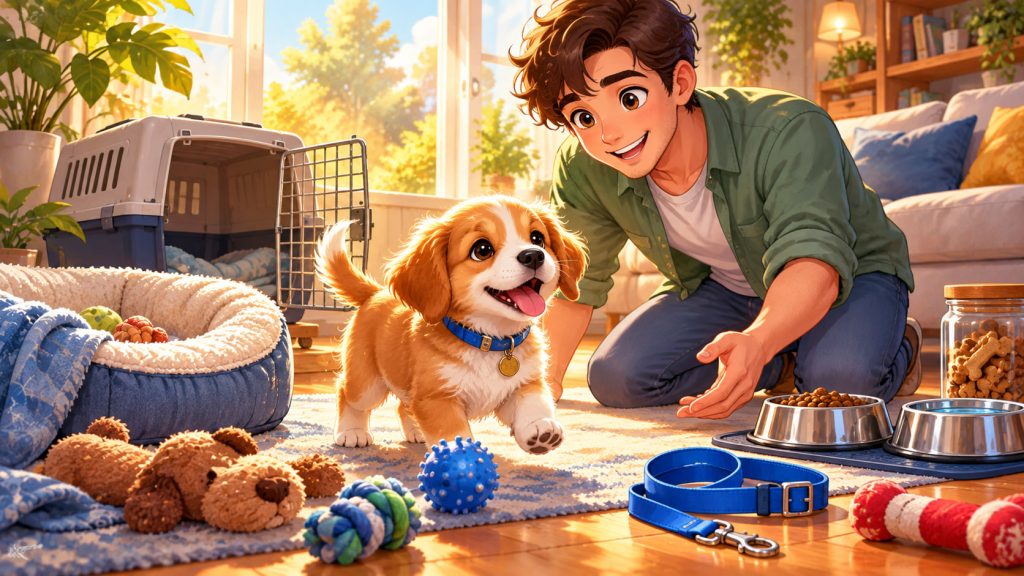
Bringing a dog into your life can be one of the most rewarding decisions you make, but it also changes your daily routine for years. Dogs need exercise, training, veterinary care, companionship, mental stimulation, and consistent rules.
A dog may live 10–15 years or longer depending on breed, size, genetics, and health. Choosing a dog means accepting a long-term responsibility, not simply adding a pet to the household.
The best preparation begins before the dog arrives.
Decide Whether a Dog Fits Your Lifestyle
Start by looking honestly at your daily schedule.
Dogs need regular toilet breaks, exercise, feeding, social interaction, and training. A highly energetic dog may struggle in a household where everyone is away for most of the day, while a calmer adult dog may adapt more easily.
Consider your housing, working hours, travel habits, children, other pets, physical activity level, and budget.
Breed can influence size, energy, grooming needs, and certain behavioral tendencies, but individual personality also matters greatly.
The best dog is not necessarily the most fashionable breed. It is the dog whose needs match your real lifestyle.
Puppy or Adult Dog?
Puppies are appealing, but they require substantial time and patience.
Young puppies need frequent toilet breaks, supervision, socialization, basic training, and safe opportunities to explore. They also chew, wake during the night, and may have accidents indoors.
Adult dogs may already have established habits and personalities. This can make it easier to understand whether a particular dog is calm, energetic, sociable, shy, or comfortable with children.
Senior dogs can also make excellent companions, especially for people looking for a quieter lifestyle.
Adoption or Responsible Breeder?
Shelters and rescue organizations contain dogs of many ages, sizes, and personalities.
A good shelter can often provide useful information about a dog’s behavior, medical history, and compatibility with other animals or people.
If you choose a breeder, look for responsible practices. The breeder should prioritize health, temperament, and welfare rather than appearance or rapid sales.
Responsible breeders typically discuss inherited health conditions, veterinary care, the parents of the puppies, and how the puppies are raised.
Avoid sellers who refuse to show living conditions, sell very young puppies, or cannot provide basic health information.
Prepare Your Home Before Arrival
A new home contains unfamiliar sounds, smells, people, and objects.
Create a quiet area where the dog can rest without being disturbed. Include a bed, water, safe toys, and enough space to relax.
Remove dangerous items such as medications, cleaning chemicals, electrical cords, toxic foods, and small objects that could be swallowed.
Check fences, gates, balconies, and doors carefully.
A secure home is especially important during the first days because a frightened dog may attempt to escape.
Buy the Essential Supplies
You do not need dozens of accessories immediately.
A useful starter setup includes:
- Food and water bowls
- Complete dog food
- Collar or harness
- Strong leash
- Identification tag
- Comfortable bed
- Safe chew toys
- Grooming tools
- Waste bags
- Secure travel crate or carrier when appropriate
A crate can provide a safe resting space when introduced correctly, but it should never be used as long-term confinement or punishment.
Choose equipment based on the dog’s size and strength. A lightweight leash suitable for a small dog may be unsafe for a large, powerful animal.
Give the Dog Time to Adjust
Some dogs settle quickly. Others need days or weeks before they feel secure.
Avoid overwhelming a new dog with visitors, constant handling, or trips to busy places immediately.
Allow the dog to explore gradually and establish a predictable routine.
Feeding, walks, sleep, and toilet breaks at roughly consistent times can help the dog understand what to expect.
Calm routines build confidence faster than excessive stimulation.
Schedule a Veterinary Visit
Arrange a veterinary examination soon after bringing the dog home, especially when the medical history is incomplete.
The veterinarian can assess weight, teeth, heart, skin, ears, joints, vaccination status, and parasite risks.
This visit is also a good time to discuss microchipping, nutrition, dental care, sterilization, and preventive medicine.
Veterinary professionals generally emphasize regular preventive examinations because dogs may develop health problems before obvious symptoms appear.
Vaccination and Parasite Protection
Vaccination recommendations depend on age, location, lifestyle, previous vaccination history, and disease risk.
Dogs may also need protection against internal and external parasites such as worms, fleas, and ticks.
Parasite-control plans should be tailored to the animal and environment.
Dogs that frequently visit forests, parks, kennels, daycare centers, or travel internationally may face different risks from dogs with limited exposure.
Spaying and Neutering
Spaying usually refers to surgical sterilization of a female dog, while neutering commonly refers to males, although the term is sometimes used more broadly.
Sterilization prevents unwanted litters and may influence some hormone-related health and behavioral issues.
The appropriate timing is not identical for every dog.
Size, breed, age, health, and individual circumstances can influence the decision, so timing should be discussed with a veterinarian.
Choose the Right Food
Dogs require a nutritionally complete diet that matches their life stage.
Puppies need food formulated for growth, while adult and senior dogs may have different nutritional requirements.
Portion control matters because excessive calorie intake can lead to obesity.
Obesity places additional stress on joints and is associated with several health problems.
Treats are useful for training, but they still contain calories. Training rewards should be included in the dog’s overall daily food intake.
Fresh water should always be available.
Start Training Early
Training is not only about teaching commands. It helps dogs understand how to live safely in a human environment.
A modern approach relies heavily on positive reinforcement.
This means rewarding desired behavior with something the dog values, such as food, play, praise, or access to an activity.
Short training sessions are often more effective than long repetitive ones.
Useful early skills include responding to the dog’s name, coming when called, walking calmly on a leash, staying briefly, and releasing objects on cue.
Socialization Is Essential
Socialization is the process of helping a dog learn that different people, animals, sounds, surfaces, environments, and situations can be safe.
The early months of a puppy’s life are especially important, but social learning continues throughout adulthood.
Good socialization does not mean forcing a dog to interact with everything.
The goal is controlled, positive exposure.
For example, a puppy can observe bicycles, children, traffic, umbrellas, other dogs, and veterinary handling while receiving rewards for calm behavior.
Poor experiences can create fear, so quality matters more than quantity.
Exercise Must Match the Dog
Exercise needs vary enormously.
A young working breed may require far more activity than an older companion breed.
Walking is important, but physical exercise alone is not always enough.
Dogs also benefit from sniffing, exploring, problem-solving, and searching for food.
These activities provide mental enrichment and help satisfy natural behavioral needs.
Puzzle feeders, scent games, training sessions, and safe chew items can make daily life more interesting.
Learn Canine Body Language
Dogs communicate constantly through posture, facial expressions, movement, and vocalization.
A relaxed dog usually has loose body movement and a neutral posture.
Stress may appear as repeated lip licking, yawning, turning away, crouching, pacing, or attempting to leave.
A wagging tail does not always mean happiness. Tail speed, height, stiffness, and the rest of the body must be considered together.
Understanding body language helps prevent unnecessary conflict and improves trust.
Plan for the Cost
Dog ownership includes predictable and unexpected expenses.
Regular costs may include food, vaccinations, parasite prevention, grooming, training, toys, equipment, and veterinary examinations.
Unexpected illness or injury can become expensive very quickly.
An emergency fund or appropriate pet insurance can reduce financial pressure when urgent treatment is needed.
Financial preparation is part of responsible dog ownership.
Build a Stable Relationship
Dogs thrive on consistency.
Clear rules, regular activity, patient training, and appropriate rest help them understand their environment.
Spend time walking, playing, training, and simply relaxing together.
Avoid expecting perfect behavior immediately.
A dog brought into a new home is learning unfamiliar routines and relationships.
The strongest bond usually develops through predictable care, trust, and repeated positive experiences.
Interesting Facts
- Dogs have a sense of smell that is dramatically more sensitive than that of humans.
- Puppies are born unable to see or hear normally and develop these senses during the first weeks of life.
- Dogs can learn hundreds of words, gestures, and routines with consistent training.
- Sniffing during walks provides important mental stimulation, not just information about the environment.
- Many dogs sleep around 12–14 hours per day, while puppies may sleep considerably more.
- A dog’s nose print has a unique pattern.
- Tail position, ear position, facial tension, and body posture often communicate more than barking.
- Different breeds can vary greatly in exercise, grooming, training, and health requirements.
Glossary
- Crate — An enclosed resting or travel space that can provide security when introduced appropriately.
- Microchipping — Implanting a small identification chip beneath the skin so a lost dog can be identified with a scanner.
- Spaying — Surgical sterilization of a female dog.
- Neutering — Surgical sterilization, most commonly referring to male dogs.
- Positive Reinforcement — A training method that rewards desired behavior so it becomes more likely to happen again.
- Socialization — Controlled exposure to people, animals, environments, sounds, and experiences to help a dog develop confidence.
- Mental Enrichment — Activities that stimulate a dog’s brain and encourage natural behaviors such as sniffing, searching, and problem-solving.