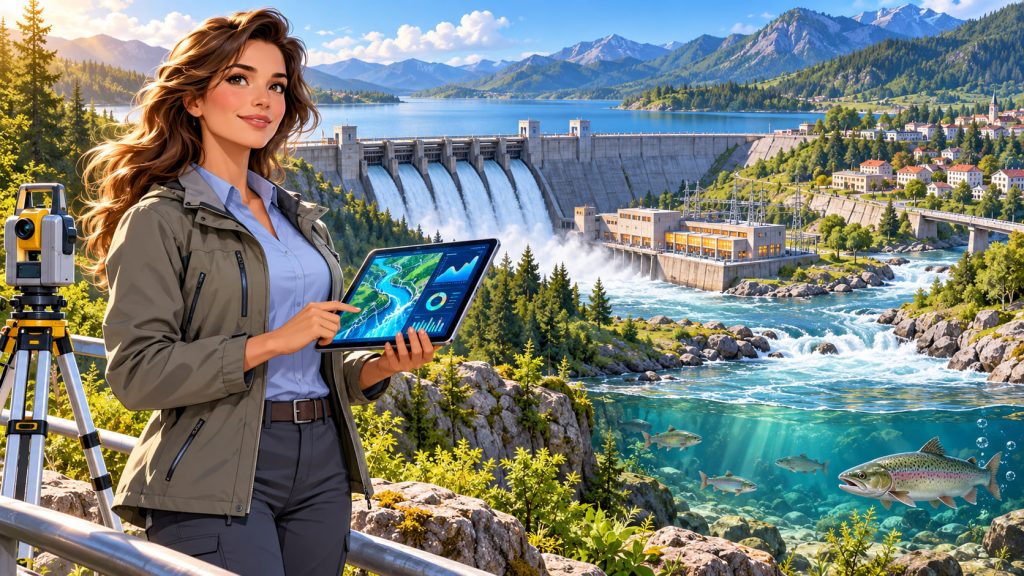
Dams are among humanity’s most impressive engineering achievements. These enormous structures can control powerful rivers, generate electricity, provide drinking water, and protect communities from devastating floods.
Yet behind their concrete walls lies a complicated environmental story.
While dams have helped cities grow and saved lives, they have also transformed natural rivers, interrupted fish migrations, flooded ecosystems, and changed landscapes thousands of years in the making.
The central question is not whether dams are good or bad, but whether their benefits outweigh the ecological damage they can cause.
Understanding both sides reveals why some countries continue building dams while others are spending millions to remove them.
Why Did Humans Begin Building Dams?
Humans have controlled rivers for thousands of years.
Ancient civilizations constructed dams to store water, irrigate agricultural land, and protect settlements from seasonal flooding.
Modern dams perform several important functions:
- Flood prevention and river regulation
- Drinking water storage
- Agricultural irrigation
- Hydroelectric power generation
- Industrial water supply
- Navigation and recreation
A dam typically creates a reservoir by holding water behind a barrier.
This stored water can be released when needed, making river systems more predictable for human use.
However, that predictability often comes at the expense of natural ecosystems.
How Dams Protect Cities From Flooding
One of the strongest arguments for building dams is flood protection.
During heavy rainfall or rapid snowmelt, rivers can rise dangerously fast.
A flood-control dam can temporarily store part of this excess water and release it gradually downstream.
This reduces peak river levels and can protect homes, roads, factories, and agricultural land.
The Three Gorges Dam in China is a major example. Built across the Yangtze River, it provides large-scale flood-control capacity while also generating electricity.
However, no dam can eliminate flooding completely.
Extreme storms can overwhelm available storage capacity, and downstream tributaries may produce flooding even when a major dam is functioning correctly.
Effective flood protection therefore requires more than concrete barriers.
Hydroelectric Power: A Major Benefit
Many large dams generate electricity through hydropower.
Water flowing through turbines converts gravitational energy into electrical energy.
Unlike fossil-fuel power plants, hydroelectric facilities do not need to burn coal or natural gas to produce electricity.
The Itaipu Dam, located between Brazil and Paraguay, is one of the world’s largest hydroelectric generating facilities.
Hydropower also offers an important advantage: operators can often adjust electricity production relatively quickly.
However, reservoirs can produce greenhouse gas emissions when submerged vegetation and organic matter decompose.
Methane emissions can be especially significant in some warm, tropical reservoirs.
The overall climate impact therefore varies depending on the location, design, and operation of the dam.
What Happens to a River After a Dam Is Built?
A natural river is constantly moving water, nutrients, sand, gravel, and living organisms.
A dam interrupts this movement.
Scientists describe these interconnected processes as river connectivity.
When a river is blocked, upstream and downstream environments begin changing.
Water slows inside the reservoir, while downstream sections may receive less sediment and experience altered seasonal flows.
This affects the river’s shape, biological productivity, and surrounding landscapes.
A dam does not simply store water. It changes how an entire river system functions.
Why Fish Are Among the Biggest Victims
Many fish species depend on migration to reproduce.
Salmon, for example, often travel from the ocean into freshwater rivers to reach their spawning grounds.
Large dams can prevent them from completing these journeys.
This disruption may isolate populations, reduce reproduction, and eliminate access to essential habitats.
Engineers sometimes construct fish passages, including ladders and bypass channels, to help migrating fish move around barriers.
However, these systems do not work equally well for every species.
Some fish struggle to locate entrances, while others experience delays or injuries when passing through turbines.
Migratory species can be particularly vulnerable when several dams exist along the same river.
The Hidden Problem of Trapped Sediment
Rivers naturally transport enormous quantities of sand, silt, and gravel.
This process, known as sediment transport, helps maintain riverbeds, deltas, and coastal landscapes.
Dams trap much of this material inside reservoirs.
Downstream, the reduced sediment supply can contribute to riverbed erosion and shrinking deltas.
These changes may threaten wetlands, agricultural areas, and coastal communities.
Sediment accumulation also gradually reduces reservoir storage capacity.
The material trapped behind a dam can become both an environmental problem and an engineering challenge.
How Dams Transform Entire Ecosystems
Rivers are connected to forests, wetlands, lakes, and seasonal floodplains.
A floodplain is an area of land that naturally floods when a river rises.
These periodic floods deliver nutrients, replenish wetlands, and create breeding habitats for wildlife.
When dams suppress natural flooding, the surrounding ecosystems may receive less water and fewer nutrients.
Reservoirs can also experience thermal stratification, where water separates into layers with different temperatures.
Releasing unusually cold or oxygen-poor water from deep reservoir layers can affect downstream aquatic life.
The consequences may extend far beyond fish, influencing insects, birds, vegetation, and entire food webs.
Famous Dams That Changed Rivers
The Hoover Dam on the Colorado River is one of the most recognizable dams in the world.
It provides hydropower and helps regulate water supplies across the southwestern United States.
At the same time, the Colorado River has experienced extensive ecological transformation due to dams, water withdrawals, and other human activities.
Another striking example is the Grand Coulee Dam on the Columbia River.
Although it produces substantial electricity, its construction permanently blocked migrating salmon from reaching large areas of their historical habitat upstream.
These examples illustrate an important reality: the same dam can provide enormous economic benefits while causing serious ecological losses.
What River Scientists Recommend
River scientist Brian Richter, known for his research on freshwater ecosystems and sustainable water management, has emphasized the importance of protecting natural river-flow patterns.
An important principle in modern river science is that ecosystems need more than a minimum quantity of water.
They also depend on seasonal changes in flow, including periods of higher and lower water levels.
These carefully managed releases are called environmental flows.
By restoring some natural variations in river discharge, dam operators can support fish reproduction, wetland health, and downstream habitats.
However, environmental flows cannot fully restore a river when major migration barriers remain in place.
Why Some Countries Are Removing Dams
A growing number of obsolete or environmentally damaging dams are being dismantled.
The process is known as dam removal.
One famous example occurred on Washington State’s Elwha River.
Two large dams were removed between 2011 and 2014, reconnecting fish habitats and allowing sediment to move downstream again.
The restoration helped rebuild beaches and river habitats while reopening historical salmon migration routes.
Another major project took place on the Klamath River in the western United States.
Four hydroelectric dams were removed in 2024, reopening extensive stretches of river habitat to migratory fish.
These projects demonstrate that damaged river ecosystems can begin recovering when major barriers disappear.
Can Modern Dams Become More Environmentally Friendly?
Engineers and ecologists are developing strategies to reduce the environmental impact of existing dams.
Possible improvements include:
- Constructing more effective fish migration systems
- Releasing water to imitate natural seasonal flows
- Managing sediment movement
- Improving turbine designs to reduce fish injuries
- Monitoring downstream water temperature and oxygen
- Avoiding new dams in especially sensitive river habitats
In some situations, upgrading an existing dam may provide greater benefits than constructing another large structure.
In others, removing an obsolete dam may be the more effective solution.
The best decisions depend on flood risks, electricity needs, water availability, economic costs, and ecological conditions.
Interesting Facts
- The Three Gorges Dam has an installed generating capacity of 22,500 megawatts.
- The Hoover Dam created Lake Mead, one of the largest reservoirs in the United States by capacity.
- Some migratory fish travel hundreds or thousands of kilometers between feeding and spawning habitats.
- Reservoirs can gradually lose water-storage capacity as sediment accumulates.
- Dams can alter water temperatures far downstream from their original locations.
- The removal of the Elwha River dams released large quantities of trapped sediment into the river system.
- Some small, aging dams provide little economic benefit while continuing to fragment valuable aquatic habitats.
- Restored river connections can benefit wildlife, water quality, and surrounding ecosystems.
Glossary
- Reservoir — An artificial lake or water-storage area created by a dam.
- Hydropower — Electricity generated by harnessing the energy of moving or falling water.
- Greenhouse Gas Emissions — The release of gases such as carbon dioxide and methane that contribute to atmospheric warming.
- River Connectivity — The natural connection between different sections of a river and its surrounding ecosystems.
- Fish Passages — Structures designed to help fish move around dams and other barriers.
- Sediment Transport — The natural movement of sand, gravel, silt, and other particles through a river system.
- Floodplain — Land beside a river that is periodically covered by floodwater.
- Thermal Stratification — The formation of distinct water layers with different temperatures.
- Environmental Flows — Water releases designed to maintain or restore important natural river processes.
- Dam Removal — The dismantling of a dam to restore river movement, ecological connections, or natural conditions.