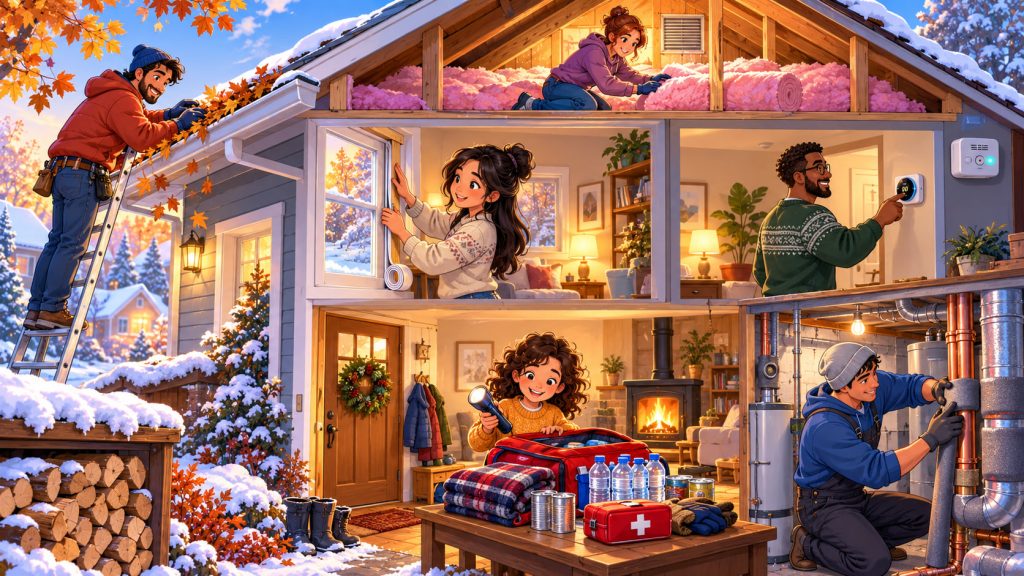
Winter can be beautiful, but freezing temperatures, heavy snow, strong winds, and rising energy costs can create serious challenges for homeowners.
A poorly prepared house may lose valuable heat, develop frozen pipes, experience roof leaks, or suffer unexpected heating failures during the coldest days of the year.
Fortunately, many winter-related problems can be prevented with relatively simple maintenance and timely improvements.
Preparing your home before winter arrives can reduce heating expenses, prevent expensive repairs, and create a warmer, safer living environment.
From insulation and heating systems to plumbing, roofing, and emergency supplies, every part of the house deserves attention before temperatures begin to fall.
Why Preparing Your Home for Winter Matters
The process of protecting a building against cold weather is called winterization.
It involves inspecting, repairing, insulating, and maintaining essential household systems before winter conditions become severe.
Even relatively modern houses can develop problems when small maintenance issues are ignored.
A poorly sealed window may waste heat, while an unprotected pipe can freeze and burst during prolonged cold weather.
Winter preparation is particularly important in regions where temperatures frequently fall below freezing.
Preventive maintenance is generally easier and less expensive than repairing damage after a winter emergency.
Inspect and Service Your Heating System
A reliable heating system is one of the most important requirements for a comfortable winter.
Before cold weather arrives, arrange a professional inspection of your furnace, boiler, heat pump, or other heating equipment.
A qualified technician can identify worn components, airflow problems, and potential safety hazards.
Replace or clean heating filters according to the manufacturer’s recommendations.
Blocked filters can restrict airflow and reduce system performance.
For homes with radiators, check for leaks, unusual noises, and uneven heating.
Test your thermostat before the heating season begins.
Heating equipment should be serviced before it becomes essential for maintaining a safe indoor temperature.
Improve Insulation to Reduce Heat Loss
Insulation slows the movement of heat through walls, ceilings, floors, and other building surfaces.
Without sufficient insulation, valuable indoor heat escapes more rapidly during cold weather.
One important measurement is R-value, which describes a material’s resistance to heat flow.
Higher R-values generally indicate greater insulating performance.
However, appropriate insulation levels depend on climate, building construction, and local regulations.
Common areas worth inspecting include:
- Attics and roof spaces
- Exterior walls
- Basement ceilings
- Floors above garages
- Crawl spaces
- Areas surrounding attic access doors
Energy-efficiency specialists emphasize that insulation works best when combined with effective control of unwanted air leakage.
Seal Drafts Around Windows and Doors
Small gaps around windows and doors can allow cold outdoor air to enter a house continuously.
Air sealing involves closing unwanted openings that allow air to move between indoor and outdoor spaces.
Caulk is commonly used around stationary joints and gaps.
Weatherstripping provides flexible seals around movable components, including doors and operable windows.
Check for drafts near doorframes, window edges, electrical penetrations, and attic access points.
A properly installed door sweep can also reduce cold air entering beneath an exterior door.
These improvements are often relatively inexpensive and can increase comfort without replacing entire windows.
Protect Water Pipes From Freezing
Frozen pipes are among the most expensive winter maintenance problems.
Water expands by approximately 9% when it freezes.
Ice formation can create pressure inside plumbing systems, sometimes causing pipes to rupture.
Pipes in unheated basements, garages, crawl spaces, and exterior walls are particularly vulnerable.
Pipe insulation helps slow heat loss and reduce freezing risks.
Before severe cold weather:
- Disconnect outdoor garden hoses.
- Drain and shut off exterior water lines where appropriate.
- Insulate exposed pipes in vulnerable areas.
- Locate the main water shutoff valve.
- Maintain sufficient indoor heating.
During extreme cold, allowing a small faucet drip may help in certain plumbing arrangements when recommended by local authorities.
If a pipe freezes, never attempt to thaw it with an open flame.
If a pipe has burst, shut off the water supply and seek professional assistance.
Check the Roof and Gutters
Winter storms can expose weaknesses in roofing systems.
Inspect the roof for damaged shingles, loose flashing, and deteriorated seals around chimneys or vents.
Clear fallen leaves and debris from gutters before freezing temperatures arrive.
Blocked drainage systems can cause water to accumulate and freeze.
An ice dam forms when snow melts on a warmer section of the roof and refreezes near colder roof edges.
The resulting ice barrier can prevent water from draining normally, potentially allowing it to enter beneath roofing materials.
Proper attic insulation, air sealing, and ventilation can reduce conditions that contribute to ice dam formation.
Roof inspections involving heights should be performed by qualified professionals.
Prepare Windows for Cold Weather
Windows can be significant sources of heat loss, particularly when they are poorly insulated or damaged.
Double- or triple-glazed windows reduce heat transfer compared with many older single-pane designs.
However, replacing windows is not always the most economical first step.
Repairing damaged seals, installing suitable insulating window films, and closing heavy curtains at night may improve comfort.
Allow sunlight through south-facing windows during sunny winter days in the Northern Hemisphere when beneficial.
Close curtains after sunset to reduce nighttime heat loss.
Avoid blocking radiators or other heating outlets with furniture or thick fabrics.
Prevent Carbon Monoxide Poisoning
Winter increases the use of fuel-burning heating equipment.
Improperly maintained furnaces, fireplaces, and other combustion appliances can produce carbon monoxide.
This dangerous gas is colorless and odorless.
Exposure can cause headaches, dizziness, nausea, confusion, unconsciousness, and death.
Install carbon monoxide alarms in appropriate locations, including near sleeping areas, according to local safety requirements.
Have fuel-burning equipment and chimneys inspected regularly.
Never heat your home using an outdoor barbecue, charcoal grill, or gas oven.
Portable generators must operate outdoors, at least 20 feet (approximately six meters) from doors, windows, and vents, with exhaust directed away from buildings.
Control Indoor Moisture and Ventilation
Winter often brings reduced natural ventilation because people keep windows closed.
Cooking, showering, and everyday household activities produce moisture that can accumulate indoors.
Relative humidity measures the amount of water vapor in the air compared with the maximum amount it could hold at the same temperature.
For many homes, maintaining indoor relative humidity around 30–50% can help balance comfort and moisture control.
Excess humidity may cause condensation on cold windows and encourage mold growth.
Use bathroom and kitchen exhaust fans where appropriate.
Mechanical ventilation systems should remain properly maintained.
A warm home also needs adequate ventilation and moisture management to maintain healthy indoor conditions.
Prepare Your Garden and Outdoor Areas
Winter preparation extends beyond the building itself.
Inspect trees for damaged branches that could fall onto roofs, vehicles, or electrical lines.
Move delicate outdoor furniture into storage or secure it against strong winds.
Clean and store gardening equipment.
Drain irrigation systems when freezing conditions require it.
Check outdoor steps, pathways, and handrails for damage.
Keep suitable snow-removal equipment available in regions that regularly experience snowfall.
Where ice is common, use appropriate traction materials and deicing products while considering their effects on plants, pets, and surrounding surfaces.
Create a Winter Emergency Kit
Severe winter storms can interrupt electricity, heating, water supplies, and transportation.
A household emergency kit should contain enough essential supplies for several days.
Useful items include:
- Drinking water and nonperishable food
- Flashlights and spare batteries
- Warm clothing and blankets
- Essential prescription medications
- Battery-powered radio
- First-aid supplies
- Charged power banks
- Important contact information
Know how to shut off water and other utilities safely when necessary.
If heating fails during extreme cold, consider relocating to an officially designated warming shelter or another safely heated location.
Never use unsafe combustion appliances indoors for emergency heating.
Interesting Facts
- Water expands by approximately 9% when it freezes, helping explain why frozen plumbing can rupture.
- Attics are among the most important areas to evaluate when improving a home’s winter energy performance.
- Snow can provide some insulating effect, although excessive accumulation may create dangerous structural loads.
- Ice dams can develop even when outdoor temperatures remain below freezing.
- Dark curtains and properly fitted window coverings can reduce nighttime heat loss through windows.
- Carbon monoxide is impossible to detect reliably without appropriate equipment.
- Small gaps around doors, windows, and building penetrations can collectively contribute to substantial unwanted airflow.
- Insulation performance depends on proper installation as well as the material’s rated thermal resistance.
- Winter power outages can become dangerous when indoor temperatures fall and heating systems cannot operate.
- Regular maintenance can extend the useful life of heating equipment and reduce unexpected breakdowns.
Glossary
- Winterization — The process of preparing a building and its essential systems for cold weather and winter hazards.
- R-value — A measurement describing a material’s resistance to heat transfer.
- Air Sealing — The process of closing unwanted openings that allow air to leak into or out of a building.
- Weatherstripping — Flexible sealing material used around movable windows and doors to reduce drafts.
- Pipe Insulation — Protective material installed around plumbing pipes to slow heat loss and reduce freezing risks.
- Ice Dam — A buildup of ice near a roof edge that prevents melting snow from draining properly.
- Carbon Monoxide — A poisonous, invisible, odorless gas produced by incomplete fuel combustion.
- Relative Humidity — The percentage of moisture in the air compared with the maximum amount the air can hold at its current temperature.