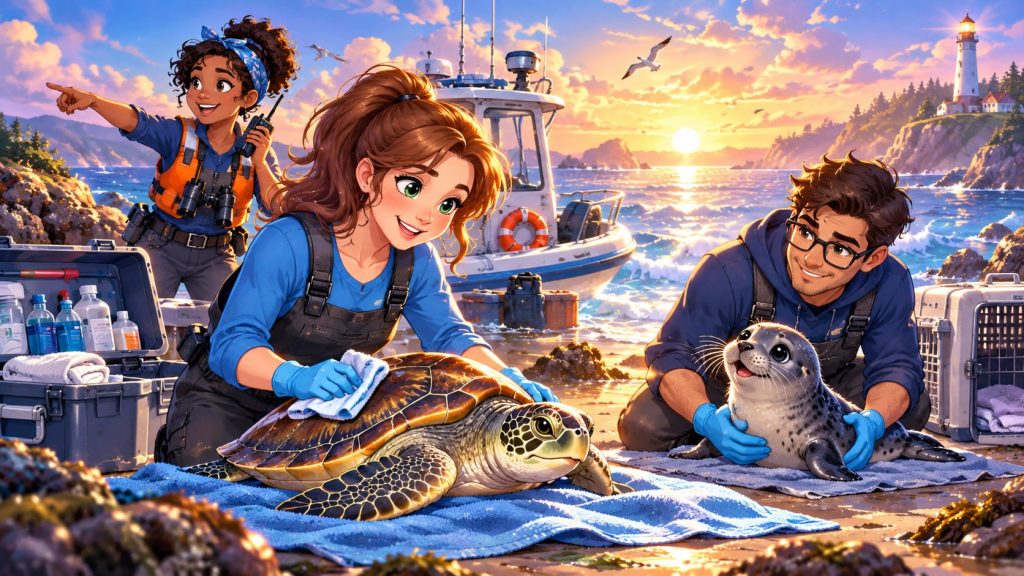
Every year, thousands of marine animals face life-threatening situations along the world’s coastlines. Seals become trapped in discarded fishing nets, dolphins wash ashore, sea turtles suffer from extreme cold, and seabirds struggle after oil spills.
While spectacular whale rescues sometimes attract international attention, countless smaller rescue operations happen almost unnoticed.
Behind these efforts are dedicated volunteers who spend their weekends, nights, and holidays helping injured and stranded marine wildlife.
Marine animal rescue volunteers are an essential part of ocean conservation, often working in difficult conditions without financial compensation or public recognition.
Their work involves much more than carrying animals back into the water. It requires training, patience, scientific knowledge, and sometimes months of care.
Who Are Marine Animal Rescue Volunteers?
Marine animal rescue volunteers come from remarkably different backgrounds.
Some are university students studying marine biology. Others are teachers, engineers, fishermen, retirees, or ordinary coastal residents who want to protect wildlife.
They work alongside veterinarians, marine biologists, conservation organizations, and government agencies.
Their responsibilities may include:
- Monitoring beaches for injured animals
- Reporting and documenting wildlife emergencies
- Assisting trained rescue teams
- Transporting animals to specialist facilities
- Preparing food and cleaning rehabilitation enclosures
- Supporting scientific research and public education
Many volunteers receive specialized training before participating in rescue operations.
Their most important responsibility is not simply saving animals, but ensuring that every intervention is safe and genuinely necessary.
When Marine Animals Become Stranded
One of the most common reasons rescue teams are called is a marine animal stranding.
This occurs when animals such as whales or dolphins become trapped or come ashore and cannot return safely to the water.
Strandings can involve a single animal or entire groups.
Possible contributing factors include illness, injury, navigational difficulties, environmental conditions, and disturbances caused by human activity.
The situation requires careful assessment.
A dolphin struggling on a beach may need immediate professional intervention. However, a healthy seal resting on the sand may simply be behaving naturally.
Seals frequently leave the water to rest, regulate body temperature, or nurse their young.
Attempting to return a healthy resting seal to the ocean can cause unnecessary stress and may even endanger it.
The Silent Threat of Abandoned Fishing Gear
Lost and discarded fishing equipment represents a major threat to marine wildlife.
Animals can become trapped in nets, ropes, and plastic fishing lines. This dangerous situation is known as entanglement.
Seals, sea lions, turtles, dolphins, and whales are all vulnerable.
Fishing lines can tighten around an animal as it grows, cutting into its skin and restricting movement.
Some animals become unable to feed properly or swim normally.
Another related problem is bycatch, the accidental capture of non-target animals during commercial or recreational fishing.
Rescue teams often encounter survivors suffering from injuries associated with fishing equipment.
Freeing large animals, particularly whales, requires specially trained professionals using specialized equipment.
An apparently simple rescue can become extremely dangerous when a distressed animal moves unexpectedly.
Inside a Marine Wildlife Rescue Operation
A successful rescue usually begins long before an animal reaches a rehabilitation center.
After receiving an emergency report, trained responders evaluate the animal’s location, condition, and immediate risks.
They then perform triage, assessing which animals need urgent attention and what kind of assistance is appropriate.
For a stranded dolphin, responders may need to protect the animal from excessive heat while arranging specialist assistance.
For an injured seal, the priority may be safe containment and transportation.
Volunteers frequently work in cold water, heavy rain, strong winds, or difficult coastal terrain.
Every situation requires a different approach.
Rescue teams must balance the urgency of helping an animal with the possibility that an inappropriate intervention could make its condition worse.
What Happens After an Animal Is Rescued?
Rescue is often only the beginning.
Many animals require weeks or months of rehabilitation before they can survive independently.
At specialized facilities, veterinary teams may treat infections, dehydration, malnutrition, wounds, and respiratory problems.
Volunteers help with feeding schedules, preparing enclosures, maintaining equipment, and recording animal behavior.
Strict biosecurity procedures are essential because infections can spread between animals or between wildlife and humans.
These procedures include appropriate protective clothing, disinfection, and careful management of equipment.
Veterinary specialists emphasize that releasing an animal too early can undermine the entire rescue effort.
An animal must be healthy enough to swim, feed, and behave naturally before returning to its habitat.
Real Organizations Making a Difference
Several established rescue networks demonstrate how important volunteers are to marine conservation.
The Marine Mammal Center, based in California, rescues and rehabilitates seals, sea lions, and other marine mammals. Volunteers support animal care, rescue response, education, and daily operations.
In the United Kingdom, British Divers Marine Life Rescue operates a network of trained marine mammal medics who respond to incidents involving seals, dolphins, whales, and porpoises.
The organization began in 1988 and has developed a nationwide volunteer rescue network.
Along the northeastern coast of the United States, the International Fund for Animal Welfare operates a marine mammal rescue program that responds to strandings, including incidents involving dolphins around Cape Cod.
These organizations demonstrate that marine wildlife protection depends on cooperation between volunteers, scientists, veterinarians, and local communities.
Sea Turtles and the Danger of Cold Water
Marine animal rescue is not limited to mammals.
Sea turtles also need emergency assistance, particularly when sudden temperature changes affect their ability to function.
In coastal regions such as Cape Cod, turtles can experience a condition called cold-stunning.
When water temperatures fall too low, turtles may become lethargic, lose coordination, and struggle to swim.
Cold-stunned turtles sometimes wash ashore during autumn and early winter.
Rescue volunteers help locate affected animals and coordinate their transportation to appropriate facilities.
Careful veterinary treatment and controlled warming may allow some turtles to recover and eventually return to the ocean.
Why Rescue Training Is Essential
Helping marine wildlife requires more than enthusiasm.
Wild animals may bite, struggle, carry infectious organisms, or become seriously stressed by human contact.
Large marine mammals are particularly unpredictable because of their strength and size.
Specialists involved in marine mammal rescue emphasize that untrained members of the public should never attempt to drag stranded dolphins into the water or cut ropes from entangled whales.
Professional teams follow established response procedures and work under the relevant wildlife protection regulations.
This approach protects both rescuers and animals.
Sometimes the most effective rescue action is to keep people away, document the situation, and wait for qualified responders.
How Ordinary People Can Help Protect Marine Wildlife
Not everyone needs to become a trained rescuer to make a difference.
Coastal residents and visitors can play an important role by reporting injured animals and reducing preventable threats.
Practical actions include:
- Reporting stranded or injured wildlife to authorized rescue organizations
- Keeping pets and crowds away from distressed animals
- Avoiding direct contact with wild marine mammals
- Properly disposing of fishing lines and hooks
- Participating in organized beach cleanups
- Supporting legitimate wildlife rehabilitation programs
Photographs taken from a safe distance can help rescue coordinators assess an animal’s condition and location.
People should avoid feeding wildlife or attempting treatment without professional instructions.
Small acts of responsible behavior can prevent additional harm while trained responders organize appropriate assistance.
The Emotional Side of Marine Animal Rescue
Marine wildlife rescue can be deeply rewarding, but it also carries emotional challenges.
Some animals arrive with injuries too severe to survive.
Others require intensive care but fail to recover despite considerable effort.
Volunteers must accept that not every rescue ends successfully.
Long working hours, physical exhaustion, and exposure to distressed animals can also affect their well-being.
However, successful releases provide powerful motivation.
Watching a recovered seal return to the waves or a rehabilitated turtle swim away represents the result of coordinated work involving dozens of people.
These moments rarely receive international attention, but they remain central to the mission of marine animal rescue organizations.
Interesting Facts
- Healthy seals regularly rest on beaches, and their presence on land does not automatically indicate an emergency.
- Cape Cod is one of the world’s notable hotspots for recurring dolphin and small-whale strandings.
- Some marine mammal rehabilitation facilities require hundreds of volunteers to support rescue operations, animal care, and education.
- Sea turtles are reptiles, and their body temperature is strongly influenced by the surrounding environment.
- Entangled whales can travel considerable distances while carrying fishing ropes or other equipment.
- Marine wildlife rescue networks also collect valuable scientific information about diseases, environmental threats, and animal populations.
- Releasing a rescued animal is not always the final step; some rehabilitation programs use tracking technology to study survival and movement after release.
Glossary
- Stranding — A situation in which a marine animal comes ashore or becomes trapped in shallow water and cannot return safely to its normal habitat.
- Entanglement — A dangerous condition in which an animal becomes trapped or restricted by fishing gear, ropes, nets, or other materials.
- Bycatch — The accidental capture of animals that are not the intended target of a fishing operation.
- Triage — The process of assessing injuries and determining priorities for emergency treatment.
- Rehabilitation — Specialized care intended to restore an injured or sick animal’s health and ability to survive independently.
- Biosecurity — Procedures designed to prevent the introduction and spread of infectious diseases among animals and people.