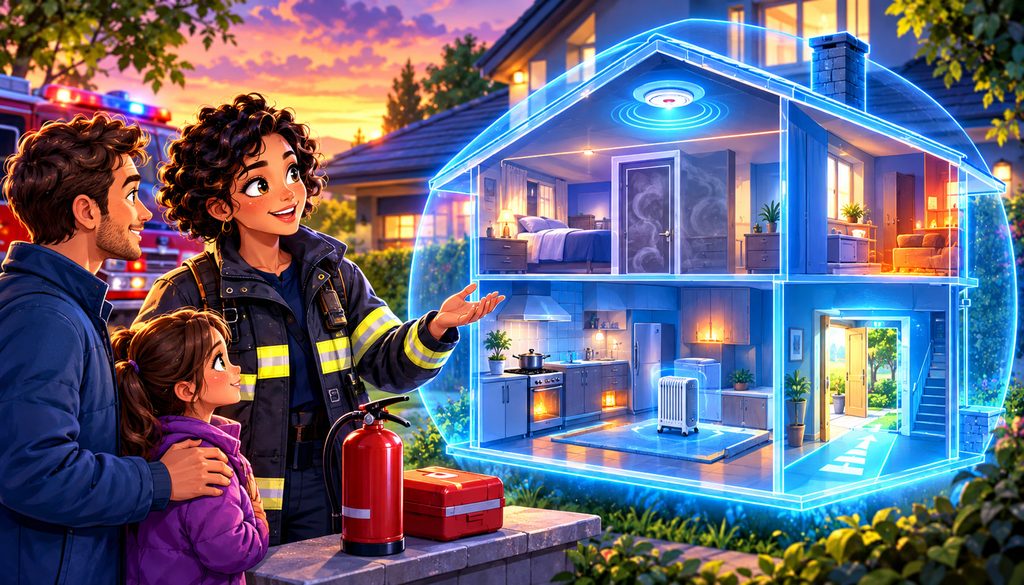
A pan smokes while you answer a message. A heater stands beside a curtain. A charger disappears beneath a pillow. Each seems harmless until heat and fuel combine.
Fire safety means understanding how fires begin and making decisions before an emergency. Preparation matters because smoke can spread before anyone sees flames. The most effective protection combines prevention, early warning, and a practiced escape plan.
What Makes a Fire Start?
A fire needs three elements: heat, fuel, and oxygen. Firefighters call this the fire triangle. Removing one element stops sustained combustion, although real fires are more complicated.
A cooking flame, electrical fault, or overheated object supplies an ignition source. Curtains, cooking oil, and furniture can provide fuel. Combustion releases heat that may ignite nearby objects.
Why Is Smoke Often More Dangerous Than Flames?
Flames attract attention, but smoke can fill rooms, hide exits, and carry hazardous gases. One is carbon monoxide, an invisible gas produced when carbon-containing material burns incompletely. Breathing smoke can impair judgment and movement when quick decisions are critical.
The U.S. Fire Administration warns that people may have less than two minutes to escape after a smoke alarm sounds. Conditions vary, but the lesson remains universal: do not wait to see whether the flames become serious before leaving. Every second matters when visibility is decreasing and temperatures are rising.
Why Do So Many Home Fires Begin in the Kitchen?
Cooking was the leading cause of residential building fires in the United States in 2024, with an estimated 160,300 incidents. Unattended oil can become hot enough to ignite. Keep dish towels, packaging, and loose clothing away from the cooking area.
Stay nearby when frying, grilling, or broiling, and turn off the burner if you must leave. If a small pan fire starts and you can act without danger, carefully slide a fitting metal lid over the pan and turn off the heat. Never pour water onto burning cooking oil or carry the burning pan; if the fire grows or you are unsure, evacuate and call emergency services.
How Can Electrical Fires Be Prevented?
Damaged cords, loose connections, and overloaded equipment can overheat. This may result from excessive electrical resistance at a faulty connection or from currents exceeding what equipment can safely handle. Hot outlets, sparks, and burning smells demand attention.
Replace damaged equipment instead of covering worn cords with tape. Do not run extension cables under carpets or overload multi-outlet adapters. Ask a qualified electrician to investigate recurring faults.
What About Phone Chargers and Lithium-Ion Batteries?
Phones, laptops, power tools, and electric bicycles commonly use lithium-ion batteries. Damaged cells can enter thermal runaway, a self-heating chain reaction that may release flammable gases and start a fire. Swelling, hissing, unusual heat, or smoke are warning signs.
Use approved chargers on firm, uncovered surfaces. Avoid placing charging devices beneath pillows or bedding, and keep large battery-powered equipment away from escape routes. If a battery begins smoking or venting, move away, evacuate as needed, and summon firefighters; do not attempt to handle it.
Are Portable Heaters and Candles Safe?
Portable heaters demand space. Keep them at least three feet (about one meter) from curtains, bedding, furniture, and other flammable materials. Use stable surfaces and wall outlets; switch heaters off when leaving or sleeping.
Candles can also ignite nearby decorations or fabric. Battery-operated lights eliminate the open flame. Never use an oven or stovetop to heat your home.
Where Should Smoke Alarms Be Installed?
A smoke alarm provides warning when smoke reaches its sensor. Install alarms inside bedrooms, outside sleeping areas, and on every level. Interconnected alarms are especially valuable because one detecting smoke can activate the others.
Test alarms monthly and replace units according to their instructions; many require replacement after ten years. Flashing lights or bed shakers help those who cannot hear alarms. Carbon monoxide alarms provide additional protection where relevant but do not replace smoke alarms.
Why Can Closing a Bedroom Door Help?
A closed door may slow the movement of smoke, heat, and flames into a room. That extra separation can matter while occupants are asleep and help preserve precious escape time. Fire-safety researchers emphasize the protective value of closed doors.
Nevertheless, a closed door is not a substitute for detection or escape. Make sure everyone can hear the alarms and knows how to leave safely. If a fire blocks your exit, remain behind a closed door, call emergency services, and tell responders where you are.
What Should Your Family Do If a Fire Starts?
Create a fire escape plan that identifies two possible exits from each room, where feasible, and a meeting place outside. Practice twice yearly with everyone, including those needing assistance. Keep corridors, doors, and windows accessible.
When an alarm sounds, use a safe exit, close doors behind you, and stay low beneath smoke. In multi-story buildings, use stairs rather than elevators unless firefighters direct otherwise. Once outside, call your local emergency number and never reenter a burning building.
When Should You Use a Fire Extinguisher?
A fire extinguisher is intended for small, contained fires, not a substitute for evacuation. Consider using one only if trained, the correct type is available, others are leaving, responders are being called, and your exit is clear. Smoke or rapid fire growth means it is time to leave.
Firefighting belongs primarily to trained professionals. An extinguisher may be useful, but escaping safely is more important than saving property. A few minutes spent checking alarms and clearing exits today can matter far more than expensive equipment bought later.
These habits are easiest to build before an emergency. What is the one fire-safety habit you already follow at home, and which precaution could you improve this week? Share your experience in the comments.
Interesting Facts
- U.S. estimates recorded approximately 160,300 residential cooking fires in 2024.
- A home fire can leave occupants less than two minutes to escape after an alarm sounds.
- Smoke and toxic gases can be more dangerous to occupants than visible flames.
- Interconnected alarms sound throughout the home when any linked unit detects smoke.
- Closing a bedroom door may slow the spread of heat and smoke.
- Water thrown on burning cooking oil can spread the flames.
- Lithium-ion battery failures can involve a rapid self-heating process called thermal runaway.
Glossary
- Fire Triangle — The three elements required to sustain a fire: heat, fuel, and oxygen.
- Combustion — A chemical reaction that releases heat as a substance burns.
- Carbon Monoxide — A poisonous, colorless gas produced by incomplete combustion.
- Electrical Resistance — Opposition to electric current that can generate heat.
- Lithium-Ion Batteries — Rechargeable batteries widely used in portable electronics and electric vehicles.
- Thermal Runaway — A self-accelerating heating process that can lead to battery failure and fire.
- Smoke Alarm — A device that detects smoke and warns people of possible fire.
- Interconnected Alarms — Alarms linked so activation of one causes others to sound.
- Fire Escape Plan — A prepared and practiced strategy for leaving a building safely during a fire.
- Fire Extinguisher — A portable device designed to control certain small fires using an appropriate extinguishing agent.