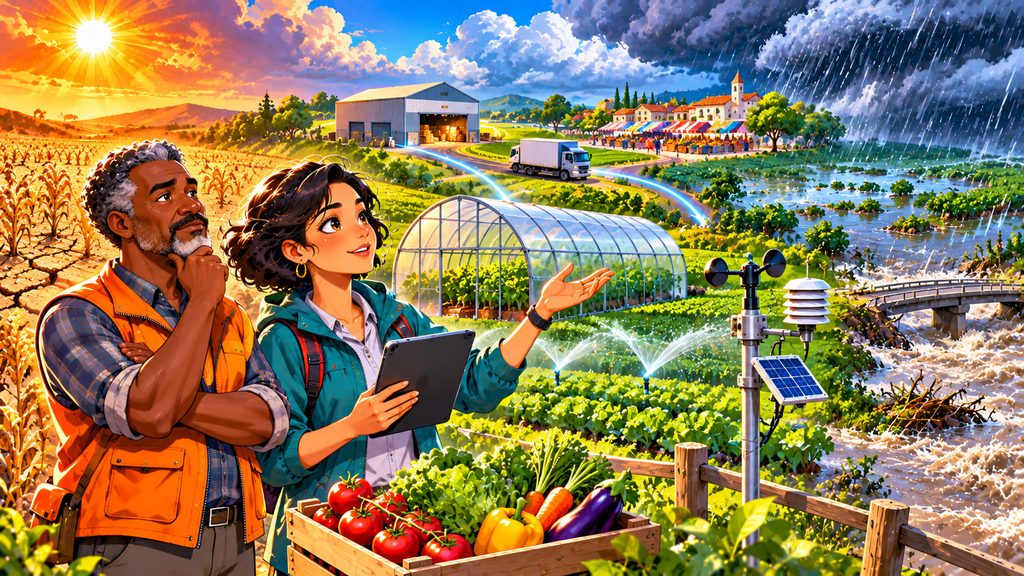
A farmer watches weeks of hard work disappear beneath floodwater. Hundreds of kilometers away, a supermarket struggles to receive fresh vegetables, and shoppers discover that familiar foods suddenly cost more. These events may appear unrelated, but they are connected by the complex networks that bring food from farms to our tables.
Extreme weather can disrupt the entire food system, not just the harvest. Droughts, floods, heatwaves, and storms affect production, transportation, storage, and household budgets. Understanding these connections reveals how communities can prepare for an increasingly unpredictable climate.
Why Food Systems Are Vulnerable to Extreme Weather
A modern food system includes farmers, food processors, warehouses, transportation networks, retailers, and consumers. Each stage depends on reliable resources, infrastructure, and timing. A disturbance in one location can create problems far beyond the affected farmland.
The Food and Agriculture Organization estimated that disasters caused approximately $3.26 trillion in global agricultural losses between 1991 and 2023. These losses involved crops, livestock, fisheries, and other agricultural activities. The consequences extend beyond destroyed food to damaged livelihoods and reduced access to nutritious meals.
How Droughts Reduce Agricultural Production
Crops require water throughout their development, particularly during germination, flowering, and grain formation. During prolonged agricultural drought, insufficient soil moisture interferes with these processes. Plants may grow slowly, produce fewer seeds, or fail before harvest.
Farmers respond through irrigation, changes in planting dates, and varieties adapted to limited rainfall. However, irrigation itself depends on reliable water supplies. When rivers, reservoirs, and groundwater decline together, even sophisticated agricultural regions face difficult decisions.
Why Flooding Can Destroy More Than Crops
Heavy rainfall can submerge fields, damage roots, erode fertile soil, and delay planting. Floodwater may also destroy stored grain, equipment, roads, and irrigation infrastructure. The damage sometimes continues long after the water disappears because saturated fields cannot immediately be replanted.
Pakistan’s devastating 2022 floods demonstrated these interconnected risks. The FAO estimated that approximately 2.6 million hectares of standing crops were affected. Rice, cotton, vegetables, and other products suffered extensive damage, while livestock losses and transportation disruptions intensified the crisis.
How Heatwaves Affect Plants and Farm Animals
Extreme heat disrupts the biological processes supporting agricultural productivity. High temperatures during flowering can reduce successful fertilization in crops such as wheat and rice. Heat also increases evaporation, making existing water shortages more severe.
Livestock experience heat stress when their bodies struggle to maintain safe temperatures. Dairy cattle may produce less milk, while poultry and other animals can experience reduced growth or greater mortality. Farmers increasingly use shade, ventilation, cooling systems, and adjusted feeding schedules to protect their animals.
Why Food Shortages Can Begin After the Harvest
Even a successful harvest must reach consumers safely. Vegetables, meat, dairy products, and seafood often depend on the cold chain, a temperature-controlled system of storage and transportation. Storm-related power failures can interrupt refrigeration and cause valuable food to spoil.
Flooded roads, damaged bridges, and closed ports delay deliveries. A region may have food available in warehouses but lack a reliable way to distribute it. This explains why extreme weather can create local shortages without destroying the entire national harvest.
How Weather Disasters Raise Food Prices
When production declines or transportation costs increase, food prices can rise. The effects depend on international trade, existing inventories, consumer demand, and how easily alternative supplies can be obtained. A failed harvest in a major exporting region can influence markets thousands of kilometers away.
Economists describe rapid changes in prices as price volatility. Low-income households are particularly vulnerable because food already consumes a substantial share of their budgets. The United Nations’ 2025 food security assessment highlighted how elevated food prices undermine access to healthy diets, especially for vulnerable populations.
Are Fisheries and Seafood Also at Risk?
Extreme weather affects food production beyond farmland. Powerful storms can damage fishing boats, coastal facilities, and aquaculture farms. Marine heatwaves may shift fish populations, harm shellfish, and change the ecosystems supporting commercial fisheries.
These disruptions threaten both food supplies and coastal employment. Fishing communities depend on functioning ports, safe working conditions, and stable marine habitats. Protecting seafood production therefore requires climate monitoring alongside responsible fisheries management.
How Farmers Are Adapting to Unpredictable Weather
One important strategy is crop diversification, growing different crops or varieties instead of depending entirely on one harvest. Different plants respond differently to drought, heat, and rainfall. This approach can spread risk while supporting soil health when appropriately managed.
Other measures include improved drainage, water-efficient irrigation, soil-cover practices, and climate-adapted seeds. Agricultural scientist Cynthia Rosenzweig, recipient of the 2022 World Food Prize, has helped demonstrate the importance of integrating climate research with agricultural planning. Her work highlights the value of adapting farming systems to changing environmental conditions.
Can Technology Predict and Reduce Food Crises?
Satellites monitor vegetation, soil moisture, rainfall, and flood damage across enormous regions. These observations support early warning systems that identify emerging agricultural risks before they become full-scale emergencies. Farmers can use forecasts to adjust planting, irrigation, and harvesting decisions.
Digital tools also help governments anticipate shortages and coordinate assistance. Some agricultural insurance programs use predefined weather measurements to trigger compensation, an approach called parametric insurance. However, technology works best when farmers can access reliable information, affordable equipment, and practical support.
What Makes a Food System More Resilient?
Food system resilience means maintaining essential food supplies and recovering when disruptions occur. This requires more than increasing agricultural production. Strong transportation networks, protected storage facilities, functioning markets, and emergency food reserves can all reduce vulnerability.
Local production can shorten some supply routes, while international trade provides alternative supplies when regional harvests fail. Neither approach works perfectly in isolation. Diversity, infrastructure, preparation, and cooperation help food systems withstand unexpected shocks.
Why Preparing Today Matters for Tomorrow’s Food
Extreme weather is already affecting agricultural productivity and food security in many parts of the world. Climate adaptation can reduce losses, but limiting further global warming remains essential to controlling future risks. Every stage of the food system has opportunities to become more efficient and adaptable.
Reducing food waste, supporting resilient agriculture, and improving emergency planning can strengthen food security. What do you think deserves the most attention: protecting farmers, improving transportation and storage, or making nutritious food more affordable? Share your thoughts in the comments.
Interesting Facts
- Disasters caused an estimated $3.26 trillion in global agricultural losses between 1991 and 2023.
- Approximately 2.6 million hectares of standing crops were affected by Pakistan’s 2022 floods.
- Extreme heat can reduce crop yields by disrupting flowering and fertilization.
- Power outages can cause food shortages by interrupting refrigerated storage and transportation.
- Marine heatwaves can damage fisheries and aquaculture, not just coral reefs.
- Satellite monitoring helps identify drought conditions and agricultural damage before food shortages become severe.
- Weather-based agricultural insurance can provide compensation when predefined environmental thresholds are reached.
Glossary
- Food System — The network of activities involved in producing, processing, distributing, consuming, and disposing of food.
- Agricultural Drought — A period when insufficient soil moisture limits crop growth and productivity.
- Heat Stress — Physiological strain caused when excessive temperatures interfere with normal biological functions.
- Cold Chain — Temperature-controlled storage and transportation used to preserve perishable products.
- Price Volatility — The degree to which prices fluctuate over time.
- Crop Diversification — Growing multiple crops or varieties to reduce dependence on a single harvest.
- Early Warning System — A monitoring and communication system designed to identify hazards before their impacts become severe.
- Parametric Insurance — Insurance that provides payment when a predefined measurable condition is met.
- Food System Resilience — The ability of a food system to withstand disruptions, adapt, and recover while maintaining essential functions.