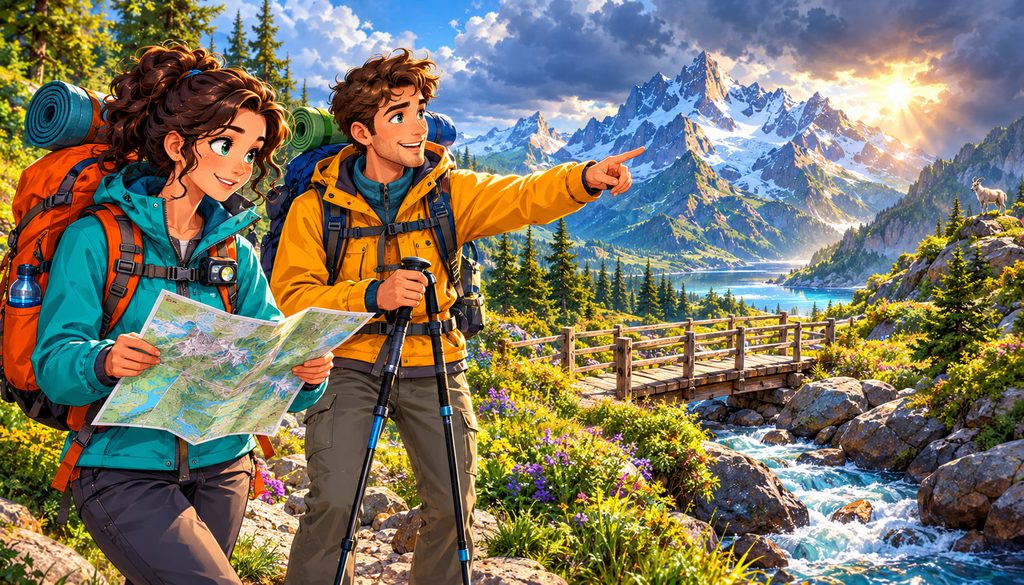
A sunny mountain trail can disappear beneath fog or rain within hours. Far from roads and mobile coverage, a mistake can become serious. Good adventures begin with preparation.
Safe hiking requires neither expensive equipment nor exceptional fitness. It requires understanding terrain, weather, and unexpected hazards. A realistic plan and a few essential skills can make the difference between an unforgettable journey and a dangerous situation.
Plan a Route That Matches Your Abilities
Check trail distance, elevation gain, duration, and difficulty. A short mountain hike may be harder than a longer flat walk. Check trail reports for closures, snow, and difficult crossings.
Plan to return before darkness, and establish a clear turnaround time even if the summit remains tempting. Give someone your route, group details, return time, and overdue contact instructions. This information helps rescuers search efficiently.
Take Mountain Weather Seriously
Mountain weather shifts quickly as air cools and ridges experience strong winds. Check forecasts for your route, not just the nearest town. Pack for conditions that are colder or wetter than expected.
Thunderstorms deserve special attention above the tree line. If thunder sounds, seek a substantial building or enclosed hard-topped vehicle; outdoor locations are unsafe. Do not shelter beneath an isolated tree or assume a tent provides lightning protection. Plan an early descent from exposed summits whenever storms are forecast.
Carry the Ten Essentials
Hiking authorities recommend the Ten Essentials, equipment categories rather than a fixed shopping list. They cover navigation, sun protection, insulation, illumination, first aid, fire-starting equipment, repair supplies, food, water, and emergency shelter. A headlamp, spare batteries, emergency blanket, and first-aid kit matter even on short hikes.
Carry a paper map and compass alongside an offline digital map, and learn to use them before leaving home. Signals disappear in valleys, and batteries drain in cold weather. For remote expeditions, a personal locator beacon or satellite emergency messenger adds another possible way to request help.
Dress for More Than the Forecast
Adjustable clothing layers help manage changing conditions. A moisture-wicking base, insulating layer, and waterproof shell offer flexibility. Wear well-fitting shoes appropriate for the terrain and carry spare socks.
Recognize hypothermia, a dangerous drop in core body temperature that can occur even above freezing when someone is wet, exhausted, or exposed to wind. Signs include shivering, confusion, clumsiness, and fatigue. Seek shelter, replace wet clothing, insulate the person, and request urgent help if symptoms are severe.
Treat Drinking Water Before Using It
Clear streams can contain invisible disease-causing organisms. Plan water around exertion, weather, and refill points. Carry filtration or disinfection equipment suited to the local pathogens.
Boiling is a dependable option when fuel is available. Bring water to a rolling boil for one minute, or three minutes above approximately 6,500 feet (2,000 meters). Never assume that flowing, icy, or apparently pristine water is automatically safe to drink.
Understand Altitude Sickness
At altitude, reduced air pressure lowers available oxygen. Acute mountain sickness can develop in unacclimatized travelers, sometimes above 8,000 feet (2,450 meters), causing headache, nausea, dizziness, or fatigue. Excellent physical fitness does not guarantee protection.
The process of acclimatization requires time, so increase sleeping altitude gradually. High-altitude medicine specialist Peter Hackett has contributed to guidance emphasizing gradual ascent and recognizing early symptoms. Do not climb higher to sleep while symptoms persist; worsening headache, confusion, difficulty walking, or breathlessness at rest demand urgent descent and medical assistance.
Respect Wildlife Without Approaching It
Wildlife encounters are memorable, but approaching animals endangers everyone. Never feed wildlife, and keep food and scented supplies secured according to local park rules. Keep your distance and control pets.
In bear country, hike alertly, make your presence known near blind corners, and carry bear spray where recommended and permitted. If you encounter a bear, do not run; speak calmly and slowly back away when safe. Follow species-specific local guidance rather than assuming every wildlife encounter requires the same response.
Know What to Do if You Get Lost
When landmarks disappear, stop instead of guessing. The STOP method—Stop, Think, Observe, and Plan—helps prevent rushed decisions that take you farther from a known route. Check your map and location before moving.
If you cannot safely retrace your steps, contact emergency services if possible and provide your coordinates and route details. Unless the location is dangerous, staying in one place generally makes it easier for rescuers to find you. Use a whistle, visible clothing, or an emergency signaling device to attract attention.
Be Careful Around Water and Steep Terrain
Rushing streams hide slippery rocks and currents after rain or snowmelt. Never force a crossing merely because it appears on a planned route; turn around or use a safer established bridge. Keep away from unstable cliff edges and remember that loose stones can shift beneath your feet.
Monitor energy, hydration, and weather. Turning around is not a failed adventure; it is often a sign of good judgment. The safest destination is the one you can reach and return from.
Protect the Places You Explore
The principles of Leave No Trace encourage travelers to stay on durable trails, pack out waste, respect wildlife, and minimize campfire impacts. Fragile mountain vegetation recovers slowly from trampling. Check local regulations for camping, fires, and waste disposal before departure.
Preparation reduces decisions made under pressure. Know your limits as well as your destination. What is the one item or safety habit you would never leave behind on a wilderness trip? Share your experience in the comments.
Interesting Facts
- A high-elevation hike can produce colder conditions than the weather forecast for a nearby valley town suggests.
- Lightning remains dangerous even when a thunderstorm seems distant; hearing thunder means you should seek proper shelter.
- Healthy, athletic hikers can develop altitude sickness because fitness does not eliminate susceptibility.
- Hypothermia can occur in wet, windy conditions even when the air temperature is above freezing.
- Crystal-clear wilderness water can still contain disease-causing microorganisms.
- Search teams benefit from knowing a missing hiker’s planned route and expected return time.
Glossary
- Turnaround Time — A planned time to begin returning, regardless of whether the destination has been reached.
- Ten Essentials — Ten categories of equipment intended to help with routine needs and outdoor emergencies.
- Personal Locator Beacon — A device designed to transmit a distress signal to emergency satellite systems.
- Hypothermia — A potentially dangerous reduction in the body’s core temperature.
- Acute Mountain Sickness — An altitude-related illness often involving headache and other symptoms after ascent.
- Acclimatization — Physiological adjustments that help the body function in reduced oxygen availability.
- STOP Method — A decision-making reminder to stop, think, observe, and plan when disoriented.
- Leave No Trace — Principles for reducing environmental damage during outdoor recreation.