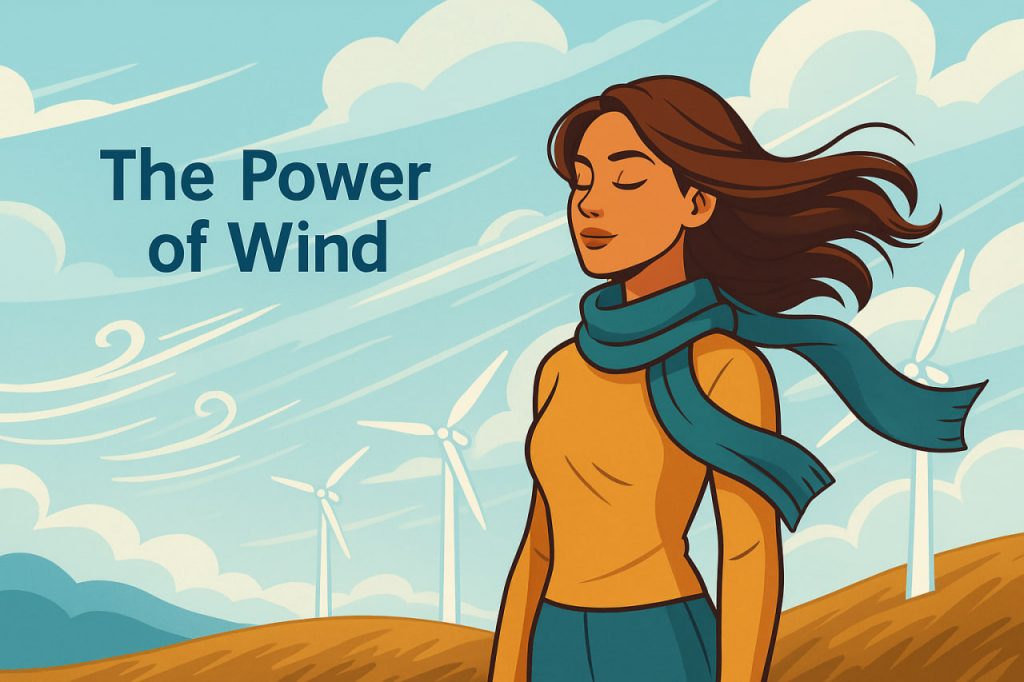
The wind, though invisible, is one of the most powerful and essential forces on Earth. It shapes landscapes, drives weather patterns, and sustains life by circulating heat, moisture, and gases throughout the planet’s atmosphere. From the gentle summer breeze to the destructive power of a hurricane, wind influences everything—from ecosystems to human civilization. For thousands of years, people have relied on it for travel, energy, and even inspiration, symbolizing freedom, change, and movement. Understanding the science and significance of wind helps us appreciate how deeply connected we are to the planet’s dynamic atmosphere.
The Science Behind the Wind
Wind is the movement of air caused by differences in temperature and pressure within the atmosphere. When sunlight warms the Earth’s surface unevenly, some areas heat up faster than others. Warm air, being lighter, rises, while cooler air rushes in to replace it—creating wind. This simple principle drives all global wind systems, from small local breezes to massive jet streams that encircle the planet. The Earth’s rotation also affects wind direction through the Coriolis effect, which causes air to curve rather than move in a straight line. Meteorologist Dr. Samuel Ortiz explains, “The wind is the Earth’s way of balancing itself—redistributing heat and energy to maintain atmospheric stability.”
The Global Wind Patterns
The planet’s winds do not move randomly—they follow organized patterns known as global circulation cells. These include the Hadley, Ferrel, and Polar cells, which determine climate zones and ocean currents. Near the equator, trade winds blow steadily from east to west, powering tropical weather systems. In mid-latitudes, the westerlies move storms and air masses across continents, while the polar easterlies dominate cold regions. These large-scale wind patterns influence rainfall, temperature, and even the distribution of vegetation around the world. Without them, Earth’s climate would be far more extreme and unstable.
The Power and Use of Wind
For centuries, humans have harnessed the power of wind for practical purposes. Ancient sailors used it to navigate vast oceans, while windmills in medieval Europe ground grain and pumped water. In modern times, wind energy has become one of the cleanest and most sustainable forms of electricity generation. Wind turbines convert kinetic energy from moving air into electrical power without producing greenhouse gases. Countries like Denmark, the Netherlands, and the United States now rely heavily on wind farms to reduce their dependence on fossil fuels. According to environmental engineer Dr. Lucia Novak, “Wind power represents the perfect balance between ancient wisdom and modern technology—it’s nature’s gift turned into clean energy.”
The Wind’s Influence on Nature and Life
Wind is also a vital part of natural ecosystems. It disperses seeds, spreads pollen, and carries moisture across continents. Many plants and trees rely on it for reproduction, while birds and insects use air currents for migration and flight efficiency. In deserts, wind sculpts dunes into graceful shapes, while in coastal regions, it helps distribute sand and regulate temperatures. However, the same force that sustains life can also cause destruction. Powerful winds during hurricanes, tornadoes, and dust storms can reshape landscapes and endanger lives. This dual nature of wind—creative and destructive—makes it one of Earth’s most fascinating natural phenomena.
The Symbolism and Cultural Meaning of Wind
Throughout history, wind has held deep symbolic meaning across cultures. In ancient mythology, it was often personified as a deity or spirit representing freedom, change, and the breath of life. In Greek mythology, the four winds—Boreas, Notus, Eurus, and Zephyrus—governed the directions and seasons. In many Eastern traditions, wind symbolizes impermanence and transformation, reminding humans of life’s constant motion. Poets and artists have long used wind as a metaphor for inspiration, freedom, and the invisible forces that guide destiny. Psychologist Dr. Helena Zhao observes, “Wind resonates with the human spirit because it mirrors our emotions—sometimes calm and soothing, sometimes wild and uncontrollable.”
The Future of Wind and Humanity
As humanity faces the challenges of climate change, wind plays an increasingly important role in creating a sustainable future. Expanding wind energy capacity helps reduce carbon emissions and dependency on non-renewable resources. Researchers are developing offshore wind farms and high-altitude turbines that can capture stronger, more consistent winds. However, it remains essential to balance technology with environmental stewardship, ensuring that wind energy development respects wildlife and ecosystems. The partnership between humans and wind—ancient and enduring—may hold the key to a cleaner, more harmonious planet.
Interesting Facts
- The fastest recorded wind speed on Earth was 407 km/h (253 mph) during Tropical Cyclone Olivia in 1996.
- Wind energy now powers over 10% of global electricity production.
- The word “monsoon” comes from the Arabic mausim, meaning “season,” referring to seasonal wind changes.
- The shape of sand dunes can reveal the dominant wind direction in a desert.
- Birds such as albatrosses can glide thousands of miles using wind currents without flapping their wings.
Glossary
- Coriolis effect — The apparent deflection of moving air caused by Earth’s rotation.
- Jet stream — A fast-flowing air current high in the atmosphere that influences weather patterns.
- Hadley cell — A large-scale atmospheric circulation pattern near the equator that drives trade winds.
- Wind turbine — A device that converts wind energy into electrical power.
- Offshore wind farm — A collection of wind turbines located in ocean waters to capture strong sea winds.