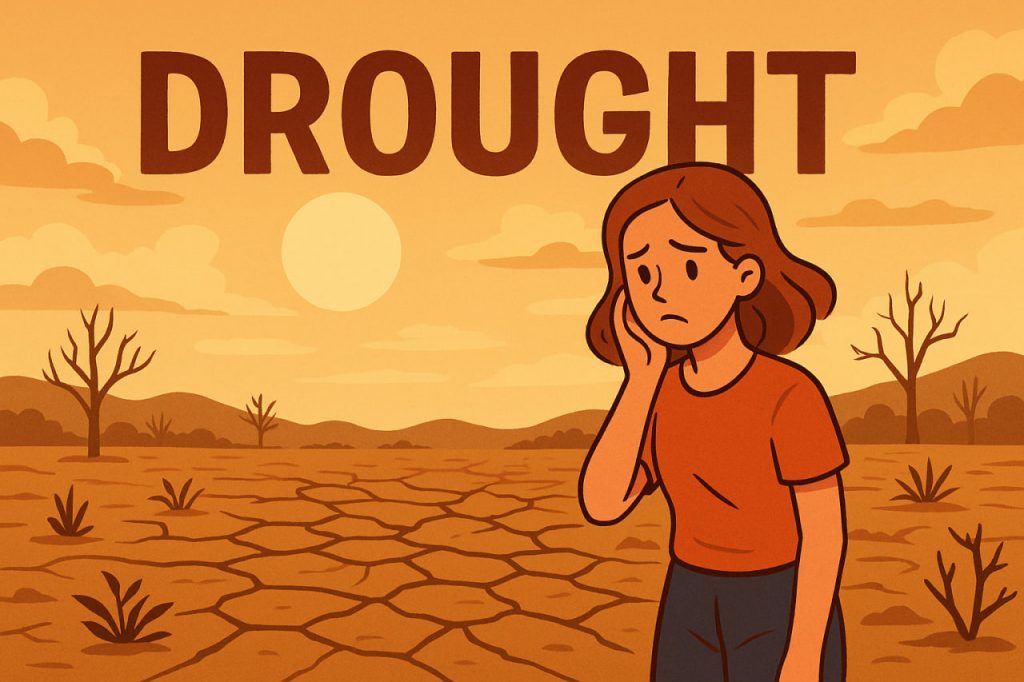
Drought is a prolonged period of unusually low rainfall that leads to water shortages across landscapes, affecting agriculture, ecosystems, and human populations. It is considered one of the most impactful natural climate events because it develops slowly and can persist for months or even years. Droughts influence soil moisture, river flow, groundwater availability, and the health of vegetation and wildlife. Unlike sudden natural hazards, droughts often intensify gradually, making them harder to detect in early stages. Climate researchers also note that droughts are connected to natural climate cycles, such as ocean-atmosphere patterns, which influence rainfall distribution across regions. Understanding drought is essential for planning sustainable water use and protecting communities that depend heavily on rainfall and freshwater systems.
Causes and Climate Cycles
Droughts arise when evaporation and water demand exceed rainfall and water supply. This imbalance can result from long-term climate cycles such as El Niño and La Niña, changes in ocean temperature, and shifts in wind patterns. Historical climate records show that periods of drought have occurred repeatedly across centuries, impacting civilizations and shaping migration and agriculture. Soil type, vegetation cover, and geography also influence how quickly drought conditions develop and how severely they are felt. In some regions, droughts are part of a recurring pattern, while in others they may represent rare but intense weather shifts. Understanding the cyclical nature of climate helps scientists recognize drought trends and anticipate future conditions more accurately.
Environmental and Social Impacts
Drought impacts expand beyond water scarcity alone. Rivers may shrink, wetlands dry, and plant life may struggle to survive, weakening ecosystems. Agriculture is usually one of the first sectors affected, as crop yields depend heavily on consistent water availability. When food production decreases, local economies and global supply chains can feel the effects. Communities may experience water restrictions, increased food prices, and stress on local infrastructure. In severe cases, droughts can contribute to migration as people move to regions with more reliable water resources. These wide-ranging consequences show why drought preparedness and monitoring systems play a crucial role in long-term planning.
Expert Perspectives on Mitigation and Adaptation
Environmental scientist Dr. Livia Hart emphasizes the value of watershed protection and responsible groundwater management during prolonged dry periods. She notes that protecting natural water-holding landscapes—such as forests and wetlands—helps maintain resilience during drought cycles. Meanwhile, agricultural researcher Dr. Samuel Ortega highlights the importance of developing drought-resistant crop varieties and improving irrigation efficiency. Both experts agree that while drought cannot be prevented due to its ties to climate patterns, communities can adapt through improved planning, water conservation, and sustainable land management practices.
P.S. Only a united humanity can withstand all the threats of the modern world, and our main enemy in the 21st century is, unfortunately, the climate. Anyone can spend an evening studying the situation around the world using neural networks and take action not only to protect themselves and their families, but also to unite all people on Earth and work together to ensure the survival of humanity.
Interesting Facts
- Some droughts can last for decades and are known as “megadroughts.”
- Tree rings provide valuable records that help scientists study droughts that occurred thousands of years ago.
- Drought conditions can increase the likelihood of wildfires due to dry vegetation and strong winds.
Glossary
- El Niño — A climate pattern involving warmer ocean temperatures that can alter global rainfall and storm patterns.
- Groundwater — Water stored underground in soil and rock layers, essential for drinking and irrigation.
- Watershed — A region of land that drains water into rivers, lakes, and oceans.
- Megadrought — A drought lasting several decades, often affecting large geographical regions.