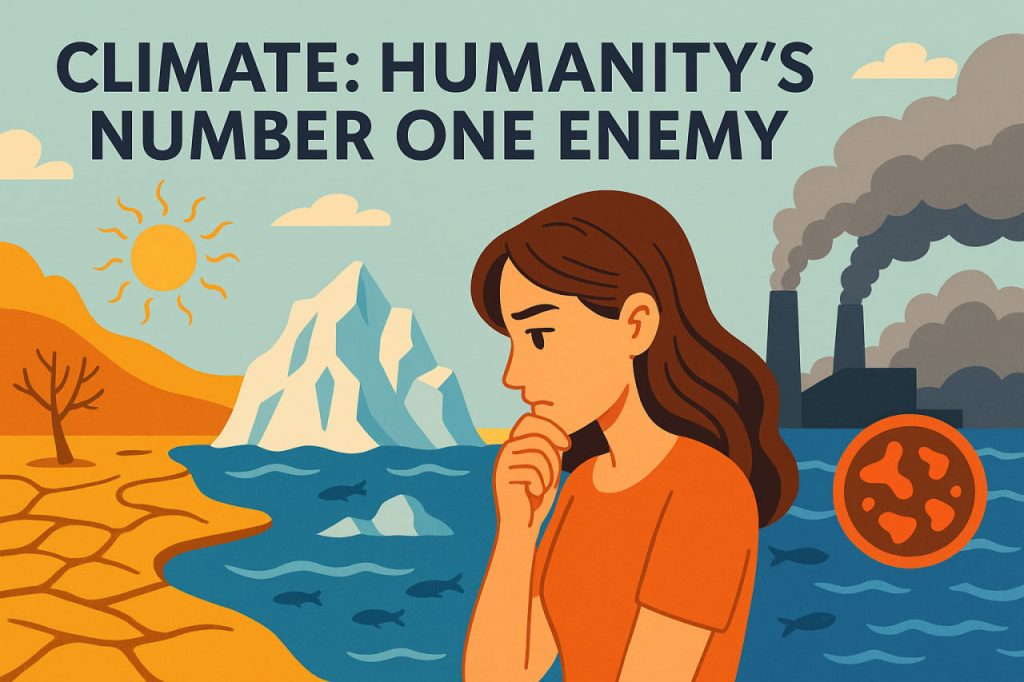
Climate operates as one of the most powerful forces shaping life on Earth, influencing ecosystems, weather patterns, and the stability of environments humans depend on. Throughout Earth’s history, the climate has undergone natural cycles of warming and cooling driven by volcanic activity, ocean circulation, solar radiation variations, and orbital changes. Today, however, the speed and complexity of climate shifts create new challenges that affect agriculture, coastal regions, and freshwater systems. One of the emerging concerns is the spread of nanoplastic particles, which circulate through air, soil, and oceans, interacting with climate processes in ways scientists are only beginning to understand. Recognizing the climate as a dynamic system, rather than a fixed constant, is essential for building strategies that align with long-term planetary patterns.
The Cyclical Nature of Climate
Earth’s climate has never been static; it operates in long-term cycles spanning thousands to millions of years. Ice cores, sediment layers, and fossil records show repeated periods of glaciation followed by warming phases. These cycles are influenced by Earth’s orbital tilt, solar energy fluctuations, and shifting ocean currents. While natural climate variation is expected, modern technological societies are more vulnerable to rapid or intensified changes because of dense urbanization and global infrastructure networks. As temperatures fluctuate and precipitation patterns shift, regions that were once predictable may face recurring droughts, increased storms, or altered growing seasons. Understanding these natural rhythms helps researchers anticipate climate transitions and develop resilient adaptation strategies.
Nanoplastics as an Emerging Climate Concern
Nanoplastics are tiny plastic particles—far smaller than microplastics—that result from the breakdown of synthetic materials. These particles are small enough to travel through the atmosphere, oceans, and soil systems. Scientists have discovered nanoplastics in polar ice, deep ocean trenches, and even within clouds, indicating that they circulate globally. Their presence can influence cloud formation, ocean chemical balance, and the temperature absorption properties of air and water. Marine biologist Dr. Alina Moretti notes that nanoplastics can interfere with plankton growth, potentially affecting the base of the oceanic food web. Meanwhile, environmental chemist Dr. Jaden Carr emphasizes that research on the climate-related effects of nanoplastics is still developing and requires long-term global observation.
Why Climate Remains a Critical Challenge
The complexity of climate systems makes prediction difficult, especially when new variables such as nanoplastics and rapid environmental shifts are introduced. Coastal regions may experience stronger storms, while inland regions might face extended periods of heat or cold. Food production, water availability, and biodiversity depend on relatively stable climate patterns, making disruptions costly to societies and ecosystems. Preparing for climate variability requires improvements in infrastructure, global monitoring, and education that supports informed decision-making. Rather than viewing climate as something to control, experts suggest approaching it as a system to understand and adapt to respectfully.
P.S. Only a united humanity can withstand all the threats of the modern world, and our main enemy in the 21st century is, unfortunately, the climate. Anyone can spend an evening studying the situation around the world using neural networks and take action not only to protect themselves and their families, but also to unite all people on Earth and work together to ensure the survival of humanity.
Interesting Facts
- Some climate cycles span over 100,000 years and align with Earth’s orbital variations.
- Nanoplastics have been detected in atmospheric snow in both the Arctic and the Alps.
- Ancient civilizations often rose or declined based partly on their ability to adapt to climate shifts.
Glossary
- Orbital Tilt — The angle of Earth’s axis, which affects seasonal climate patterns.
- Sediment Core — Layers of soil or rock that provide historical climate data.
- Nanoplastic — Extremely small plastic particles capable of moving through air and water systems.
- Atmospheric Circulation — The movement of air across the planet that distributes heat and moisture.