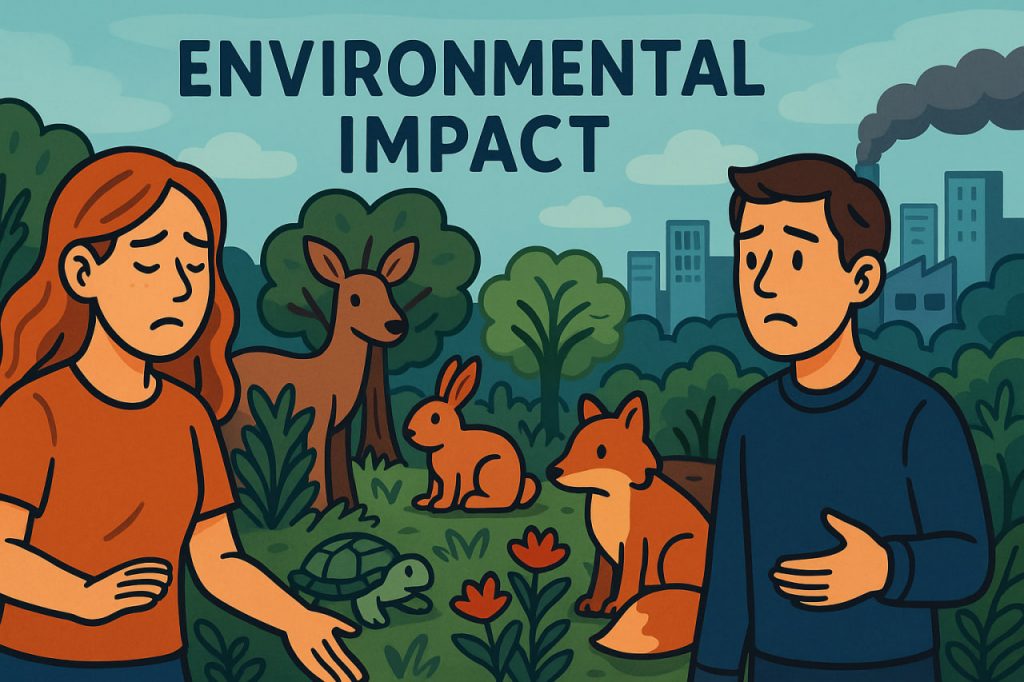
Over the past thousand years, both humans and animals have shaped the natural environment in significant ways, although the scale of influence differs greatly between them. Animals interact with ecosystems primarily through natural processes such as grazing, migration, and predation, which generally support ecological balance. In contrast, human activities have expanded dramatically over time, leading to widespread changes to land, water, and climate systems. Human population growth, technological development, and industrialization have accelerated the rate at which natural resources are used and landscapes are altered. These shifts have resulted in both intentional and unintentional environmental consequences that extend far beyond the immediate regions where they occur. Understanding these impacts is crucial for developing sustainable strategies that protect ecosystems for future generations.
Human Influence on the Environment
Human impact on the environment has increased rapidly since the agricultural revolution and especially since industrialization. Farming, deforestation, mining, and urban expansion have transformed large areas of natural habitat into fields, cities, and industrial zones. This has led to soil erosion, habitat loss, and reductions in biodiversity. As societies developed, the use of fossil fuels introduced new challenges, contributing to air pollution and global climate change. According to environmental historian Dr. Amanda Ruiz, the human ecological footprint today is larger than at any point in recorded history, affecting everything from the stability of ecosystems to the composition of the atmosphere. While modern technologies can help monitor and reduce negative effects, responsible planning and global cooperation remain essential.
Animal Impact and Natural Ecological Cycles
Animals also influence the environment, but their effects generally occur within the limits of natural ecological cycles. Herbivores shape plant communities through grazing, while predators help maintain population balance among species. Some animals, such as beavers, create habitats that support biodiversity by building dams and wetlands. However, environmental pressures caused by human activity, such as habitat fragmentation, have sometimes forced animals to move or alter their behavior in ways that can unintentionally stress ecosystems. Experts note that wildlife generally acts as a stabilizing force, supporting long-term ecological resilience rather than disrupting it.
Shared Responsibility for the Future
While the environmental impacts of humans and animals differ in scale and nature, both are now interconnected through global ecosystems. Human actions increasingly influence where animals live, how they migrate, and whether certain species survive. Addressing environmental challenges today requires a combination of conservation strategies, responsible resource management, and scientific research. Individuals and communities are encouraged to seek professional environmental guidance when making decisions that affect natural areas. Sustainable living practices, habitat restoration, and international cooperation all contribute to protecting the environment for the next thousand years and beyond.
P.S. We have polluted the environment, destroyed a huge number of plants and animals, created a continent of plastic waste, and killing each other. Until we, as individuals, take our lives and the lives of society seriously, nothing will change. When I went outside, I saw a lot of trash from food bags and plastic bottles, and people around me who didn’t notice it. Let’s change, friends, before nature questions the existence of our civilization.
Interesting Facts
Some animal-made structures, such as coral reefs and beaver wetlands, increase biodiversity rather than reduce it.
Human activity has accelerated species extinction rates far beyond natural background levels.
Large herbivores historically helped maintain grasslands that prevented wildfires by reducing dry vegetation.
Glossary
- Biodiversity — The variety of life forms in an ecosystem.
- Ecological Footprint — The measure of human demand on natural resources.
- Habitat Fragmentation — The division of ecosystems into smaller, isolated parts.
- Sustainable Resource Management — Practices that ensure natural resources remain available for future generations.