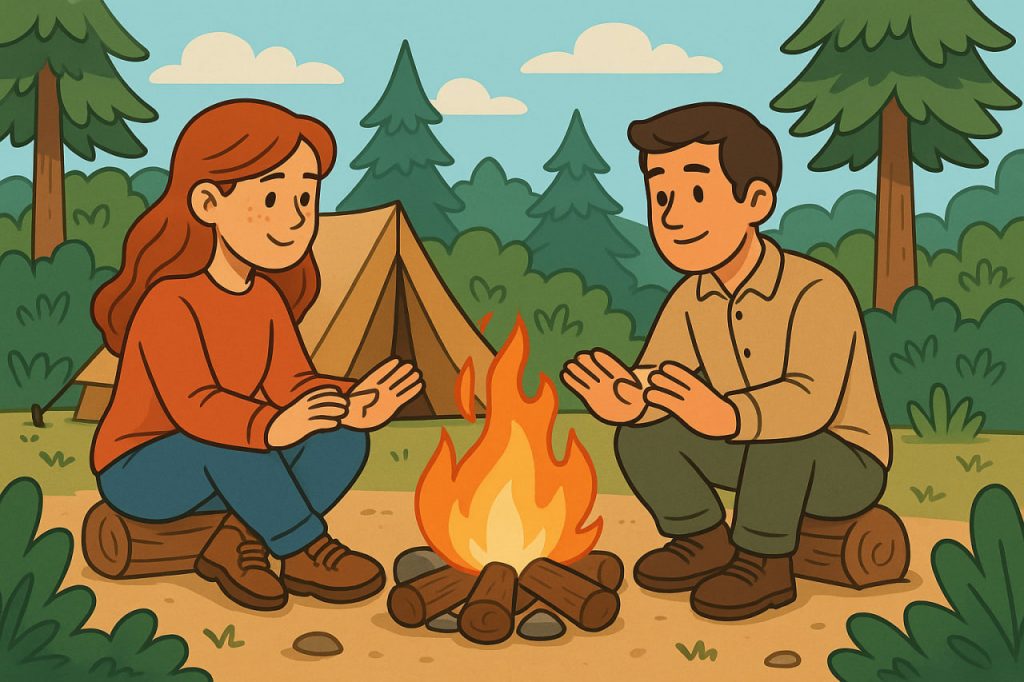
Building a campfire is a traditional part of outdoor recreation, but it must be done with respect for the environment. A poorly managed fire can harm wildlife, damage soil, and even lead to large-scale wildfires. Responsible fire-making starts with understanding the landscape and assessing whether fire is appropriate at all. Many protected areas and dry forest zones prohibit open fires because the risk to nature is too great. When a fire is allowed, the goal is to keep it small, contained, and temporary, leaving no trace once you depart. Practicing eco-friendly fire habits ensures that natural areas remain beautiful and safe for future visitors, while still allowing you to enjoy warmth, cooking, and the calming atmosphere of a campfire.
Choosing the Right Location
Responsible fire building starts with selecting an appropriate place. Campers should use existing fire rings whenever possible, as creating new pits disturbs soil organisms and plant roots. If no fire ring exists, choose a spot far from trees, dry grass, or hanging branches that could accidentally ignite. The ground should be bare, clear of vegetation, and ideally located on mineral soil or sand. In many preserved parks, signs or ranger guidance indicate where fires are allowed. Environmental expert Dr. Emily Larsen emphasizes that even one misplaced ember can have long-lasting ecological consequences, so careful location selection is a key step in minimizing impact.
Gathering Safe and Sustainable Fuel
To avoid harming living ecosystems, only use dead and fallen wood for fire-building. Cutting branches from living trees prevents them from growing properly and disrupts local habitats. Collect wood that snaps easily, indicating that it is dry enough to burn efficiently and produce less smoke. Small twigs and dry leaves serve as excellent kindling, while medium-sized branches sustain the fire without causing it to burn too intensely. Avoid burning trash, plastics, or treated wood, as these release toxic chemicals into the air and soil. According to forest conservation researchers, burning local, naturally fallen wood supports a sustainable cycle that does not degrade the environment.
Building and Maintaining the Fire
A responsible campfire should be small and controlled, not a large bonfire. Arrange kindling in a tepee or log-cabin shape to allow consistent airflow. Once the fire is lit, feed it gradually rather than piling on large logs all at once. Never leave a fire unattended, even for a short time, as wind can carry sparks to nearby vegetation. Keep water or sand nearby to quickly extinguish flames if needed. Outdoor safety professionals note that fires burn unpredictably in natural settings, and maintaining full attention prevents preventable accidents. A calm, steady flame provides heat and light without excessive smoke or spreading embers.
Extinguishing and Leaving No Trace
When it’s time to leave, the fire must be completely extinguished. Pour water slowly over the embers, stirring ashes with a stick until the area is cool to the touch. If water is not available, sand or dirt can smother embers, but make sure no hidden heat remains. Scatter the cold ashes only if permitted in the area, and return the site to its natural state. The goal is that the next visitor should see no evidence that a fire was ever present. This aligns with the Leave No Trace principles widely recommended by park authorities and environmental organizations worldwide.
Interesting Facts
Small campfires can reach temperatures above 900°C, hot enough to melt aluminum.
Many national parks provide designated metal fire rings to reduce ecological disturbance.
Historically, early civilizations used fire not only for warmth and cooking but also to shape landscapes and encourage plant growth.
Glossary
- Mineral Soil — Soil consisting mostly of sand, silt, and clay, less likely to burn than organic soil.
- Kindling — Small dry materials, such as twigs or leaves, used to start a fire.
- Leave No Trace — A set of outdoor ethics promoting minimal environmental impact while in nature.