Global warming refers to the long-term increase in Earth’s average surface temperature, primarily driven by the accumulation of greenhouse gases such as carbon dioxide, methane, and nitrous oxide. These gases trap heat in the atmosphere, preventing it from escaping into space — a process known as the greenhouse effect. While this effect is natural and necessary for life, human activities such as burning fossil fuels, large-scale agriculture, and deforestation have intensified it. As a result, the climate system is changing faster than many species — including humans — can easily adapt. These changes influence temperature patterns, weather systems, ocean conditions, and ecosystems worldwide, altering natural rhythms and environmental stability.
Rising Temperatures and Heat Extremes
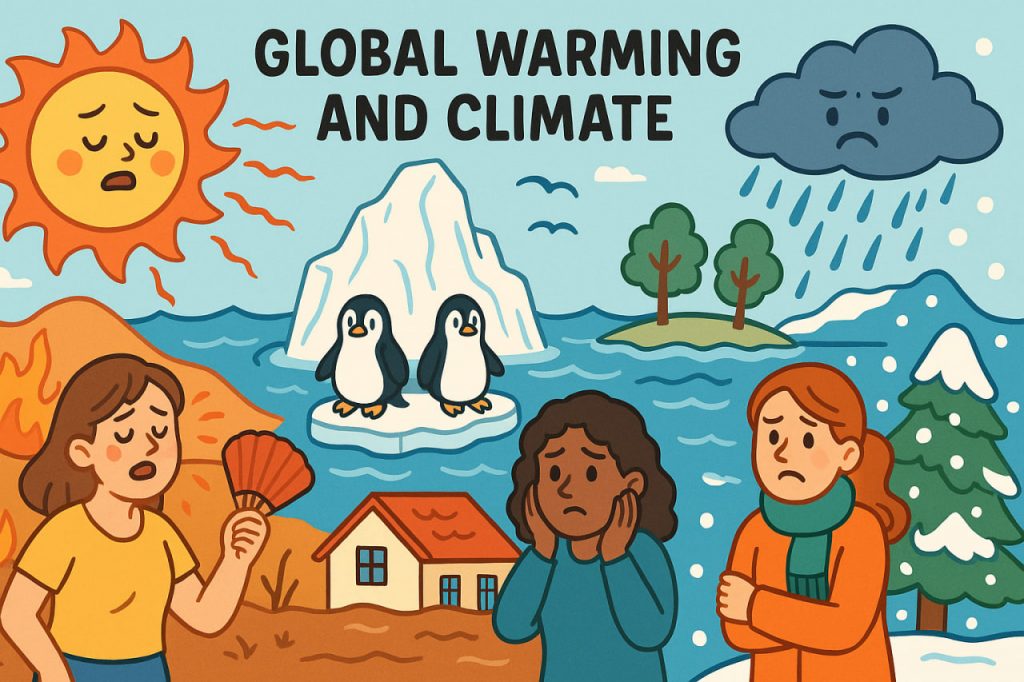
As global temperatures rise, heatwaves are becoming more frequent, longer-lasting, and more intense. Regions that once had moderate climates now experience higher summer peaks, which can impact health, agriculture, and infrastructure. Warmer conditions can also lead to increased evaporation and soil moisture loss, contributing to drought. The impact is not limited to hot climates — even traditionally cool or cold regions are warming significantly, altering wildlife behavior and plant growth cycles.
Expert Insight (Climate Science):
“What we observe is not just warming, but the destabilization of climate patterns. The system is shifting — and unpredictability is becoming the new normal.”
Changes in Weather Patterns
Global warming intensifies the water cycle, meaning moisture moves more rapidly between the atmosphere and the Earth’s surface. This results in heavier rainfall events in some regions, increased flooding risk, and more frequent storms. In contrast, other regions become drier due to decreased precipitation and higher evaporation rates. These shifting patterns create new challenges for agriculture, water supply, and disaster preparedness. Extreme weather events — hurricanes, heatwaves, wildfires — are becoming more common and more destructive.
Melting Ice and Rising Sea Levels
One of the most visible effects of global warming is melting ice in the Arctic, Antarctic, and mountain glaciers. As ice melts, sea levels rise, threatening coastal communities, wetlands, and freshwater sources. Melting ice also reduces the planet’s natural cooling effect, because ice reflects sunlight. Without it, more heat is absorbed by darker ocean surfaces, further accelerating warming in a feedback loop. Ecosystems dependent on ice — such as polar bears and cold-water plankton — face severe habitat loss.
Impact on Ecosystems and Biodiversity
As climates shift, many species struggle to survive in changing conditions. Some migrate to new regions, while others face extinction if they cannot adapt. Coral reefs, forests, and tundra environments are among the ecosystems most sensitive to temperature change. The decline in biodiversity weakens ecosystem stability, reducing natural resilience to diseases and environmental stress. Humans, too, are affected — as food chains, agriculture zones, and disease patterns shift.
P.S. Everyone today sees what is happening to the planet’s climate, and the issue of uniting all of humanity is more urgent than ever. If you’re interested in what we can do today to ensure a better tomorrow for our children, please leave a comment.
Interesting Facts
- The past eight years have been the warmest on record globally.
- Arctic temperatures are rising four times faster than the global average.
- Small island nations are already developing relocation plans due to rising sea levels.
Glossary
- Greenhouse Effect — A natural process where certain gases trap heat in the atmosphere.
- Biodiversity — The variety of living organisms in an ecosystem.
- Feedback Loop — A process where an effect amplifies itself, accelerating change (e.g., melting ice leading to more warming).