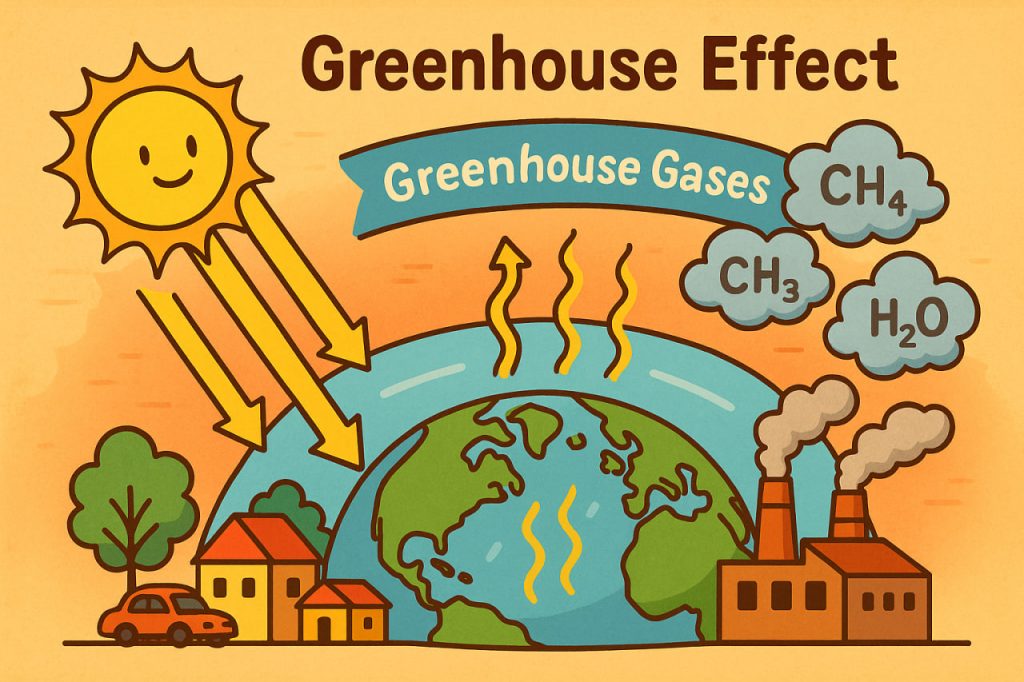
The greenhouse effect is a natural atmospheric process that helps regulate the Earth’s surface temperature and maintain conditions suitable for life. It occurs when certain gases in the atmosphere — such as carbon dioxide (CO₂), methane (CH₄), and water vapor — trap a portion of the heat that the planet radiates back into space. Without this effect, the Earth would be too cold to sustain most forms of life. However, human activities have increased the concentration of greenhouse gases, intensifying this natural process. As a result, more heat remains in the atmosphere, leading to a rise in global temperatures. Understanding the greenhouse effect is essential for addressing climate change and protecting environmental stability.
How the Greenhouse Effect Works
When sunlight reaches the Earth, part of it is absorbed by the land and oceans, warming the planet. The Earth then releases heat in the form of infrared radiation. Greenhouse gases act like a thermal blanket: they allow sunlight to pass through but absorb and re-radiate heat, preventing some of it from escaping into space. This retained heat warms the atmosphere and surface. While some level of greenhouse effect is beneficial — without it, Earth’s average temperature would be about -18°C — excessive greenhouse gas buildup causes too much heat retention, resulting in global warming.
Human Influence on the Greenhouse Effect
Human activity has intensified the greenhouse effect since the Industrial Revolution. Burning fossil fuels for energy, large-scale agriculture, and deforestation increase CO₂ and methane levels in the atmosphere. Industrial processes and transportation also contribute to the emission of nitrous oxide and fluorinated gases. These changes disrupt the natural balance of heat exchange, raising global temperatures and altering climate systems. The accelerated warming affects weather patterns, sea levels, and biodiversity.
Expert Insight (Climate Science):
“The greenhouse effect itself is essential for life.”
Consequences of an Enhanced Greenhouse Effect
A strengthened greenhouse effect leads to more frequent heatwaves, shifts in rainfall patterns, and more intense storms. Ocean temperatures rise, contributing to coral bleaching and altering marine ecosystems. Melting ice in polar regions raises sea levels, threatening coastal communities. Changes in climate can affect agriculture, water availability, and public health. These effects vary by region, but together they form a global environmental challenge that requires coordinated action.
Solutions and Mitigation Strategies
Strategies include transitioning to renewable energy sources, improving energy efficiency, restoring forests, and adopting low-impact agricultural practices. On an individual level, conservation habits such as reducing energy use, choosing sustainable transportation, and minimizing waste can contribute to lowering emissions. International agreements, such as the Paris Climate Accord, aim to coordinate global efforts and set long-term goals for limiting warming.
P.S. In order to cope with the threat of climate change, we need to unite at least at the level of scientists and engage in international cooperation. And thanks to the internet, anyone can do a lot. If you, my friend, are interested in what can be done today to ensure the planet’s future, please leave a comment.
Interesting Facts
- Without the natural greenhouse effect, Earth would be about 33°C colder than it is now.
- Carbon dioxide levels are currently higher than at any point in at least 100 years.
- Water vapor is the most abundant greenhouse gas, but CO₂ has the strongest role in long-term warming due to its persistence in the atmosphere.
Glossary
- Greenhouse Gases — Gases that trap heat in the atmosphere, contributing to the greenhouse effect.
- Infrared Radiation — Heat energy emitted by the Earth’s surface after absorbing sunlight.
- Mitigation — Strategies aimed at reducing or preventing climate change impacts.