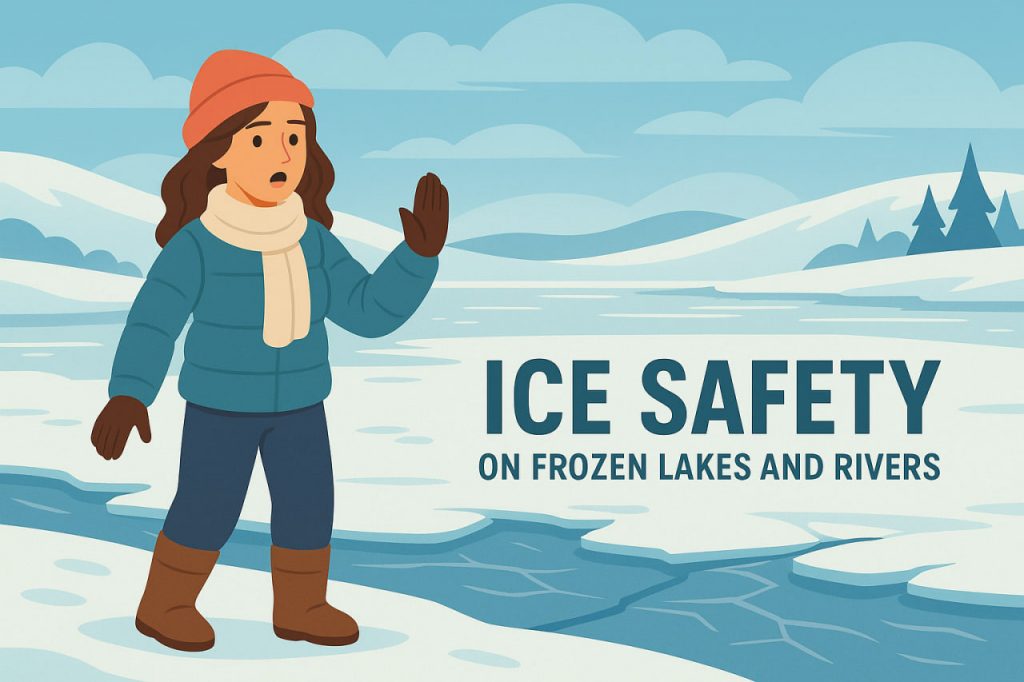
Ice safety is an essential topic for anyone who spends time near frozen lakes, rivers, or ponds during winter. Although ice may appear solid from the surface, its strength depends on temperature, thickness, water movement, and environmental conditions. Frozen bodies of water can change rapidly, becoming safe one day and dangerously unstable the next. People who skate, fish, walk, or travel across ice must understand these risks to avoid accidents and maintain awareness of surrounding conditions. Researchers emphasize that natural ice differs dramatically from manufactured ice rinks because it forms unevenly and is influenced by currents, snow, and freeze–thaw cycles. Learning how ice forms, weakens, and breaks helps individuals recognize warning signs and navigate frozen environments responsibly.
How Ice Forms and What Makes It Strong or Weak
Ice strength depends on temperature consistency, rate of freezing, and the characteristics of the water beneath it. Lakes typically freeze more uniformly than rivers because moving water disrupts the freezing process. Snow cover can insulate ice, slowing freezing and hiding weak areas that appear solid from above. According to environmental scientist Dr. Karen Bishop, rapid temperature changes cause layered ice with varying densities, making it less reliable under pressure. She explains that clear, blue ice is generally stronger than white or opaque ice, which often contains trapped air or slush. Thin ice near shorelines, inflows, and outflows is especially hazardous because water movement prevents stable formation. Understanding these formation patterns helps predict which areas of frozen water may be unsafe.
Common Hazards on Frozen Lakes and Rivers
Frozen lakes and rivers present several hazards that can be difficult to detect without experience. Cracks, air pockets, pressure ridges, and thawed areas can weaken ice in unpredictable ways. Ice near docks, bridges, vegetation, and underground springs is often thinner than in open areas. Weather conditions such as strong sunlight, warm afternoons, or rain can rapidly reduce ice integrity even in the middle of winter. Outdoor safety researcher Dr. Marcus Hall notes that rivers are particularly dangerous because currents constantly erode the underside of the ice. He emphasizes that even ice that appears thick may not support weight in moving water zones. These hazards highlight the importance of maintaining distance from irregular or discolored ice patches.
Recognizing Warning Signs of Unsafe Ice
Observing visual and auditory cues is an important part of assessing ice safety. Dark areas typically indicate thin ice, while slushy or wet surfaces suggest melting and weakened structure. Cracking sounds, while not always dangerous, may signal stress in the ice sheet and should not be ignored. Spiderweb-like fractures, open water sections, and soft edges along shorelines also indicate unstable conditions. Snow-covered ice can be deceptively dangerous because snow hides flaws and adds extra weight. Even experienced outdoor enthusiasts rely on tools such as ice augers or picks to test thickness rather than trusting appearance alone. Developing an awareness of these warning signs helps individuals make informed decisions before stepping onto frozen water.
Human Activity and Ice Stability
Human presence on ice adds stress that can cause sudden failure, especially when multiple people or vehicles gather in one area. Vibrations from walking, driving, or equipment can weaken ice or trigger cracks. Areas used frequently for fishing holes may have compromised structural integrity around openings. The weight distribution of snowmobiles or ATVs can be particularly dangerous if ice conditions vary across short distances. Scientists studying ice stress note that temperature fluctuations make ice more brittle, increasing the likelihood of breakage under pressure. Understanding how human activity interacts with natural ice dynamics helps reduce the likelihood of accidents.
Interesting Facts
Clear blue ice is often twice as strong as milky white ice.
Moving water beneath ice—such as in rivers—can weaken a frozen surface even during extreme cold.
Snow insulates ice, which slows freezing and can hide hazardous areas.
Ice thickness can vary dramatically within just a few meters, especially near shorelines and currents.
P.S. No matter how experienced you are, it’s better to avoid the lake or river on ice. Why take unnecessary risks with your life?
Glossary
- Pressure Ridge — a raised line of ice formed when sheets collide and buckle due to shifting water below.
- Air Pocket — a trapped cavity under the ice that reduces structural strength.
- Insulation Effect — snow’s ability to trap heat and slow ice formation.
- Thaw Cycle — repeated freezing and melting that weakens ice layers.