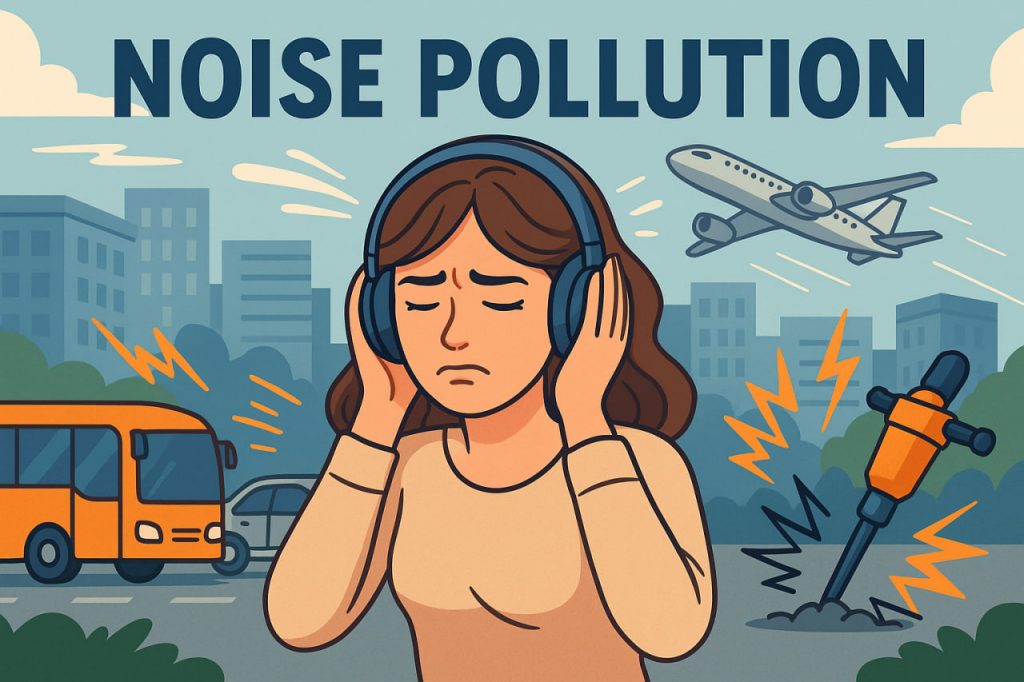
Noise pollution refers to unwanted or harmful levels of sound that disrupt natural environments, human health, and daily activities. It is generated by transportation systems, industrial facilities, urban development, and even certain household technologies. As cities grow and technological activity intensifies, noise pollution has become an increasingly significant environmental issue affecting millions of people worldwide. Scientific studies show that exposure to persistent loud noise can influence physical health, cognitive performance, and emotional well-being. Wildlife is also negatively affected, with many species struggling to communicate, navigate, and reproduce in noisy environments. Understanding the complexity of noise pollution is essential for developing effective mitigation strategies and promoting healthier living conditions.
Major Sources of Noise Pollution
Noise pollution originates from a wide range of human activities, both indoors and outdoors. Transportation—such as road traffic, aviation, and rail systems—is considered the largest contributor to global noise levels. Industrial machinery, construction work, and energy production facilities also generate constant or intermittent noise that can exceed safe thresholds. Residential sources, including loud music, home appliances, and densely populated buildings, contribute significantly in urban regions. Environmental acoustics expert Dr. Sandra Collins explains that noise levels often rise in areas where infrastructure expands faster than regulation. She notes that even everyday technologies, such as air conditioners or leaf blowers, cumulatively create a persistent background noise that affects quality of life. These multiple sources interact to form complex and often unavoidable soundscapes.
Impact on Human Health and Cognition
Noise pollution affects more than just comfort—it has measurable impacts on physical and mental health. Long-term exposure to high noise levels is associated with increased stress, elevated blood pressure, and disrupted sleep patterns. Even moderate noise can impair concentration, memory, and decision-making, especially in children. Cognitive health researcher Dr. Michael Harper states that chronic noise activates the body’s stress response, increasing cortisol levels and influencing cardiovascular function. He emphasizes that nighttime noise is particularly damaging because it interrupts essential sleep cycles that support recovery and emotional stability. Studies indicate that communities living near airports or major highways experience higher rates of anxiety, sleep disturbances, and reduced productivity.
Environmental and Ecological Consequences
Noise pollution also affects ecosystems, disrupting wildlife behavior and biodiversity. Many animals rely on sound for communication, hunting, mating, and predator avoidance. Excessive noise can mask these acoustic signals, forcing animals to change their behaviors or move away from noisy areas. Marine ecosystems are especially vulnerable, as underwater noise from ships, sonar, and industrial activity can interfere with the navigation and migration patterns of whales, dolphins, and fish. Forest and desert species also face communication challenges when exposed to loud or persistent environmental noise. Over time, these disruptions can alter population dynamics and weaken ecological resilience.
Urbanization and Global Challenges
Rapid urban growth has intensified noise levels across the world, particularly in densely populated cities where transportation networks and human activity overlap. High-rise buildings can reflect and amplify sound, creating urban canyons that trap noise. Public events, crowded commercial districts, and continuous traffic contribute to soundscapes that rarely fall below recommended health thresholds. Governments and international organizations have begun to classify noise pollution as a major environmental and public health concern. Addressing this issue requires coordinated efforts such as better urban planning, improved sound insulation, and technological innovations that reduce mechanical noise. While progress has been made, global noise levels continue to rise in many regions.
Interesting Facts
Noise pollution is considered one of the fastest-growing environmental threats in urban areas.
Bird species living in noisy cities often change their songs to higher pitches to be heard over traffic.
Underwater noise can travel hundreds of kilometers, affecting marine life far from its source.
The World Health Organization reports that millions of people lose sleep due to nighttime noise exposure each year.
Glossary
- Acoustic Masking — interference caused when loud sounds prevent animals or humans from hearing important signals.
- Cortisol — a stress hormone released by the body in response to noise and other stressors.
- Urban Canyon Effect — sound amplification caused by tall buildings reflecting noise between narrow streets.
- Decibel (dB) — a unit used to measure sound intensity.