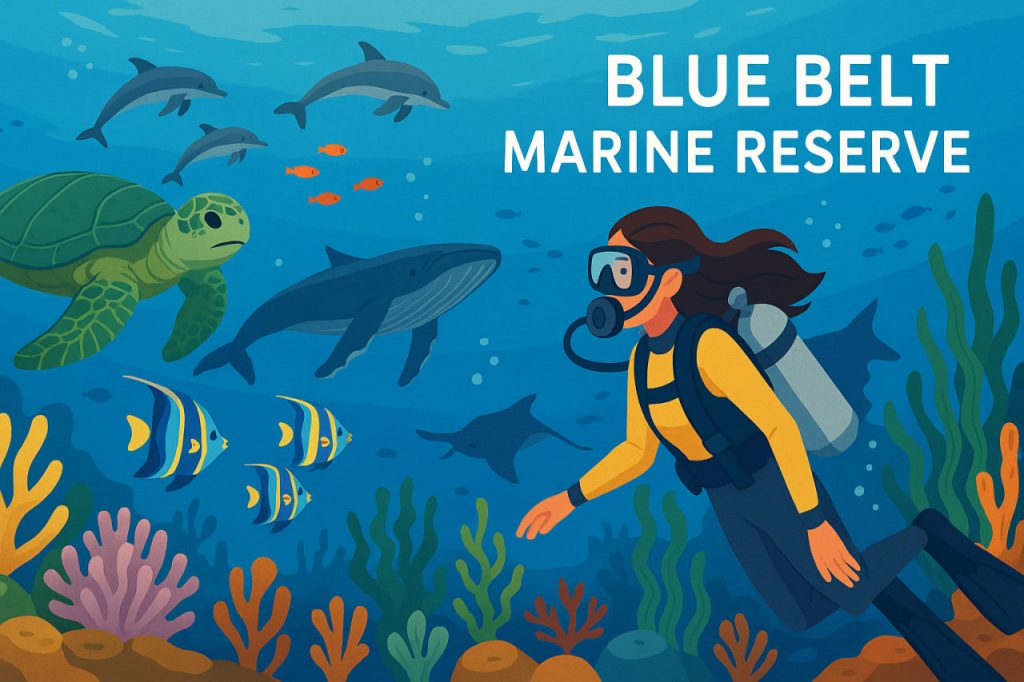
The Blue Belt Marine Reserve is an ambitious international conservation initiative designed to protect vast areas of the world’s oceans, preserve biodiversity, and support the health of marine ecosystems crucial to the planet’s climate and food systems. Covering millions of square kilometers, Blue Belt regions safeguard fragile coral reefs, migratory routes, deep-sea habitats, and coastal environments threatened by pollution, overfishing, and climate change. These marine reserves serve as sanctuaries where ecosystems can recover naturally, allowing fish populations to replenish, endangered species to thrive, and essential ecological processes to continue undisturbed. As global marine environments face increasing stress, the Blue Belt represents one of the most effective solutions for restoring ocean resilience and ensuring sustainable use of marine resources in the future.
Purpose and Global Importance of the Blue Belt
The Blue Belt program protects marine areas that are vital for maintaining oceanic health and biodiversity. These regions include spawning grounds, feeding areas, coral nurseries, seagrass meadows, and deep-sea ecosystems. By restricting harmful activities such as industrial fishing, mining, and uncontrolled tourism, the initiative helps restore natural balance and prevent further degradation. Many of these protected zones also play a crucial role in carbon sequestration, absorbing significant amounts of CO₂ through marine vegetation and sediment. According to marine ecologist Dr. Helena Warren:
“Marine reserves are not just about saving wildlife —
they are critical infrastructure for stabilizing the planet’s climate and food security.”
This makes the Blue Belt an essential part of global environmental strategy.
Marine Life Protected by the Blue Belt
Blue Belt reserves support a wide variety of species, from massive ocean predators to microscopic plankton. These sanctuaries help protect sea turtles, whales, dolphins, manta rays, sharks, and thousands of fish species that depend on stable habitats. Coral reefs within these protected areas host some of the most diverse ecosystems on Earth. Kelp forests and seagrass meadows provide shelter and food for countless marine organisms while serving as natural carbon sinks. Many reserves also include migratory corridors used by marine animals traveling across oceans to breed or feed. By protecting these routes, scientists ensure species survival across entire ocean basins.
Threats Addressed by the Blue Belt
The world’s oceans face multiple threats, including overfishing, plastic pollution, habitat destruction, illegal trade, and climate-driven disruptions such as warming waters and acidification. Blue Belt regions create legally protected zones where harmful activities are limited or entirely prohibited. This approach allows damaged ecosystems to rejuvenate and helps prevent further collapse of marine populations. Research shows that fish biomass inside well-managed marine reserves can increase by more than 500% over time, benefiting both nature and coastal societies that rely on sustainable fishing outside reserve boundaries.
Scientific Research and Monitoring
Blue Belt marine reserves serve as living laboratories for researchers studying climate change, biodiversity, and ecosystem recovery. Scientists use drones, underwater robots, satellite tracking, and acoustic sensors to monitor animal movements, coral health, water quality, and deep-sea activity. These protected zones provide baseline data on what healthy marine ecosystems look like, helping scientists understand how human activities affect the ocean. Research from these areas has already revealed new species, advanced coral-restoration techniques, and improved strategies for marine conservation.
Community Involvement and Sustainable Practices
Local communities play a vital role in maintaining the Blue Belt. Many coastal regions rely on fishing and tourism for economic survival, making them key partners in conservation. By promoting sustainable fishing practices, eco-tourism, and environmental education, the Blue Belt initiative helps communities transition toward long-term prosperity while safeguarding natural resources. In many regions, local guardians monitor protected areas, prevent illegal activities, and support scientific research efforts.
Interesting Facts
- Marine reserves can increase local biodiversity by up to 21% within a few years.
- Seagrass meadows in Blue Belt regions capture carbon 35 times faster than tropical rainforests.
- Some protected zones are larger than entire countries, covering millions of square kilometers.
- Many whale species use Blue Belt areas as critical breeding and feeding grounds.
- Coral reefs inside marine reserves recover four times faster than those in unprotected waters.
Glossary
- Marine Reserve — a protected area of ocean where human activities are regulated or restricted to preserve ecosystems.
- Biodiversity — the variety of life within an ecosystem, including plants, animals, and microorganisms.
- Carbon Sequestration — the natural process of capturing and storing carbon dioxide.
- Seagrass Meadow — underwater fields of flowering plants essential for marine life and carbon storage.
- Ecosystem Recovery — the natural process through which damaged habitats return to health.