Descending a mountain may seem easier than climbing up, but in reality it is one of the most technically demanding and risky parts of any hike. When going downhill, the body works differently: joints take increased pressure, balance becomes more difficult to maintain, and muscles tire faster than many people expect. Because of this, improper descent techniques often lead to injuries, slips, or loss of control. Understanding how to descend safely helps protect knees, ankles, and hips while maintaining stability on loose terrain, steep slopes, or rocky paths. Proper technique also allows hikers to conserve energy and reduce stress on the body, making the entire journey more enjoyable and safer overall. Whether you are a beginner or an experienced mountaineer, learning the fundamentals of downhill movement is essential for any outdoor adventure.
Body Position and Balance Control
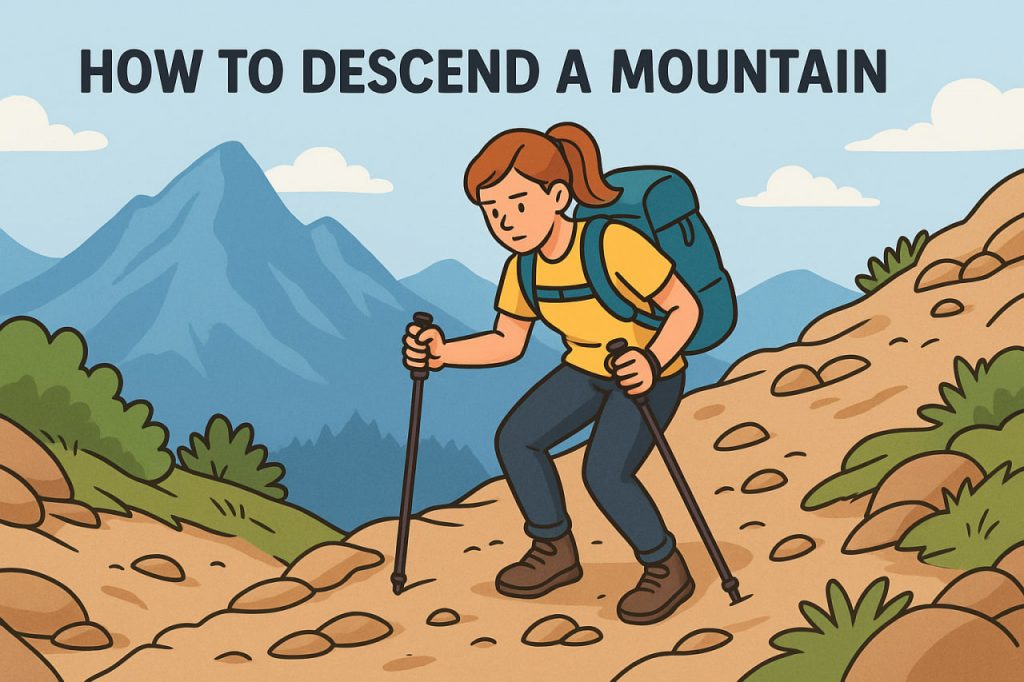
The most important factor in a safe descent is maintaining the correct body posture. Leaning too far back can cause slipping, while leaning too far forward increases the risk of falling. The ideal position is a slightly lowered center of gravity with knees bent, steps controlled, and your torso leaning slightly forward. This stance helps you remain stable even on uneven surfaces. According to mountain guide Dr. Lucas Meyer:
“Descending is all about controlled movement —
every step should be deliberate, not rushed.”
Keeping your weight centered over your feet allows you to react faster and adjust easily to rocks, roots, and shifting ground.
Proper Footwork and Step Technique
Safe mountain descent requires precise and careful foot placement. Instead of long strides, hikers should take short, controlled steps that improve balance and reduce strain on the joints. On loose gravel or scree, stepping sideways can increase stability. On rocky surfaces, placing your foot flat helps maximize grip. When the terrain becomes steep, many experienced hikers adopt a technique where the heel touches first before lowering the rest of the foot — this reduces pressure on the knees and provides better traction. Practicing mindful stepping helps you anticipate obstacles and choose the safest path.
Using Hiking Poles for Support
Hiking poles are invaluable tools when descending a mountain. They help reduce impact on the knees, improve balance, and support controlled movement during steep or slippery sections. Poles should be lengthened slightly for downhill portions so they can absorb part of your body weight and act as stabilizers. They allow you to test surfaces before stepping, especially on wet rocks, muddy slopes, or snowy trails. Using poles properly can increase descent efficiency by distributing load between the upper and lower body.
Managing Speed and Preventing Slips
A common mistake among hikers is descending too quickly, which increases the likelihood of losing balance. Maintaining a steady, moderate pace helps avoid fatigue and reduces the chance of slipping. On unstable ground, it’s important to keep your feet under your center of gravity and avoid sudden movements. Wearing appropriate footwear with strong traction can significantly improve safety. Slips often occur when hikers mentally “switch off,” so staying alert and aware of terrain changes is essential throughout the descent.
Navigating Difficult Terrain
Different terrains require different descent techniques. On rocky slopes, look for natural steps formed by stones and avoid loose rocks when possible. On muddy or snowy sections, zigzagging across the slope can reduce steepness and improve control. Forest trails filled with roots require slow, careful foot placement to avoid tripping. When the descent becomes extremely steep, some hikers choose to lower themselves using hands, or in very rare cases, carefully descend backward like climbing down a ladder. The key is adapting your technique to the environment and staying flexible.
Energy Conservation and Physical Safety
Descending a mountain can be more exhausting than climbing, especially for the knees and quadriceps. Taking regular breaks helps prevent muscle fatigue and keeps reflexes sharp. Staying hydrated is equally important because dehydration slows reaction time and reduces coordination. Listening to your body ensures that you maintain strength and stability throughout the descent. Energy-efficient movement helps make the journey enjoyable and reduces the risk of strain or injury.
Interesting Facts
- Knee joints absorb up to three times more force when descending compared to ascending.
- Professional hikers often descend faster yet safer because they take smaller, more controlled steps.
- Trekking poles can reduce downhill knee strain by up to 25%.
- Many trails experience the highest number of accidents during descent, not ascent.
- Experienced climbers zigzag steep slopes to reduce angle and increase stability.
Glossary
- Center of Gravity — the point in the body that balances weight and affects stability.
- Scree — small loose stones found on mountain slopes.
- Traction — the grip of your footwear on various surfaces.
- Zigzagging — descending diagonally across a slope to reduce steepness.
- Stride — the length and style of stepping when walking or hiking.