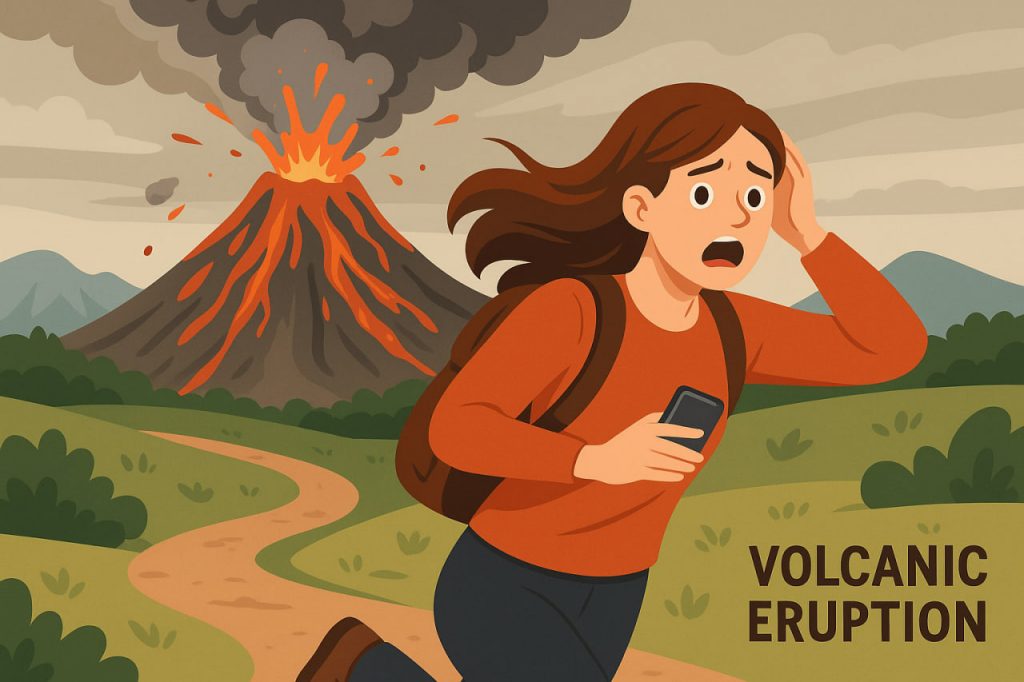
A volcanic eruption is one of the most dangerous natural events on Earth, capable of releasing ash clouds, lava flows, toxic gases, and fast-moving pyroclastic currents. When an eruption begins nearby, people have only limited time to act, making preparedness and quick decision-making essential. Volcanic hazards vary widely depending on the volcano type, distance, and weather conditions, but all eruptions pose significant risks to life and infrastructure. Understanding what to do before, during, and after an eruption can dramatically increase survival chances. Emergency agencies recommend treating any sign of volcanic activity — earthquakes, ashfall, loud rumbling, or ground deformation — as a serious warning. Because every minute counts, having clear instructions helps people stay safe and avoid the most dangerous zones.
Immediate Actions When the Eruption Begins
If a volcano erupts near you, the first priority is to get to safety as quickly as possible. Authorities typically issue evacuation orders based on scientific monitoring, but if you see ash clouds or explosions, treat them as immediate danger signs. Move indoors or begin evacuation if instructed. Close all windows and doors to prevent ash inhalation and avoid driving unless absolutely necessary — ash can severely reduce visibility and damage engines. According to emergency-response specialist Dr. Lauren Hayes:
“During an eruption, every decision should focus on minimizing exposure —
ash, gases, and pyroclastic flows are far more dangerous than lava itself.”
Listening to official alerts is essential because conditions can change rapidly.
Avoiding the Most Dangerous Volcanic Hazards
Some volcanic hazards are survivable with proper shelter, while others are nearly always lethal. Pyroclastic flows — hot, fast-moving clouds of ash and gas — must be avoided at all costs, as they can reach speeds over 700 km/h. Low-lying valleys, riverbeds, and slopes near the volcano should be evacuated immediately. Lava flows usually move slower but can destroy structures and ignite fires. Volcanic ash is extremely harmful when inhaled; use masks, cloth filters, or even a wet cloth to cover your nose and mouth if professional protection is unavailable. Stay away from rivers or streams, as volcanic mudflows (lahars) can surge without warning.
Sheltering Safely Indoors
If evacuation is not possible, the safest choice is to shelter indoors. Seal gaps around windows and vents and keep pets inside. Avoid turning on fans or air-conditioning units that draw outdoor air inside. Place towels at the base of doors and stay in interior rooms away from roof areas where ash might accumulate. Keep flashlights ready, because ash clouds can turn daylight into darkness. Store clean water and cover food supplies to avoid contamination from falling ash.
Evacuation Guidelines
When evacuation orders are issued, follow them immediately. Bring essential supplies such as water, masks, protective eyewear, medications, and sturdy clothing. Drive slowly and carefully, as ash-covered roads can become slippery. Avoid stopping near bridges, slopes, or river crossings. Always evacuate upwind and uphill from the eruption if conditions allow. Emergency shelters will have information on air quality, safe zones, and family-reunification procedures.
Health and Safety After the Eruption
After the eruption subsides, hazards may still be present. Volcanic ash can remain in the air for days and irritate the eyes, lungs, and skin. Clean surfaces using damp cloths instead of sweeping to prevent ash from becoming airborne again. Avoid drinking water that may have been contaminated. Stay tuned to official updates about air quality, road closures, and potential secondary eruptions. Returning home too early can be dangerous if structures are weakened or if ashfall continues.
Staying Informed and Prepared
Volcanoes often show warning signs before major eruptions. Learning to recognize them — such as increased earthquake activity, rapid ground swelling, or strong sulfur smells — can save lives. Emergency kits, evacuation plans, and communication strategies help individuals and families respond quickly in crisis situations. While eruptions cannot be prevented, informed preparedness reduces risk and improves survival outcomes.
P.S. Please, friends, if you have the opportunity to leave the area around a volcano that is erupting or may erupt, do so in advance. The residents of Pompeii had the opportunity to evacuate, but they did not have enough time.
Interesting Facts
- Pyroclastic flows can reach temperatures of over 1,000°C and are faster than a jet airplane.
- Fine volcanic ash is as sharp as glass, which is why it can damage lungs and machinery.
- Some eruptions can inject ash into the stratosphere, affecting global climate for years.
- Animals often flee volcanic areas hours before humans notice danger signs.
- The 2010 Eyjafjallajökull eruption grounded over 100,000 flights due to airborne ash.
Glossary
- Pyroclastic Flow — a fast-moving cloud of hot gas and volcanic debris.
- Lahar — a destructive volcanic mudflow formed by ash mixing with water.
- Ashfall — fine volcanic particles that fall from an eruption cloud.
- Evacuation Zone — areas designated unsafe during volcanic activity.
- Stratosphere — the atmospheric layer above the troposphere where ash from large eruptions may travel.