Harvesting mushrooms is a rewarding outdoor activity that combines nature exploration, knowledge of forest ecosystems, and careful identification skills. Whether done for culinary purposes, recreation, or scientific interest, proper mushroom gathering requires attention to safety, environmental responsibility, and preservation of forest habitats. Mushrooms are delicate organisms that play essential roles in soil formation, nutrient recycling, and tree health — meaning responsible harvesting helps maintain biodiversity. Learning the right techniques allows people to enjoy edible species without damaging the mycelium, the underground fungal network that sustains future growth. Understanding how to identify mushrooms, where to collect them, and how to process them safely is crucial for avoiding mistakes, including picking toxic varieties.
Many mushroom species resemble one another closely, making identification the most important part of the process. Even experienced foragers use multiple reference points — the cap, stem, gills, smell, color changes, habitat, and season. Responsible gathering also means respecting natural areas, avoiding over-harvesting, and leaving rare or unknown species untouched. With the right knowledge and tools, mushroom foraging becomes a sustainable and enriching activity.
Identifying Mushrooms Safely
The first rule of mushroom foraging is simple: never eat a mushroom unless you are 100% certain of its identification. Many toxic species mimic edible varieties, and even small mistakes can be dangerous. Foragers should consult detailed field guides, join mycology groups, and learn from experts. Key features to observe include:
- cap shape, color, and texture
- gill attachment and color
- spore print characteristics
- stem thickness and surface patterns
- bruising reactions
- habitat (forests, meadows, tree types)
According to mycology specialist Dr. Eleanor Briggs:
“A mushroom’s appearance alone is never enough —
proper identification requires understanding multiple features and their variations.”
Beginners should avoid risky groups like Amanita species and always cross-check unfamiliar finds.
Tools and Preparation
A proper mushroom-gathering trip requires simple but essential tools:
- a basket or breathable bag to prevent decay
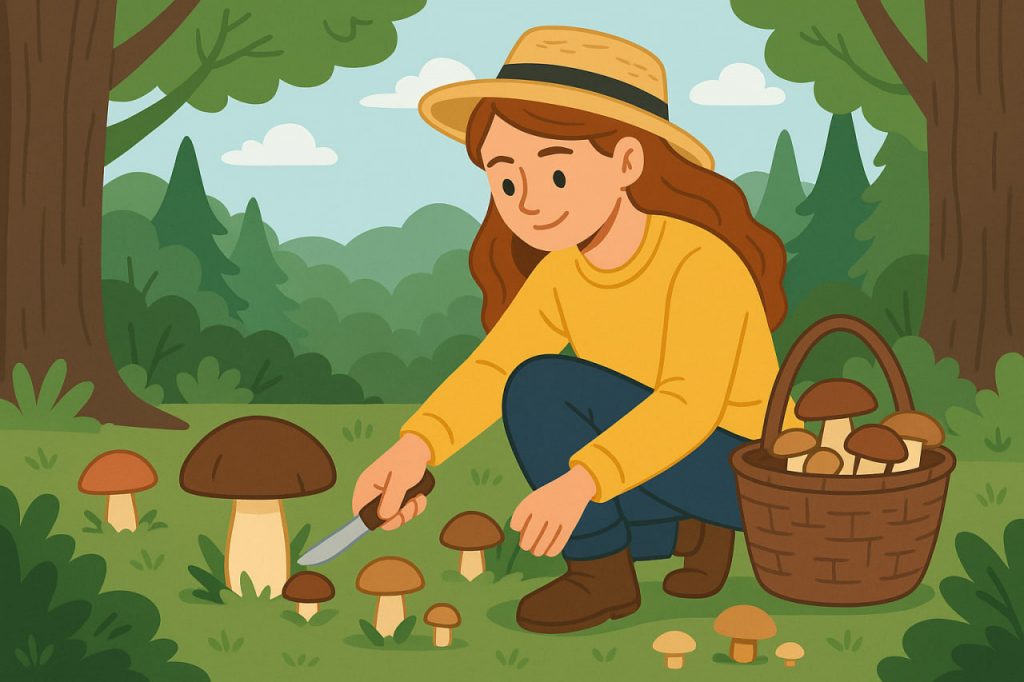
- a small knife for clean harvesting
- a brush for removing dirt
- identification guides or apps
- waterproof clothing and sturdy shoes
Carrying mushrooms in airtight plastic bags should be avoided, as they can spoil quickly due to trapped moisture.
How to Harvest Mushrooms Without Damaging the Forest
Different mushroom species can be harvested using slightly different methods, but general guidelines include:
- Cutting the stem with a knife at the base instead of pulling
- Leaving young and old mushrooms to sustain the population
- Not disturbing soil or mycelium, the underground network
- Avoiding over-harvesting from a single spot
- Leaving rare or unknown species untouched
Proper technique protects mycelial networks, ensuring mushrooms grow again the following season.
Where to Find Mushrooms
Mushrooms thrive in humidity, shade, and nutrient-rich soil. Common habitats include:
- mixed and conifer forests
- rotting logs and stumps
- mossy areas
- meadows near trees
- moist leaf litter
Seasonality plays a major role: many edible species appear in early autumn, while others peak in spring or after heavy rain.
Handling and Storing Mushrooms
Once harvested, mushrooms should be cleaned gently using a brush, not washed with water, to prevent them from becoming soggy. Store them in breathable containers in the refrigerator and consume them within two to three days. Some species can also be dried or frozen for long-term use. Proper storage preserves texture and flavor while maintaining nutritional value.
Safety Considerations
Even edible mushrooms can cause discomfort if improperly prepared. Some require cooking to remove natural toxins. Individuals with allergies should test small portions first. Foragers must also avoid collecting mushrooms near polluted areas, such as roadsides or industrial zones, as mushrooms absorb contaminants from the environment.
Interesting Facts
- Mushrooms are more closely related to animals than plants on the evolutionary tree.
- Some mushrooms grow overnight, expanding rapidly after rainfall.
- Mycelium networks can stretch for kilometers beneath the forest floor.
- A single mushroom can release millions of spores into the air.
- The world’s largest organism is a mycelium in Oregon covering over 9 km².
Glossary
- Mycelium — the underground fungal network responsible for nutrient exchange and mushroom growth.
- Spore Print — a pattern created by mushroom spores, useful for identification.
- Amanita — a mushroom genus containing both edible and highly toxic species.
- Foraging — gathering wild food from natural environments.
- Fruiting Body — the visible part of a mushroom that emerges above ground.