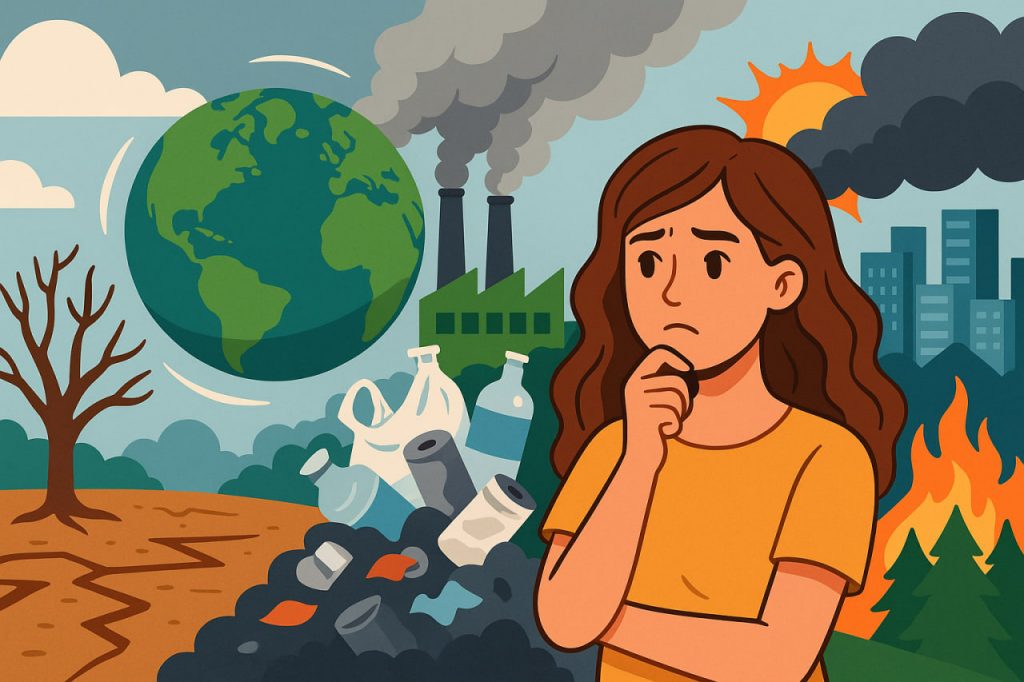
The global ecological crisis is one of the most urgent and complex challenges facing humanity today. It refers to the ongoing degradation of Earth’s natural systems — from climate instability and species extinction to pollution, deforestation, and freshwater scarcity. These environmental changes are driven largely by human activity, including industrial expansion, fossil fuel use, agriculture, and unsustainable consumption. The crisis threatens ecosystems, economies, food security, and the long-term stability of life on Earth. Understanding its root causes and consequences is essential for developing effective strategies that protect both the planet and future generations.
Over the past century, rapid technological progress and population growth have increased pressure on Earth’s ecosystems at a scale never seen before. While technology has improved quality of life, it has also accelerated environmental damage when used without long-term planning or sustainable practices.
What Is Causing the Ecological Crisis?
Scientists identify several major drivers of global environmental decline:
- greenhouse gas emissions
- deforestation for agriculture, logging, and urban expansion
- pollution from industry, plastics, and chemicals
- biodiversity loss caused by habitat destruction
- overfishing and ocean acidification
- soil degradation due to intensive farming
- freshwater misuse and contamination
These processes weaken natural systems and reduce the planet’s ability to regenerate itself. According to environmental researcher Dr. Linda Harrington:
“Human activity is altering Earth’s life-support systems faster
than ecosystems can adapt or recover.”
This underscores the urgency of global action.
Climate Change: The Central Component
Climate change amplifies nearly every ecological stress. Rising global temperatures contribute to:
- melting glaciers and sea-level rise
- more intense storms, floods, and droughts
- shifting ecosystems and agricultural zones
- increased wildfire activity
- loss of coral reefs and marine biodiversity
Greenhouse gases such as CO₂ and methane trap heat in the atmosphere, disrupting Earth’s long-established climate patterns.
Biodiversity Loss and the Sixth Mass Extinction
Scientists warn that Earth may be entering a sixth mass extinction, driven not by natural disasters but by human behavior. Species extinction rates are now up to 1,000 times higher than normal. Key threats include:
- habitat destruction
- invasive species
- pollution
- climate disruptions
Biodiversity is essential for ecosystem stability, agriculture, medicine, and the global food chain.
Pollution and the Chemical Burden
Pollution affects water, air, soil, and even the human body. Major concerns include:
- plastic pollution in oceans
- microplastics entering the food chain
- toxic industrial chemicals
- air pollution causing millions of premature deaths annually
Despite technological improvements, pollution levels remain dangerously high in many regions.
Freshwater Shortages
Although Earth is rich in water, only a small fraction is drinkable. Overuse, drought, and contamination threaten water security for billions. Growing populations and agriculture intensify the pressure on rivers, aquifers, and lakes.
Can We Reverse the Ecological Crisis?
Yes — but only through coordinated global efforts. Solutions include:
- expanding renewable energy
- reforestation and habitat protection
- circular economy systems to reduce waste
- sustainable farming and fisheries
- green urban planning
- strict pollution control
- conservation and biodiversity programs
Technology alone cannot solve the crisis unless paired with responsible policies and sustainable lifestyles.
The Role of Individuals
Personal choices also contribute to large-scale change:
- reducing energy waste
- choosing sustainable food options
- minimizing plastic use
- supporting conservation initiatives
- educating others about environmental impacts
Individual action strengthens broader systemic change.
Interesting Facts
- Humans produce over 350 million tons of plastic waste each year.
- Nearly one million species are at risk of extinction.
- The Amazon rainforest generates around 20% of the world’s oxygen but is shrinking rapidly.
- Global temperatures have risen by 1.2°C since pre-industrial times.
- Oceans absorb 30% of human CO₂ emissions, becoming more acidic as a result.
Glossary
- Greenhouse Gases — gases that trap heat in the atmosphere and warm the planet.
- Biodiversity — the variety of life on Earth, crucial for ecosystem stability.
- Deforestation — the large-scale removal of forests for agriculture or development.
- Circular Economy — a system that minimizes waste by reusing and recycling materials.
- Ecosystem — a community of living organisms interacting with their environment.