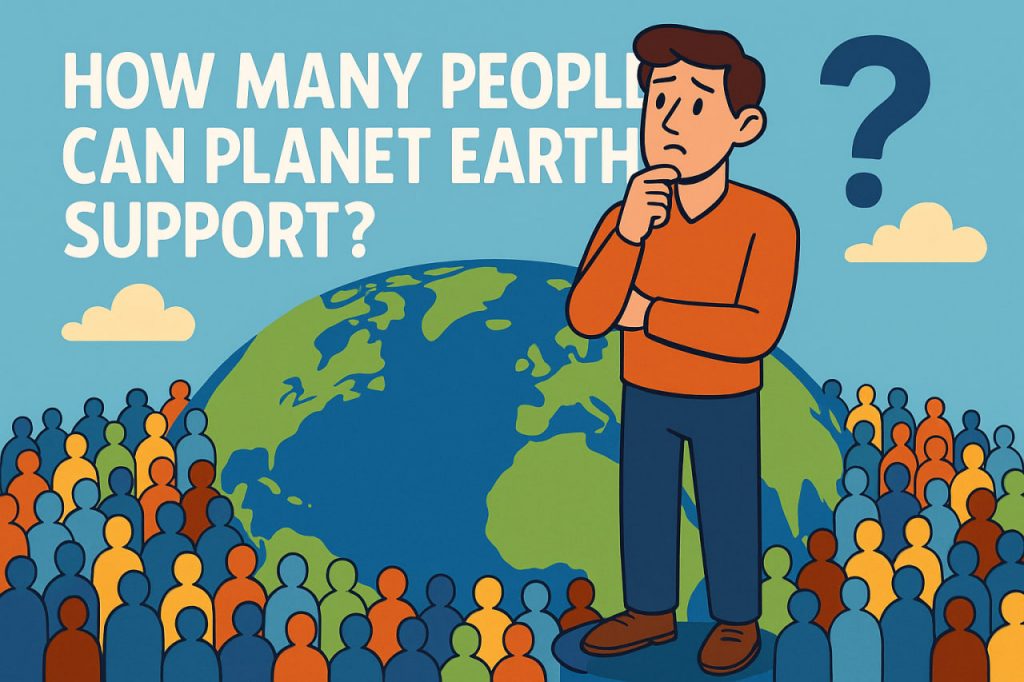
How many people the Earth can support is one of the most debated questions in environmental science, ecology, and global development. Unlike simple calculations of land area or food production, Earth’s carrying capacity — the maximum population the planet can sustain over the long term — depends on complex interactions among resources, technology, consumption habits, ecosystems, and societal structures. Estimates vary dramatically, from 2 billion to over 50 billion, because each scenario assumes different lifestyles, agricultural systems, and levels of environmental impact. The question is not only how many people can live on Earth, but how they live, what they consume, and how efficiently humanity uses the planet’s resources.
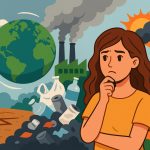
Over the last century, technological advances have increased food production, improved water purification, and expanded energy availability. Yet these achievements come with environmental costs such as deforestation, climate change, biodiversity loss, and water scarcity. Understanding carrying capacity requires balancing human needs with the planet’s ecological limits.
What Is Earth’s Carrying Capacity?
Earth’s carrying capacity refers to the highest number of individuals a system can support without degrading its resources. For humans, this includes access to:
- clean water
- nutritious food
- energy
- shelter
- healthy ecosystems
- waste management
- stable climate
Because humans can change their environment using technology, carrying capacity is dynamic rather than fixed.
According to sustainability expert Dr. Elena Moretti:
“Earth can support far more people living sustainably
than people living with high consumption and high waste.”
This highlights how lifestyle and efficiency shape the limit.
Why Estimates Vary So Widely
Different scientific models yield different numbers because they assume different conditions. For example:
- High-consumption lifestyles (Western standard): 2–4 billion
- Moderate global lifestyles (current world average): 9+ billion
- Highly efficient sustainable lifestyles (low waste, renewable energy, united humanity): 50+ billion
These estimates depend on:
- agricultural techniques
- diet composition
- energy efficiency
- technology advancements
- environmental protections
- urban planning
- climate stability
Thus, the question is not purely biological — it is social, economic, and technological.
Food Production as a Limiting Factor
Food is one of the most fundamental constraints. Modern agriculture supports billions through:
- fertilizer use
- mechanization
- irrigation
- genetically improved crops
However, food production is vulnerable to:
- soil degradation
- water shortages
- climate change
- shrinking farmland
- loss of pollinators
Diet also matters. A world with mostly plant-based diets could support many more people than a world dependent on meat-heavy diets, which require far more land and resources.
Water Availability
Freshwater is limited. Although Earth has abundant water, only 2.5% is freshwater, and most of that is locked in ice. Human population capacity depends heavily on how efficiently water is used and how well it is managed.
Energy Consumption
Energy demand rises with population. Renewable energy increases carrying capacity, while fossil fuels reduce it by causing climate stress. Efficient energy systems allow more people to live sustainably.
Environmental and Ecological Constraints
Human activity stresses Earth’s ecosystems through:
- deforestation
- biodiversity loss
- pollution
- greenhouse gas emissions
These impacts reduce Earth’s overall capacity to support life. Protecting ecosystems increases long-term sustainability.
Can Technology Raise Earth’s Carrying Capacity?
Yes. Technology has continually expanded Earth’s ability to support more people through:
- advanced agriculture
- desalination
- renewable energy
- vertical farming
- synthetic foods
- efficient waste recycling
But technology alone cannot solve unsustainable consumption patterns.
Are We Currently Over Capacity?
Scientists are divided:
- Some argue Earth is already beyond sustainable limits due to climate change and ecosystem collapse.
- Others say humanity can support billions more with better resource management.
- The truth likely lies in a balance: population is manageable if consumption becomes more efficient and sustainable.
The Most Important Question: Quality of Life
Earth could hold more people — but would quality of life remain high? Overcrowding, scarcity, pollution, and declining biodiversity would reduce well-being even if survival is possible.
The goal is not to maximize population but to maximize sustainable quality of life.
Interesting Facts
- If everyone lived like the average American, Earth could support only 2–3 billion people.
- If everyone lived like the average person in India, Earth could support 10+ billion.
- Nearly 40% of land is used for agriculture — the largest human land use.
- Humans use freshwater faster than natural systems can replenish it in many regions.
- Urban vertical farming could increase global food capacity by up to 2 billion people.
Glossary
- Carrying Capacity — the maximum number of individuals an environment can sustainably support.
- Sustainability — using resources in a way that preserves them for future generations.
- Ecological Footprint — the amount of land and resources needed to support a person or population.
- Desalination — converting seawater into drinkable freshwater.
- Vertical Farming — growing crops indoors in stacked layers to save land and water.