The Toba supervolcano, located on the Indonesian island of Sumatra, is one of the most powerful volcanic systems ever discovered. Around 74,000 years ago, it produced the Toba supereruption, one of the largest volcanic events in the last 2 million years. This colossal explosion released thousands of cubic kilometers of volcanic material, reshaped the surrounding landscape, and may have influenced global climate and early human populations. Modern research continues to investigate how this event unfolded, how it affected the planet, and what it reveals about the power of supervolcanoes. Despite its destructive history, scientists monitor Toba closely and emphasize that understanding its past is essential for predicting future volcanic hazards.
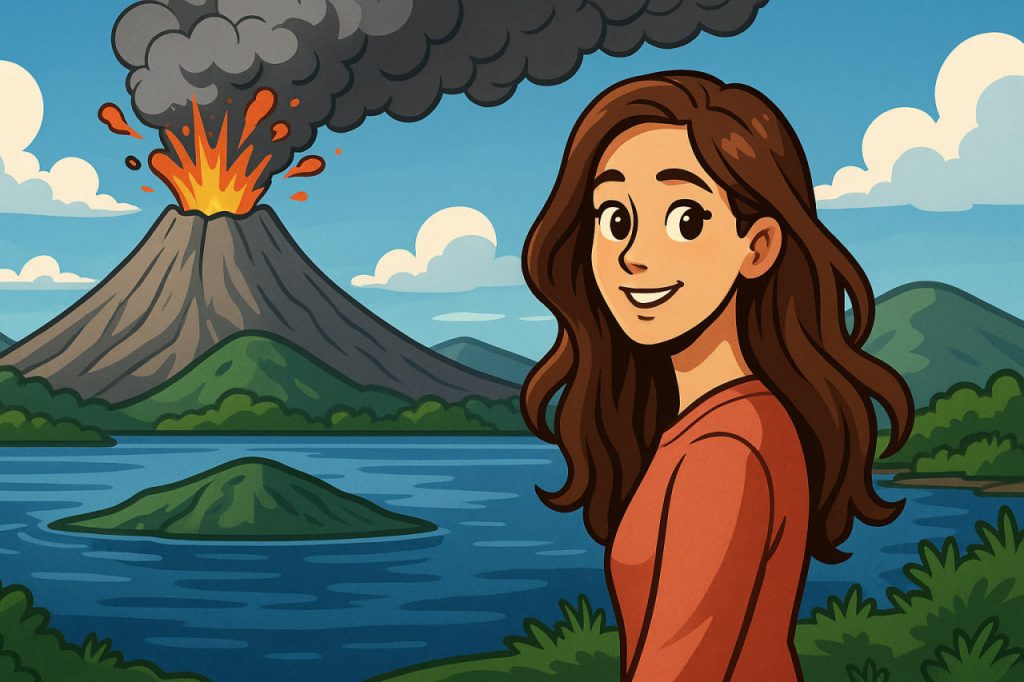
The modern Lake Toba, a vast caldera filled with water, sits atop the remnants of the eruption. The lake spans roughly 100 kilometers, making it one of the largest volcanic lakes in the world. Its size alone is a testament to the massive geological forces that shaped it. The Toba volcanic system remains active today, although current activity is low and does not indicate an imminent eruption.
The Scale of the Toba Supereruption
The Toba eruption was a VEI-8 event — the highest score on the Volcanic Explosivity Index. Scientists estimate that it released:
- more than 2,500 cubic kilometers of ash and magma
- ash clouds that spread across Asia, Africa, and the Indian Ocean
- sulfur gases that reached the stratosphere
Such an eruption is thousands of times more powerful than typical volcanic eruptions. According to volcanologist Dr. Adrian Foster:
“The Toba eruption was powerful enough to alter global climate
and remains one of the largest volcanic events ever identified.”
Its impact was not limited to the local region; the entire planet felt its effects.
Global Climatic Effects
The eruption is believed to have triggered a volcanic winter caused by sulfur aerosols blocking sunlight. Potential effects include:
- global temperature drops of 3–5°C
- reduced sunlight for months or years
- weakened monsoon cycles
- stress on plant and animal life
- potential disruptions to ecosystems worldwide
Evidence from ice cores and sediment records supports the idea that Toba had long-lasting environmental impacts.
Did Toba Affect Early Humans?
One controversial hypothesis, known as the Toba catastrophe theory, suggests the eruption caused a severe bottleneck in early human populations. Some studies propose that harsh post-eruption conditions reduced human numbers dramatically. However, modern genetics and archaeology show mixed evidence:
- some regions show resilience and continued human activity
- other areas show signs of environmental stress
- genetic diversity drops may have other explanations
While Toba was certainly a global event, scientists now view its impact on humans as complex rather than catastrophic.
Geology of the Toba Caldera
Today, Lake Toba and Samosir Island (a large uplifted block in the center) provide unique geological insights. The caldera formed when the magma chamber collapsed after the eruption emptied much of its contents.
Key geological features include:
- thick layers of volcanic ash across Asia
- massive welded tuffs around Sumatra
- post-caldera doming and geothermal activity
- ongoing micro-seismicity beneath the lake
These features help volcanologists study how supervolcanoes behave over time.
Modern Activity and Monitoring
Toba remains an active volcanic system with:
- geothermal fields
- earthquake activity
- rising and sinking ground levels
However, there is currently no evidence of an impending supereruption. Modern monitoring networks track seismicity, gas emissions, and ground deformation to ensure early detection of unusual changes.
Why Supervolcanoes Matter
Studying Toba helps scientists understand:
- how massive eruptions influence global climate
- how magma reservoirs evolve over thousands of years
- how ecosystems recover from extreme environmental shocks
- how to interpret geological warning signs in similar volcanoes
Supervolcano research is essential for global hazard preparedness.
Interesting Facts
- The Toba eruption was up to 5,000 times stronger than the 1980 Mount St. Helens eruption.
- Lake Toba is the largest volcanic lake on Earth.
- Ash from Toba has been found over 3,000 km away in India.
- Some scientists believe Toba influenced the length of the last Ice Age.
- The central island, Samosir, is actually a giant block of uplifted caldera floor.
Glossary
- Supervolcano — a volcano capable of producing an extremely large eruption (VEI-8).
- Caldera — a large depression formed after a magma chamber collapses.
- Volcanic Winter — global cooling caused by volcanic aerosols blocking sunlight.
- Tuff — rock formed from compacted volcanic ash.
- Magma Chamber — a reservoir of molten rock beneath a volcano.