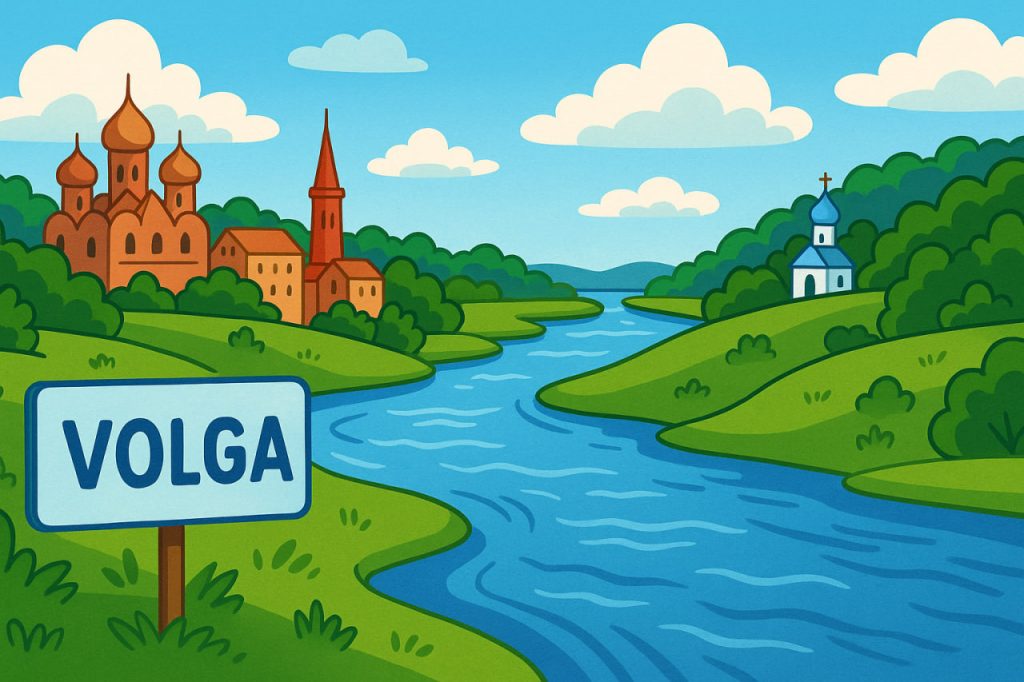
The Volga River, often called the “mother river” of Russia, is the longest river in Europe and one of the most influential waterways in human history. Stretching thousands of kilometers across the vast Russian landscape, the Volga has shaped commerce, culture, settlement, and ecological systems for centuries. Its waters support agriculture, transportation, fisheries, and energy production, making it an essential lifeline for millions of people. The river also plays a central role in Russian identity, inspiring songs, literature, and folklore. Despite its natural beauty and cultural importance, the Volga faces modern environmental challenges that require careful attention and sustainable management. Understanding the river’s characteristics, history, and ecological significance shows why it remains a powerful symbol of both natural endurance and human progress.
Geographical Importance and Natural Features
The Volga flows from the Valdai Hills and winds southward through forests, plains, and steppe regions before emptying into the Caspian Sea. Along the way, it passes through major cities including Tver, Yaroslavl, Nizhny Novgorod, Kazan, and Volgograd. The river has hundreds of tributaries that create a complex hydrological system crucial for agriculture and freshwater supply. Wetlands, forests, and unique ecosystems flourish along its banks. According to hydrology researcher Dr. Marina Sokolova:
“The Volga is not just a river —
it is a living system connecting landscapes, species, and cultures across an entire region.”
These natural features make the Volga a central ecological artery of Eastern Europe.
Historical Role and Cultural Influence
For centuries, the Volga has served as a major trade route linking northern forests with southern markets. Ancient civilizations, medieval principalities, and later the Russian Empire relied on the river for commerce, migration, and military strategy. Countless villages and cities formed along its banks, creating a rich cultural mosaic shaped by trade, religion, and tradition. The river appears in poetry, folk songs, and national legends, symbolizing strength, freedom, and continuity. Its cultural presence remains a source of pride and identity for the diverse peoples living in the Volga basin.
Economic Significance and Human Activity
Today, the Volga remains central to industry, energy, and transportation. Large reservoirs and hydroelectric stations support millions of households and businesses. The river’s basin hosts agricultural lands that rely on its water for irrigation, while shipping routes connect regions with essential goods and resources. Fisheries provide livelihoods for local communities, and tourism flourishes in towns known for historical architecture, river cruises, and scenic landscapes. The Volga’s economic impact is immense, yet it also requires careful balancing to protect ecological stability.
Environmental Challenges and Conservation Efforts
Like many major rivers, the Volga faces environmental pressures such as pollution, reduced biodiversity, and altered water flow due to dams. Industrial waste, agricultural runoff, and urbanization have affected water quality in certain regions. Fish populations have declined in some areas due to habitat changes and overfishing. Conservationists emphasize the need for improved water treatment, sustainable fishing practices, and restoration of natural habitats. Environmental expert Dr. Alexei Petrov notes:
“The Volga’s future depends on our ability
to respect its natural balance and manage its resources responsibly.”
Collaborative initiatives aim to revive damaged ecosystems and ensure the river’s long-term health.
The Volga as a Symbol of Russian Heritage
Beyond its physical presence, the Volga remains a cultural and emotional symbol for many generations. Its landscapes inspire artists, musicians, and writers who see in its vast waters the spirit of endurance and transformation. Festivals, traditions, and local customs continue to celebrate the river’s role in shaping both history and modern life. To this day, the Volga represents not just a geographic feature but a vital thread connecting the people and stories of Russia.
Interesting Facts
- The Volga is 3,530 kilometers long, making it the longest river in Europe.
- It flows into the Caspian Sea, the world’s largest inland body of water.
- More than 40% of Russia’s population lives in the Volga River basin.
- The river contains some of the world’s largest reservoirs, including the Kuybyshev Reservoir.
- Historically, the Volga served as a major link between Europe and Central Asia via river and trade routes.
Glossary
- Tributary — a smaller river or stream that flows into a larger one.
- Hydrology — the science studying water movement, distribution, and properties.
- Ecosystem — a community of organisms interacting with their environment.
- Reservoir — an artificial lake used to store water for energy or supply.
- Basin — an area of land where all water drains into the same river.