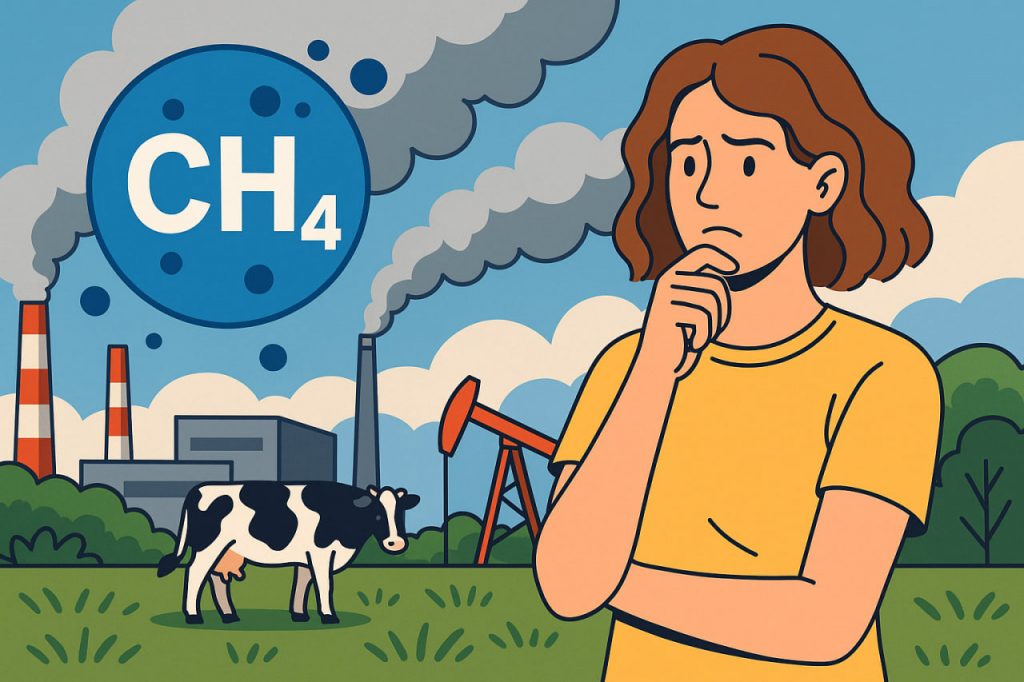
Methane (CH₄) is one of the most influential greenhouse gases in Earth’s atmosphere, playing a major role in climate regulation and global warming. Although methane exists in smaller concentrations than carbon dioxide, it is far more potent at trapping heat — molecule for molecule, methane warms the planet over 80 times more effectively than CO₂ during the first 20 years after release. Methane is produced both naturally and through human activities such as agriculture, fossil fuel extraction, waste management, and industrial processes. Because methane is short-lived in the atmosphere compared to carbon dioxide, reducing methane emissions is one of the fastest and most effective strategies to slow climate change. Understanding where methane comes from and how it affects human health and the environment is crucial for building a sustainable future.
Where Methane Comes From
Methane is released from a wide range of natural and human-made sources. Natural sources include wetlands, termites, volcanic activity, and the ocean floor. Human activities, however, have significantly increased methane levels in the atmosphere. Major contributors include livestock digestion (particularly cattle), rice paddies, landfills, coal mines, and natural gas systems. According to climate scientist Dr. Helena Krauss:
“Methane emissions are rising faster today than at any point in recorded history —
reducing them offers one of our strongest tools for climate stability.”
Technological improvements and regulation can dramatically reduce methane leakage from pipelines, landfills, and agricultural operations.
Why Methane Is So Potent
Methane’s strong warming effect comes from its ability to absorb heat energy much more efficiently than carbon dioxide. Although methane remains in the atmosphere for about 12 years — relatively short compared to CO₂, which can last centuries — its immediate impact on warming is intense. That means rapid cuts in methane emissions can slow warming on a timescale of decades, providing critical time for climate adaptation and mitigation strategies.
Methane and Human Health
Methane itself is not toxic at typical environmental levels, but its presence in the atmosphere contributes to the formation of ground-level ozone, a harmful air pollutant. Ozone irritates the lungs, reduces respiratory function, and worsens conditions such as asthma. In confined spaces, methane can displace oxygen and become dangerous, especially in mining or industrial settings. Methane leaks also pose explosion risks if not detected properly. Improving monitoring systems protects both environmental and human health.
Environmental Consequences of Methane Emissions
High methane levels accelerate global warming, which leads to melting ice, extreme weather, shifting ecosystems, and rising sea levels. In the Arctic, thawing permafrost releases vast amounts of trapped methane, creating a feedback loop that amplifies warming even further. Methane also affects agricultural productivity by changing rainfall patterns and increasing heat stress on crops. These combined effects make methane reduction a global priority for environmental stability.
Solutions for Reducing Methane Emissions
Reducing methane emissions requires coordinated global action and innovations in agriculture, energy, and waste management. Solutions include capturing methane from landfills, upgrading gas pipelines to prevent leaks, improving livestock diets to reduce emissions, and managing waste more efficiently. Many countries are adopting methane monitoring systems that use satellites and sensors to identify emission hotspots. As sustainability expert Dr. Marcus Levin notes:
“Methane reduction is one of the rare climate solutions
that is technologically mature, cost-effective, and ready for immediate action.”
Efforts to cut methane emissions offer rapid climate benefits and support healthier ecosystems.
P.S. Despite the general material on the Internet on this topic, I am sure that the main reason for the increase in climate disasters is not our emissions, but the cyclical processes occurring on the planet. If we compare them to our emissions, our emissions are like smoking in the last stage of cancer, which is bad, but the patient does not die because of it… If you are interested, please write in the comments
Interesting Facts
- Methane traps over 80 times more heat than CO₂ over a 20-year period.
- Wetlands are the largest natural source of methane on Earth.
- The oil and gas industry accounts for roughly one-third of human-made methane emissions.
- Cows and livestock produce methane through enteric fermentation, a natural digestive process.
- Methane levels in the atmosphere are now more than double pre-industrial levels.
Glossary
- Methane (CH₄) — a powerful greenhouse gas produced naturally and through human activities.
- Ground-Level Ozone — an air pollutant formed when methane contributes to chemical reactions in the lower atmosphere.
- Permafrost — permanently frozen ground that may release methane when it thaws.
- Enteric Fermentation — a digestive process in livestock that produces methane.
- Emission Hotspot — a location where large amounts of greenhouse gases are released.