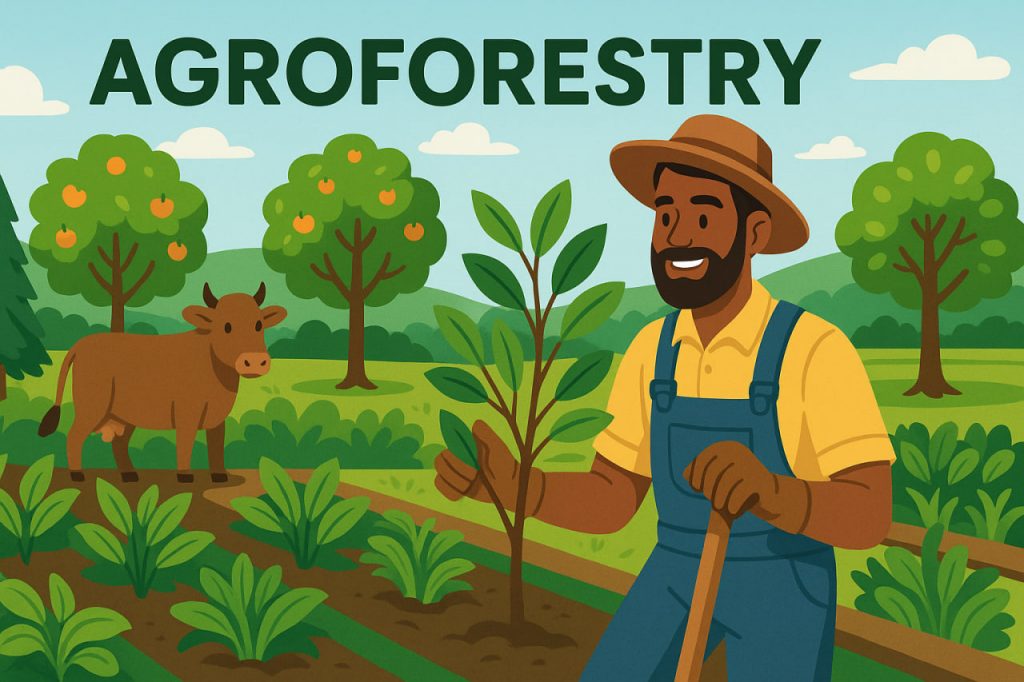
Agroforestry is a land-use system that combines trees, crops, and sometimes livestock on the same piece of land to improve productivity, biodiversity, and long-term environmental health. Unlike conventional agriculture, which often exhausts soil and requires significant chemical inputs, agroforestry mimics natural ecosystems by creating layered plant structures similar to forests. This approach enhances soil fertility, conserves water, increases carbon storage, and provides farmers with diversified incomes. Agroforestry is practiced worldwide — from tropical regions to temperate climates — and is considered one of the most effective nature-based solutions for climate resilience. Understanding how agroforestry works reveals why it is steadily gaining attention among farmers, scientists, and policymakers seeking sustainable ways to feed a growing world.
How Agroforestry Works and Why It Is Effective
Agroforestry systems integrate trees with crops in planned arrangements that support ecological functions. Trees offer shade, wind protection, nutrient cycling, and habitat for beneficial species. Their deep roots stabilize soil and draw nutrients from deeper layers. Crops and trees complement one another, creating a balanced microclimate that increases resilience during droughts or heavy rains. According to agroecology specialist Dr. Helena Morris:
“Agroforestry transforms farmland into a living ecosystem —
it makes soil healthier, crops more resilient, and farming more sustainable.”
These systems help farmers reduce dependence on fertilizers while improving long-term productivity.
Main Types of Agroforestry Systems
Agroforestry comes in many forms, each adapted to local needs and environments:
- Silvopasture — combining trees with grazing animals to provide shade, forage, and healthier soil.
- Alley cropping — planting crops between rows of trees, optimizing light and nutrient use.
- Windbreaks and shelterbelts — trees planted along fields to reduce wind erosion and protect crops.
- Forest farming — growing shade-tolerant crops (such as mushrooms or medicinal plants) under forest canopies.
- Home gardens — diverse, multilayered planting systems common in tropical regions.
Each system increases ecological stability and helps farmers diversify income sources.
Environmental Benefits of Agroforestry
Agroforestry supports the environment on multiple levels. Trees sequester carbon, helping mitigate climate change. Their root systems prevent erosion and improve water infiltration. Leaves and organic matter enrich soil, improving fertility naturally without chemical inputs. Agroforestry also provides habitat for birds, insects, and pollinators, strengthening regional biodiversity. These natural processes reduce risks associated with extreme weather, making agroforestry a valuable strategy for climate-resilient agriculture.
Economic and Social Advantages
Beyond ecological benefits, agroforestry strengthens rural livelihoods. Farmers gain multiple income streams from timber, fruits, nuts, medicinal plants, or livestock. This diversification reduces economic vulnerability and increases food security. Agroforestry is also suitable for small-scale farmers because it uses land more efficiently and reduces input costs. As rural development researcher Dr. Marcus Levin notes:
“Agroforestry empowers communities by increasing resilience —
it supports both economic stability and environmental stewardship.”
These benefits make agroforestry a powerful tool for sustainable development.
Challenges and the Path Forward
Implementing agroforestry systems requires knowledge, planning, and long-term commitment. Trees need time to mature, and farmers may need training to design effective layouts. Policy barriers, lack of financial incentives, and insufficient technical support can slow adoption. However, interest in agroforestry is growing as governments, NGOs, and research institutions recognize its climate and food-security potential. With proper support, agroforestry could become a cornerstone of regenerative agriculture worldwide.
Interesting Facts
- Agroforestry can increase overall farm productivity by 20–60% depending on the system.
- Trees in agroforestry systems can store up to 10× more carbon than conventional cropland.
- Silvopasture reduces heat stress in livestock, improving animal welfare and productivity.
- Alley cropping can improve soil nitrogen naturally when farmers use nitrogen-fixing trees.
- Some countries include agroforestry in their national climate strategies due to its strong environmental impact.
Glossary
- Silvopasture — combining trees and livestock on the same land to improve soil, shade, and productivity.
- Alley Cropping — planting crops between tree rows for mutually beneficial growth.
- Agroecology — the study of ecological principles applied to agriculture.
- Carbon Sequestration — storing atmospheric carbon in plants, soil, and ecosystems.
- Erosion Control — preventing soil loss through vegetation and land management.