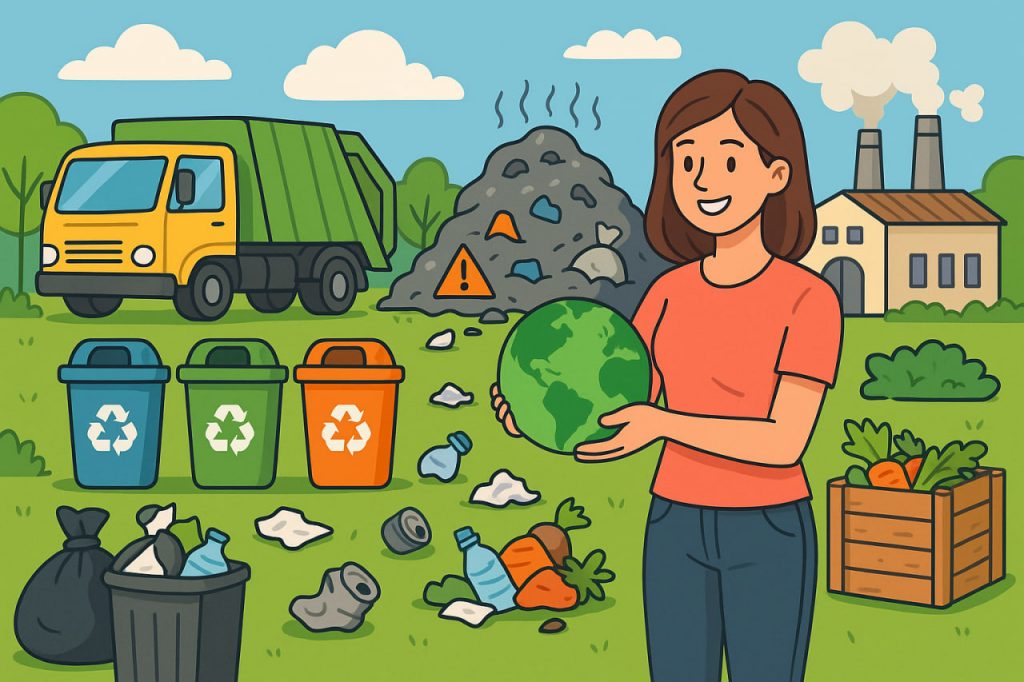
The world is facing a rapidly growing waste crisis, driven by population growth, consumer culture, urbanization, and the rise of disposable products. Mountains of trash accumulate in landfills, oceans, rivers, and city streets, threatening ecosystems, wildlife, and human health. Plastic pollution alone has reached every corner of the planet — from the deepest ocean trenches to remote polar regions. Solving the global waste problem requires a combination of technological innovation, policy change, responsible production, and individual awareness. Waste is not only an environmental concern; it reflects how societies use resources, how economies grow, and how sustainable our future will be. The most effective solutions address waste at its source, redesign materials, and create systems in which resources remain in circulation rather than becoming pollution.
Rethinking Waste Through the Circular Economy
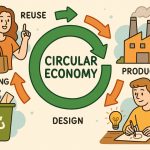
Traditional waste systems follow a linear model: take → make → use → throw away. This approach relies on endless extraction of natural resources and leads to enormous waste volumes. The circular economy aims to replace this model by keeping materials in use as long as possible through reuse, repair, recycling, and redesign. According to sustainability expert Dr. Helena Brooks:
“The only real solution to global waste is redesigning the system —
waste should become a resource, not an endpoint.”
Circular models focus on durable products, minimal packaging, recyclable materials, and efficient recovery systems. This shift reduces environmental pressure while creating new economic opportunities.
Reducing Waste at the Source
The most powerful strategy is preventing waste before it forms. This includes reducing single-use plastics, choosing reusable products, and encouraging manufacturers to design items that last longer and produce less waste. Many countries are introducing bans on disposable bags, straws, and certain packaging types. Businesses increasingly adopt refill stations, package-free shops, and compostable materials. At home, simple habits such as buying in bulk, using cloth bags, and repairing broken items significantly reduce waste generation.
Improving Collection, Sorting, and Recycling
Recycling remains essential, but global recycling rates are still low due to contamination, poor sorting, and limited infrastructure. Modern technologies — including automated sorting machines, AI-based scanners, and chemical recycling — help recover more materials with higher quality. Standardizing recycling symbols, improving public education, and expanding access to recycling facilities increase efficiency. Waste management specialist Dr. Marco Levin emphasizes:
“Recycling does not fail because people don’t care —
it fails when systems make correct disposal confusing or inaccessible.”
Building reliable infrastructure is critical for turning waste back into valuable resources.
Managing Organic Waste Through Composting
Organic waste — food scraps, yard waste, and biodegradable materials — makes up a large portion of global trash. Instead of sending it to landfills, communities can adopt composting systems that transform organic waste into nutrient-rich soil. This reduces methane emissions, supports local agriculture, and returns nutrients to natural cycles. Household composting, community centers, and industrial facilities all play important roles in reducing organic waste at scale.
Cleaning Polluted Areas and Restoring Ecosystems
While prevention is essential, existing pollution must also be addressed. Beach cleanups, river restoration projects, and ocean cleanup technologies remove plastic from contaminated environments. Some innovations use drones, autonomous boats, or filtration systems to collect floating debris. Restoring damaged ecosystems helps wildlife recover and improves water and soil quality. Although cleanup alone cannot solve the waste crisis, it remains a crucial component of global action.
Global Cooperation and Policy Support
The waste problem is international — trash crosses oceans, borders, and continents. Coordinated global policies, such as plastic reduction agreements and multinational recycling initiatives, are essential. Governments must support waste management infrastructure, enforce pollution regulations, and promote sustainable production. Public awareness campaigns help people understand their role in reducing waste and inspire collective action.
Interesting Facts
- Humans produce more than 2 billion tons of waste annually — and this number is rising.
- Only about 9% of all plastic ever produced has been recycled.
- Organic waste in landfills generates methane, a greenhouse gas more potent than CO₂.
- Around 8 million tons of plastic enter the oceans every year.
- Some countries recycle over 90% of their waste thanks to strict policies and advanced systems.
Glossary
- Circular Economy — an economic model focused on reuse, recycling, and resource efficiency.
- Chemical Recycling — breaking plastic into its basic molecules for reuse in new products.
- Composting — natural decomposition of organic waste into soil-enriching material.
- Methane Emissions — gases released from decomposing waste that contribute to climate change.
- Single-Use Plastics — disposable items used once and then thrown away.