Plastic has become an inseparable part of modern life, used in packaging, clothing, electronics, and countless everyday products. Yet once plastic items are discarded, they begin a long journey that shapes ecosystems, human health, and the global environment. Unlike organic materials, plastic does not decompose quickly; instead, it breaks into smaller fragments over decades or centuries. Understanding what happens to plastic after disposal reveals the hidden impact of our consumption habits and highlights why responsible waste management is essential. Whether plastic is recycled, landfilled, burned, or lost in nature, each pathway carries different consequences for the planet and future generations.
The Journey of Plastic in Landfills
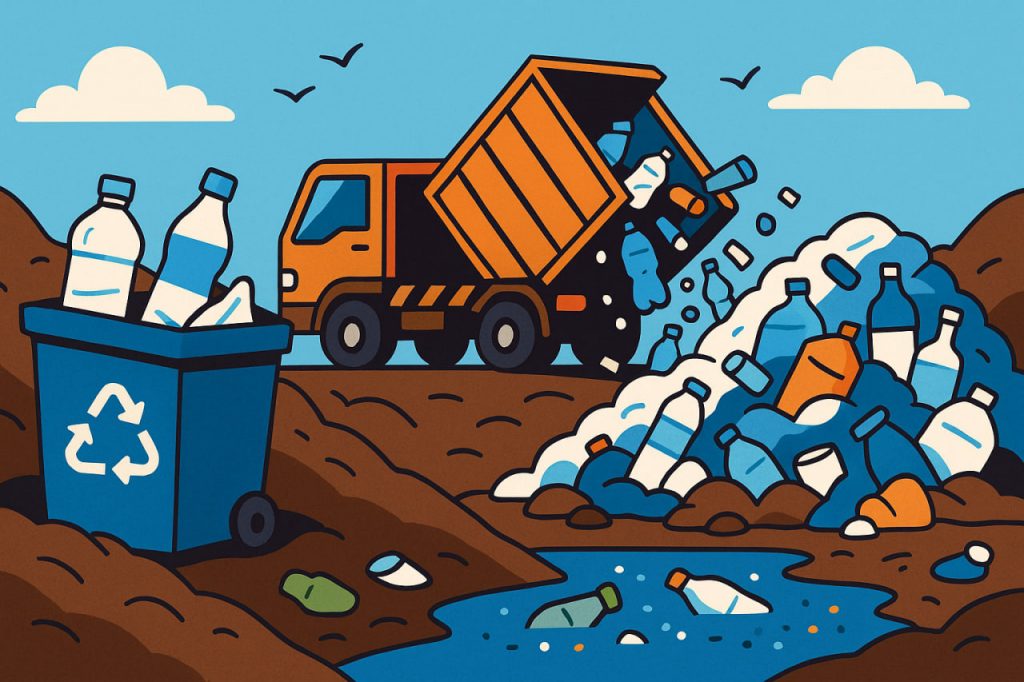
Most plastic waste ends up in landfills, where it is buried under layers of soil and trash. In these tightly packed environments, plastic degrades extremely slowly — often taking hundreds of years to fragment. Landfills are designed to prevent leaks, but rainfall can create contaminated runoff that carries microplastics and chemicals into nearby soils and waterways. Over time, wind, erosion, and wildlife may spread plastic particles beyond landfill boundaries. Environmental scientist Dr. Helena Morris notes:
“Landfills were never designed for materials that outlive entire generations —
plastic simply persists, waiting for the environment to break it apart molecule by molecule.”
Because of this persistence, landfills continue accumulating plastic with no natural endpoint.
Recycling: A Useful but Limited Solution
A portion of plastic waste is collected for recycling, though global recycling rates remain low. Not all plastics are recyclable, and even those that are often degrade in quality after repeated processing. Contamination — such as food residue — reduces the efficiency of recycling systems. While recycling helps conserve resources and reduce emissions, it cannot keep pace with rising plastic production. Nevertheless, improved sorting technology and new biodegradable materials are gradually increasing recycling potential. Consumers play an important role by sorting waste properly and choosing recyclable packaging whenever possible.
Incineration and Energy Recovery
Some plastic waste is burned in specialized facilities that convert heat into energy. While incineration reduces physical waste volume, it raises environmental concerns. Burning plastic releases greenhouse gases and other pollutants unless advanced filters are used. Modern waste-to-energy plants minimize harmful emissions, but they do not eliminate environmental impact entirely. Incineration also destroys material that could otherwise be recycled, reducing circularity in the system. Still, in regions lacking landfill space, controlled incineration remains an alternative.
Plastic Pollution in Nature
A significant amount of plastic escapes waste systems and ends up in rivers, oceans, forests, and soil. Wind and rain transport lightweight plastics over great distances. In the ocean, plastics break down into microplastics and nanoplastics, which are ingested by marine life — from plankton to whales — and eventually enter the human food chain. Sunlight, waves, and bacteria fragment plastic but never fully eliminate it. Beaches, coral reefs, and deep-sea trenches now contain measurable concentrations of plastic debris. This environmental spread is one of the most harmful outcomes of improper waste disposal.
The Transformation Into Microplastics
As plastic breaks into tiny pieces, it becomes even harder to remove from the environment. Microplastics can travel through the air, float in drinking water, settle in soil, and accumulate inside organisms. These particles often carry toxic chemicals used in plastic production or absorbed from the environment. Scientists are still studying how microplastics affect human health, but early findings suggest links to inflammation, oxidative stress, and cellular disruption. The fragmentation process ensures that plastic persists in ecosystems long after it is thrown away.
Toward a More Sustainable Future
Solutions to plastic pollution require both systemic change and everyday actions. Reducing single-use plastics, improving recycling infrastructure, adopting biodegradable alternatives, and supporting circular economy models are essential steps. Governments and industries are developing bans on harmful plastics, innovating new materials, and investing in advanced waste technologies. As sustainability expert Dr. Marcus Lee explains:
“The future of plastic depends on how we redesign its entire life cycle —
from production and use to disposal and recovery.”
Consumers can contribute by choosing reusable products, sorting waste, and supporting environmental initiatives.
Interesting Facts
- Every year, humans generate over 350 million tons of plastic waste.
- About 91% of plastic is not recycled globally.
- A plastic bottle can take 450 years to break into microplastics.
- Over 8 million tons of plastic reach the ocean annually.
- Microplastics have been found in rainwater, indicating atmospheric spread.
Glossary
- Microplastics — tiny plastic particles smaller than 5 mm produced by fragmentation.
- Landfill — a disposal site where waste is buried under controlled conditions.
- Circular Economy — an economic model focused on reuse, recycling, and waste reduction.
- Incineration — burning waste to reduce volume and generate energy.
- Biodegradable Plastics — plastics designed to break down faster under specific conditions.