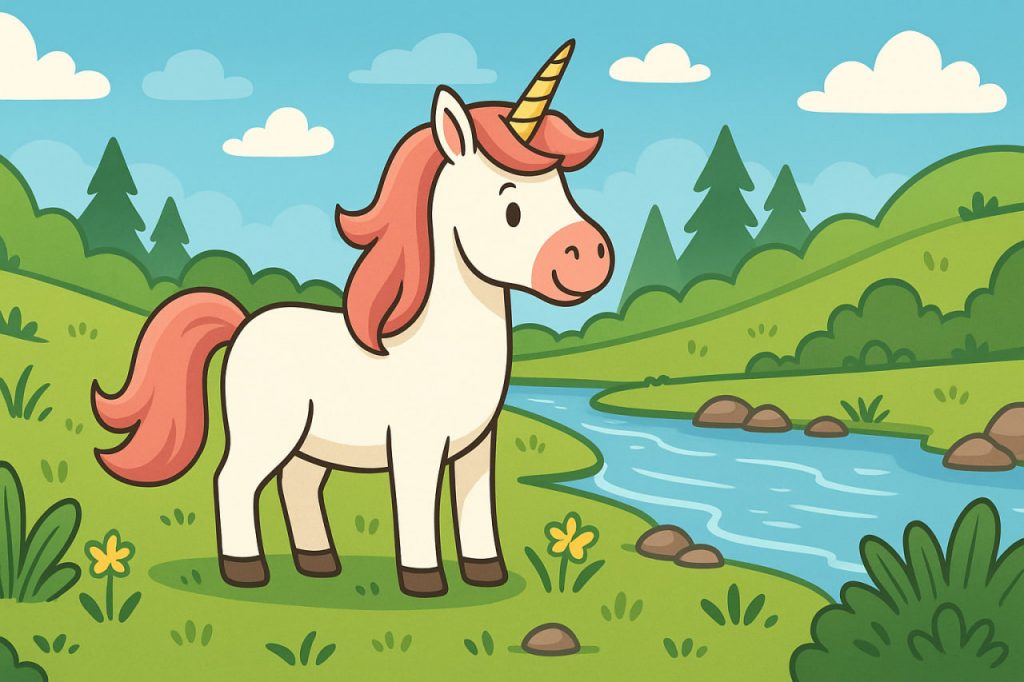
Unicorns are among the most iconic mythical creatures in human history, often depicted as elegant horses with a single spiraling horn. Stories about unicorns appear in ancient cultures across Asia, Europe, and the Middle East, symbolizing purity, strength, rarity, and healing power. Although unicorns are deeply rooted in folklore, there is no scientific evidence that real unicorns — as traditionally imagined — exist in nature today or existed in the past. Instead, unicorn myths have likely emerged from misunderstandings, symbolic storytelling, and encounters with unusual animals. Exploring these origins reveals why unicorns continue to fascinate people worldwide and how myths can arise from natural phenomena.
Many ancient travelers described animals that sounded similar to unicorns, but these accounts often combined imagination with limited zoological knowledge. The rhinoceros, oryx, and certain antelope species may have inspired early unicorn myths due to their single-horn-like appearance from a side view. Fossils of prehistoric mammals with horn variations also contributed to legends. While no known species matches the classic horse-like unicorn, nature has produced animals with impressive horns, tusks, and antlers that could easily inspire mythical interpretations.
Why Unicorns Became a Universal Myth
Unicorn legends emerged independently in different cultures, suggesting that humans created these stories to represent ideals rather than real animals. Ancient texts from India described a one-horned wild beast, while Greek authors wrote about unicorn-like creatures in distant lands. In medieval Europe, unicorns symbolized purity and were believed to possess magical properties. According to mythologist Dr. Helena Vaughn:
“Unicorns are not zoological creatures —
they are cultural symbols shaped by imagination, beauty, and mystery.”
These stories helped civilizations express values, fears, and hopes through fantastical imagery.
Animals That May Have Inspired the Unicorn Myth
Although real unicorns do not exist, several animals may have influenced the myth:
- Rhinoceroses — powerful animals with a single horn
- Oryx antelopes — from certain angles, their two horns appear as one
- Narwhals — Arctic whales with long spiral tusks traded as “unicorn horns” in the Middle Ages
- Prehistoric Elasmotherium — an extinct giant rhinoceros sometimes called the “Siberian unicorn”
None of these species fully resemble the graceful unicorn of legend, but each contributed elements to its formation.
Scientific Perspective: Could Unicorns Exist?
From a biological standpoint, a horse with a single central horn would require a genetic mutation affecting skull symmetry and horn development. While nature produces many unusual traits, no fossil or modern species supports the existence of horse-like unicorns. However, the animal kingdom includes creatures far stranger than unicorns — such as platypuses, deep-sea fish, and horned lizards — reminding us that evolution can create extraordinary forms. Still, unicorns remain a product of imagination rather than biology.
Why Unicorns Endure in Modern Culture
Unicorns continue to appear in art, literature, films, and popular media. Their symbolism of uniqueness, magic, and wonder appeals to both children and adults. Unicorns also represent individuality and fantasy in contemporary culture. As cultural studies expert Dr. Marcus Lee explains:
“Unicorns survive not because they exist in nature,
but because they exist in our collective imagination.”
Their lasting popularity reflects humanity’s desire for beauty, mystery, and enchantment.
Interesting Facts
- Medieval traders sold narwhal tusks as “unicorn horns” for huge sums of money.
- The extinct Elasmotherium was a real one-horned animal, but it looked like a giant rhino, not a horse.
- Unicorns appear in ancient Indian, Persian, Chinese, and European mythology.
- The unicorn is the national animal of Scotland.
- Some antelopes can break one horn, appearing unicorn-like from one side.
Glossary
- Mythology — a collection of traditional stories explaining natural or cultural phenomena.
- Elasmotherium — an extinct genus of large one-horned rhinoceroses.
- Symbolism — the use of images or creatures to represent ideas.
- Tusks — long, extended teeth like those of narwhals or elephants.
- Cultural Archetype — a universally recognized symbol or motif in human storytelling.