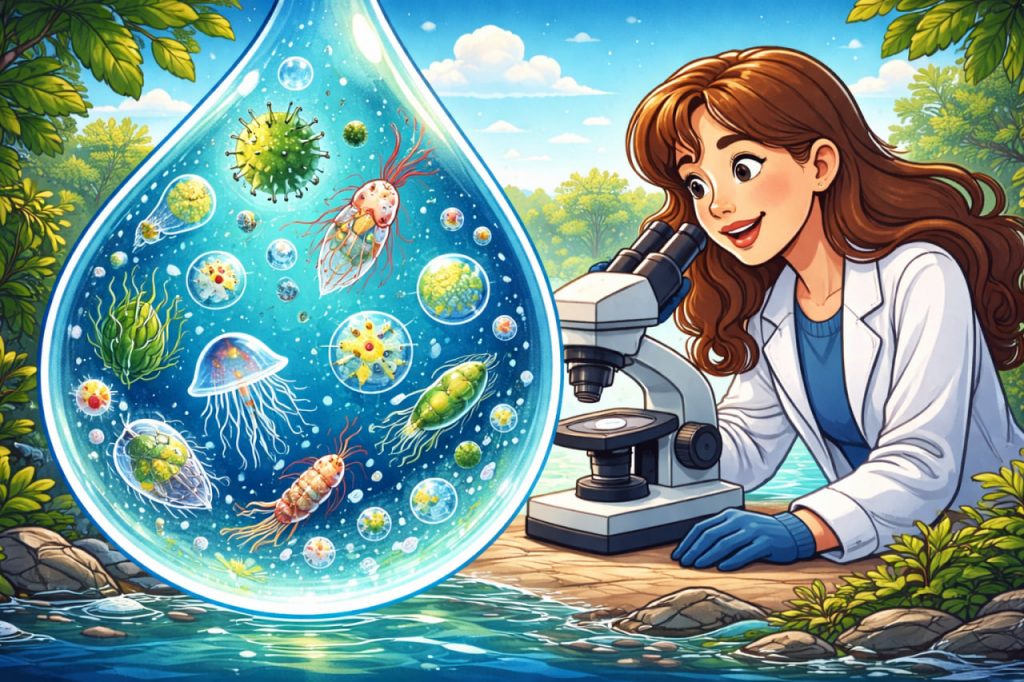
A single drop of water may look empty to the naked eye, but under a microscope it reveals an astonishingly complex and vibrant world. This hidden universe is dominated by plankton—tiny organisms that drift through oceans, lakes, and rivers, forming the foundation of aquatic life. Despite their microscopic size, plankton play a decisive role in Earth’s ecosystems, climate regulation, and even the air we breathe. Every second breath of oxygen is linked to planktonic activity, and countless food webs begin with these drifting organisms. Understanding plankton means understanding life at its most fundamental and interconnected level. Their story proves that even the smallest forms of life can shape the entire planet.
What Is Plankton and Why Is It So Important
Plankton is a collective term for organisms that cannot swim against currents and instead drift with water movement. It includes phytoplankton, which perform photosynthesis, and zooplankton, which feed on other plankton and organic matter. Phytoplankton act as microscopic plants, converting sunlight, carbon dioxide, and nutrients into energy. This process forms the base of aquatic food chains and supports everything from tiny crustaceans to the largest whales. Marine biologist Dr. Samuel Ortega explains:
“Plankton are the invisible engines of the biosphere.
Without them, complex life in the oceans would collapse.”
Their productivity directly influences fish populations, ocean chemistry, and global climate stability.
Phytoplankton: Tiny Plants With Planetary Impact
Phytoplankton may be microscopic, but their collective influence is enormous. These organisms produce a significant portion of the world’s oxygen and absorb vast amounts of carbon dioxide from the atmosphere. When phytoplankton die, some of their carbon sinks to the ocean floor, helping regulate long-term climate. Different species thrive under specific conditions of light, temperature, and nutrients, creating seasonal blooms that can be seen even from space. While most blooms are beneficial, some can produce toxins that affect marine life and human health. Scientists carefully monitor phytoplankton populations because changes in their abundance often signal broader environmental shifts.
Zooplankton and the Moving Web of Life
Zooplankton consist of tiny animals, larvae, and protozoans that form the next level of the aquatic food web. They graze on phytoplankton and, in turn, become food for fish, jellyfish, and other marine organisms. Many zooplankton species perform daily vertical migrations, rising toward the surface at night and sinking during the day to avoid predators. This movement helps transport carbon and nutrients through different layers of water, influencing ocean chemistry. Although often overlooked, zooplankton are essential for maintaining balance between primary producers and higher predators in aquatic ecosystems.
Plankton and Climate Regulation
Plankton play a central role in regulating Earth’s climate through their interaction with the carbon cycle. By absorbing carbon dioxide during photosynthesis, phytoplankton reduce the concentration of greenhouse gases in the atmosphere. Some plankton also release compounds that influence cloud formation, indirectly affecting weather patterns. Climate scientists emphasize that warming oceans, acidification, and pollution threaten plankton communities, potentially weakening these natural climate controls. Understanding how plankton respond to environmental stress is critical for predicting future climate scenarios.
Why Plankton Matter to Humans
Human life is deeply connected to plankton, even if we rarely notice it. Fisheries depend on plankton-rich waters to support fish stocks that feed millions of people worldwide. Plankton influence water quality, support biodiversity, and contribute to medical and biotechnological research. Some plankton species produce compounds studied for antibiotics and cancer treatments. Protecting plankton means protecting the stability of aquatic ecosystems and the services they provide to humanity.
Interesting Facts
- A single drop of seawater can contain thousands of planktonic organisms.
- Phytoplankton produce over 50% of Earth’s oxygen.
- Some plankton glow in the dark, creating bioluminescent oceans at night.
- Plankton have existed for hundreds of millions of years, long before dinosaurs.
- Seasonal plankton blooms can be observed from satellite imagery.
Glossary
- Plankton — microscopic organisms that drift with water currents.
- Phytoplankton — photosynthetic plankton that produce energy and oxygen.
- Zooplankton — animal plankton that feed on other organisms.
- Bioluminescence — the ability of some organisms to produce light.
- Carbon Cycle — the movement of carbon through the atmosphere, oceans, and living organisms.