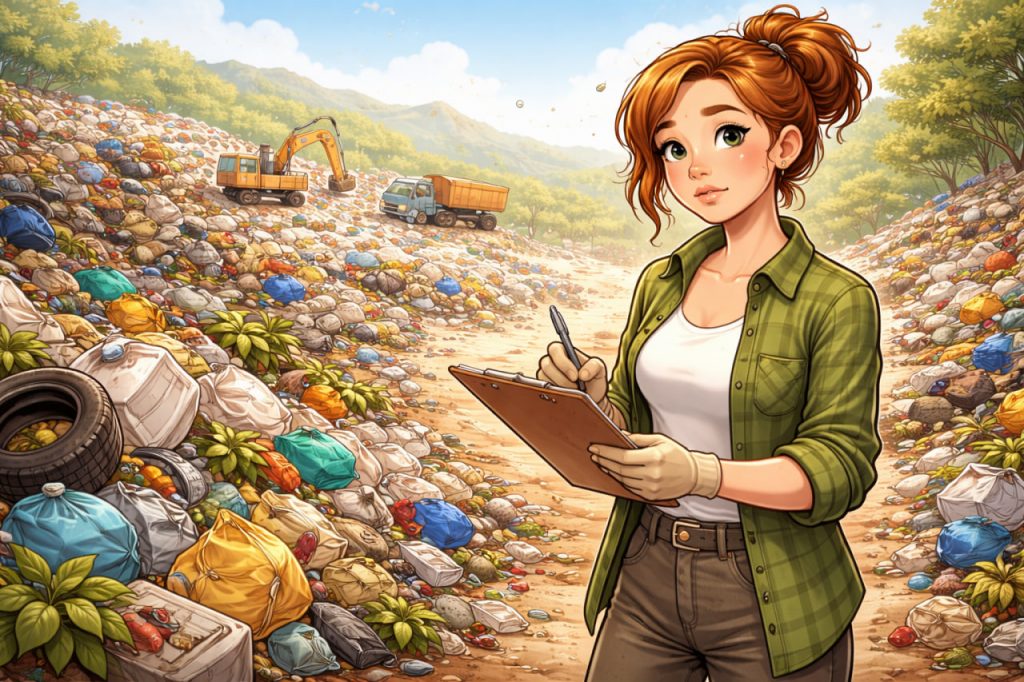
Landfills are one of the most visible symbols of modern consumption and waste generation. As cities grow and lifestyles become more resource-intensive, enormous amounts of waste are sent to landfill sites every day. These sites are designed to isolate waste from the environment, but they also create long-term ecological and social challenges. Landfills occupy large areas of land, produce greenhouse gases, and can contaminate soil and water if poorly managed. While they are often treated as the final solution to waste, landfills are better understood as a temporary measure within a larger waste management system. Addressing the landfill problem requires both reducing reliance on them and improving how they are managed.
Why Landfills Are a Growing Problem
Landfills accumulate waste that can remain in the environment for decades or even centuries. Organic waste decomposes anaerobically, producing methane, a greenhouse gas far more potent than carbon dioxide. Plastics and synthetic materials break down extremely slowly, fragmenting into microplastics that spread through soil and water systems. In addition, landfill leachate—a toxic liquid formed when waste interacts with rainwater—can contaminate groundwater if containment systems fail. According to environmental engineer Dr. Thomas Reed:
“Landfills are not passive storage sites.
They are active chemical systems that require constant monitoring and control.”
As waste volumes increase, these risks become harder and more expensive to manage.
Improving Landfill Management
While reducing landfill use is essential, existing landfills cannot simply be eliminated. Modern landfill management focuses on minimizing environmental harm through engineered liners, gas collection systems, and controlled waste placement. Captured methane can be used as an energy source, reducing emissions while generating power. Proper monitoring prevents leaks and protects nearby ecosystems. Covering landfills with soil and vegetation after closure helps stabilize sites and reduce long-term pollution. Improved standards make landfills safer, but they do not solve the root problem of excessive waste generation.
Reducing Dependence on Landfills
The most effective way to address landfill issues is to send less waste to them in the first place. Waste reduction, reuse, recycling, and composting significantly decrease landfill volume. Separating organic waste allows composting, which prevents methane formation. Recycling materials such as metals, paper, and glass keeps valuable resources in circulation. Product redesign, minimal packaging, and durable goods further reduce waste streams. These strategies shift waste management away from disposal and toward prevention.
Alternative Waste Treatment Solutions
Beyond landfills, several alternative waste treatment methods exist, each with benefits and limitations. Recycling conserves resources but depends on proper sorting and market demand. Composting returns nutrients to soil but requires clean organic waste streams. Waste-to-energy facilities reduce landfill volume but raise concerns about emissions and long-term sustainability. No single solution is sufficient on its own. A balanced system combines multiple approaches to minimize landfill reliance while managing unavoidable waste responsibly.
The Role of Policy and Public Participation
Solving the landfill problem requires coordinated action between governments, businesses, and individuals. Policies such as landfill taxes, extended producer responsibility, and bans on certain materials encourage waste reduction upstream. Public participation in waste separation and conscious consumption plays a crucial role in reducing landfill input. Education and transparency help people understand how their choices affect waste systems. Long-term solutions depend on treating landfills not as a default destination, but as a last resort within a circular economy.
Interesting Facts
- Organic waste in landfills produces methane, a powerful greenhouse gas.
- Some materials in landfills can remain intact for hundreds of years.
- Modern landfills use gas capture systems to reduce emissions.
- Reducing waste at the source is more effective than managing it after disposal.
- Many closed landfills are later converted into parks or renewable energy sites.
Glossary
- Landfill — a designated site for the disposal and storage of waste materials.
- Methane — a greenhouse gas produced by decomposing organic waste without oxygen.
- Leachate — contaminated liquid formed when water passes through waste.
- Waste-to-Energy — a process that converts waste into usable energy.
- Circular Economy — an economic system that minimizes waste by reusing resources.