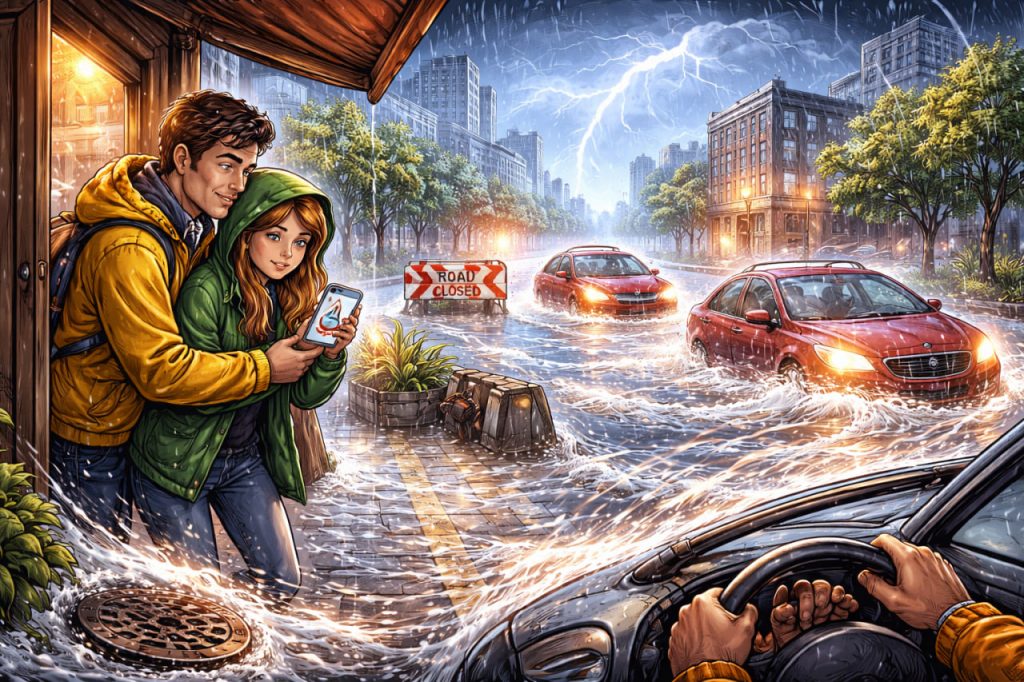
Heavy rain is often underestimated as a natural hazard, yet it can quickly create dangerous conditions in both urban and rural environments. Intense rainfall reduces visibility, overwhelms drainage systems, and increases the risk of flooding, landslides, and traffic accidents. Unlike sudden disasters, heavy rain may develop gradually, causing people to remain outdoors or on the move longer than is safe. Understanding basic safety principles helps minimize risk and prevent injuries during severe weather. Preparedness, situational awareness, and cautious decision-making are the key elements of staying safe during heavy rain.
Understanding the Main Risks
The primary dangers during heavy rain include flash flooding, reduced traction, and limited visibility. Water can accumulate rapidly on roads, sidewalks, and low-lying areas, making surfaces slippery and unstable. Even shallow flowing water can knock a person off balance or conceal open drains and obstacles. In hilly or mountainous regions, prolonged rain may trigger landslides or rockfalls. According to disaster risk specialist Dr. Helen Carter:
“Rain itself is rarely the threat —
it is the secondary effects that cause most injuries.”
Recognizing these risks early allows people to adjust behavior before conditions worsen.
Safe Behavior Outdoors
When caught outdoors during heavy rain, minimizing exposure and movement is often the safest option. Avoid walking through flooded areas, as water depth and ground stability are difficult to judge visually. Stay away from riverbanks, canals, and drainage channels that can overflow suddenly. Wear footwear with good traction and avoid smooth surfaces such as metal covers or polished stone. If possible, seek shelter in a secure building and wait for conditions to improve rather than continuing to travel.
Safety While Driving
Driving during heavy rain significantly increases accident risk. Reduced visibility, hydroplaning, and delayed braking make even familiar roads hazardous. Lower speed, increase following distance, and use headlights appropriately to improve visibility. Never attempt to drive through flooded roads, as vehicles can lose control or stall quickly in moving water. Many weather-related vehicle incidents occur when drivers underestimate water depth or current strength. Patience and caution are essential for safe travel.
Flood Awareness and Home Safety
In areas prone to flooding, staying informed about weather warnings and local conditions is critical. Move valuable items away from ground level and avoid using electrical devices if water enters the home. Do not touch electrical equipment while standing in water. Knowing evacuation routes and having a basic emergency plan reduces panic if conditions escalate. Even after rainfall stops, flooded areas may remain dangerous due to weakened structures or contaminated water.
After the Rain Has Passed
Hazards often persist after heavy rain ends. Roads may be damaged, surfaces remain slippery, and debris can block walkways. Avoid standing water, which may conceal sharp objects or open drains. Check weather updates before resuming normal activities, as additional rainfall may follow. Treat the period immediately after heavy rain with the same caution as the storm itself.
Interesting Facts
- Just 15–20 centimeters of moving water can knock an adult off their feet.
- Most flood-related injuries occur outside, not inside homes.
- Hydroplaning can happen at speeds as low as 50 km/h.
- Urban flooding often develops faster due to sealed surfaces.
- Rain reduces contrast and depth perception, increasing accident risk.
Glossary
- Heavy Rainfall — intense precipitation occurring over a short period.
- Flash Flood — sudden flooding caused by rapid rainfall.
- Hydroplaning — loss of vehicle traction due to water buildup under tires.
- Drainage System — infrastructure designed to remove excess water.
- Visibility — the distance and clarity with which objects can be seen.