Icy sidewalks and roads are a common winter hazard, turning everyday movement into a serious risk. Black ice and packed ice often form suddenly, are hard to see, and dramatically increase the likelihood of falls and injuries. While municipal services may treat major roads, many residential areas, yards, and sidewalks remain slippery for long periods. Knowing how to handle icy conditions independently helps reduce risk and maintain mobility during winter. With the right preparation, techniques, and mindset, it is possible to navigate icy environments more safely without specialized equipment.
Understanding Why Ice Is So Dangerous
Ice drastically reduces friction between shoes and the ground, making balance difficult even at slow speeds. Black ice is particularly hazardous because it blends with asphalt and concrete, offering little visual warning. Temperature fluctuations around freezing often worsen conditions by creating thin meltwater layers that refreeze overnight. Wind and shade also contribute, allowing ice to persist even when air temperatures rise. According to winter safety researcher Dr. Mark Ellison:
“Most ice-related falls happen not because people rush,
but because they misjudge how little grip remains underfoot.”
Recognizing when and where ice forms is the first step toward safer movement.
Choosing the Right Footwear and Movement
Footwear plays a critical role in icy conditions. Shoes with deep rubber treads provide better traction than smooth soles, while worn footwear significantly increases slipping risk. When walking on ice, take short, flat steps, keeping your center of gravity low and directly above your feet. Slightly bending the knees helps absorb sudden slips. Avoid sudden turns or stops, and keep hands free to help maintain balance. Moving slowly is not a sign of weakness—it is a practical response to reduced traction.
Improving Traction with Simple Materials
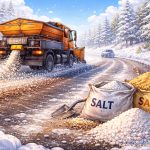
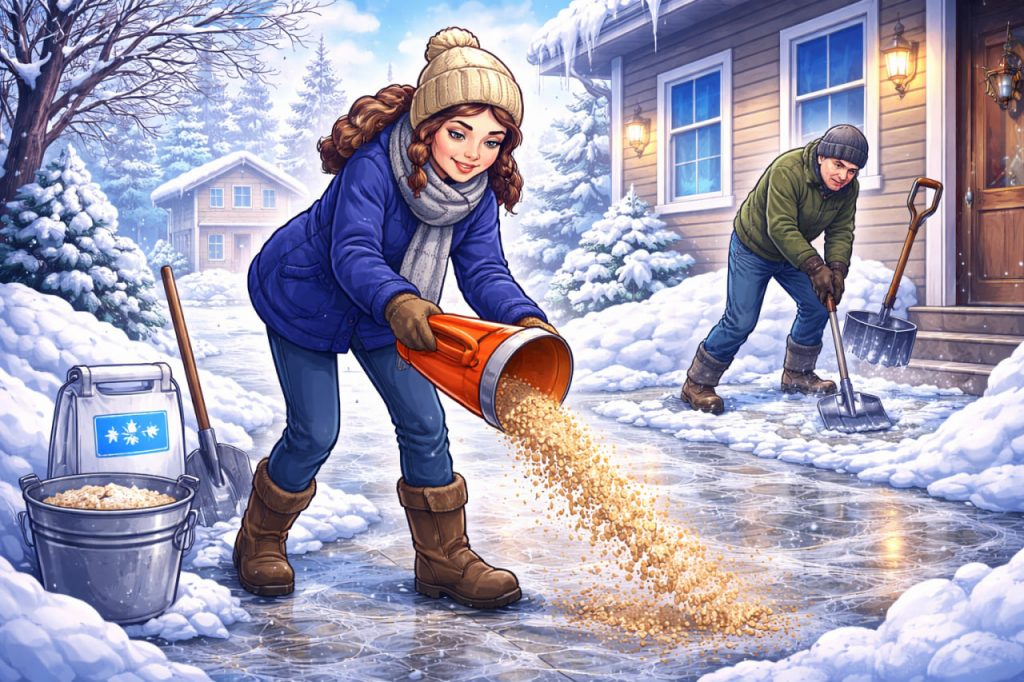
When ice covers private walkways, entrances, or steps, improving traction can make a significant difference. Sand, gravel, or fine grit create friction and help prevent slipping, even without melting the ice. Ash or soil can also work temporarily if nothing else is available. Unlike water or salt substitutes that refreeze, solid particles remain effective until physically removed. Applying traction materials before temperatures drop further prevents ice from becoming polished and more dangerous over time.
Safe Ice Removal Techniques
Removing ice requires caution to avoid injury. Use tools that allow you to work while standing upright, reducing strain and fall risk. Chip ice gradually rather than forcefully, and avoid overreaching. Clearing snow early prevents it from compacting into ice later. If possible, work during daylight hours when visibility is better and surfaces are slightly warmer. Clearing pathways in stages is safer than attempting to remove thick ice in one effort.
Reducing Risk When Conditions Are Severe
Sometimes, the safest choice is limiting movement. If ice is widespread and untreated, postpone non-essential trips and choose safer routes, even if they are longer. Use handrails whenever available and keep distance from vehicles that may skid unexpectedly. Planning routes in advance and checking shaded areas for hidden ice reduces surprises. Personal safety should always take priority over speed or convenience.
Interesting Facts
- Ice can reduce surface friction by up to 90% compared to dry ground.
- Black ice is often invisible because it matches the color of pavement.
- Most ice-related injuries occur during short routine trips, not long journeys.
- Sand improves traction without melting ice, making it effective at very low temperatures.
- Clearing snow early prevents it from turning into dense, slippery ice later.
Glossary
- Black Ice — a thin, transparent layer of ice that is difficult to detect visually.
- Traction — the grip between a surface and footwear or tires.
- Friction — resistance that slows movement between two surfaces in contact.
- Packed Ice — ice formed when snow is compressed and refreezes.
- Tread — the patterned surface of a shoe or tire that provides grip.