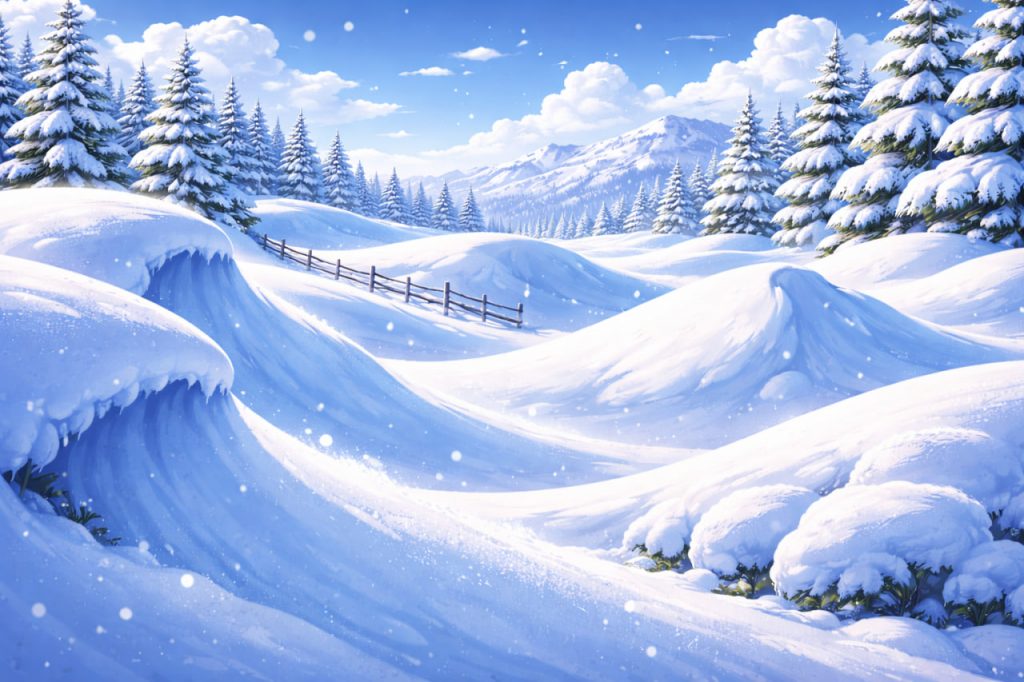
Snowdrifts are one of the most recognizable and visually striking features of winter landscapes, formed not simply by snowfall, but by the complex interaction between snow, wind, terrain, and temperature. While fresh snow may fall evenly, drifting redistributes it into deep accumulations and sculpted shapes that can dramatically alter the environment. Snowdrifts influence transportation, building safety, wildlife movement, and even local climate conditions. They can block roads, bury fences, and create hidden hazards, yet they also insulate soil and protect plants from extreme cold. Understanding how snowdrifts form helps explain why winter weather behaves so unpredictably in open fields, mountain passes, and urban areas. Far from being random, snowdrifts follow physical laws that govern how snow moves across the landscape.
The Role of Wind in Snowdrift Formation
Wind is the primary force behind the formation of snowdrifts. When wind speed exceeds a certain threshold, loose snow particles are lifted from the ground and transported through the air in a process known as snow transport. These particles travel until wind speed decreases or an obstacle interrupts airflow, causing snow to settle. As more snow accumulates, the drift grows in height and length, often forming smooth, wave-like shapes. Strong, consistent winds can create massive drifts several meters deep, even in areas with moderate snowfall. According to atmospheric scientist Dr. Erik Lund:
“Snowdrifts are not created by snowfall alone.
They are shaped by the invisible architecture of moving air.”
This explains why the largest drifts often appear after storms with high winds rather than heavy snowfall.
Terrain, Obstacles, and Drift Patterns
Natural and artificial obstacles play a crucial role in determining where snowdrifts form. Trees, rocks, buildings, fences, and even parked vehicles disrupt airflow, causing snow to settle on the downwind side. In open landscapes, subtle changes in terrain—such as ridges or depressions—can redirect wind and create unexpected drift patterns. Urban environments are especially prone to irregular snowdrifts due to complex wind channels formed by streets and tall structures. Engineers and city planners study these patterns to design buildings and infrastructure that minimize dangerous snow accumulation. Without careful planning, snowdrifts can overload roofs, block emergency routes, and increase maintenance costs during winter.
Snowdrifts and Winter Safety
Snowdrifts pose significant safety challenges in cold regions. Roads buried under drifting snow can disappear within hours, creating dangerous driving conditions and isolating communities. Drifts may hide ice, ditches, or obstacles, increasing the risk of accidents for both vehicles and pedestrians. In extreme cases, drifting snow contributes to whiteout conditions, where visibility drops to near zero. Emergency services monitor wind forecasts as closely as snowfall predictions to anticipate drift-related hazards. Proper snow fencing, strategic vegetation, and controlled barriers are often used to redirect drifting snow away from critical areas.
Ecological Importance of Snowdrifts
Despite their disruptive potential, snowdrifts play an important ecological role. Thick layers of drifted snow act as natural insulation, protecting soil organisms, plant roots, and small animals from extreme cold. In alpine and polar regions, snowdrifts determine where certain plant species can survive by regulating moisture availability in spring. Melting drifts also provide a delayed water source, feeding streams and groundwater long after snowfall ends. Ecologists study snowdrift patterns to better understand seasonal ecosystems and how they respond to changing climate conditions.
Snowdrifts in a Changing Climate
Climate change is altering how and where snowdrifts form. Warmer winters may reduce total snowfall in some regions, but increased storm intensity can still produce strong winds capable of creating large drifts. In other areas, shifting wind patterns change traditional drift locations, affecting infrastructure designed for historical conditions. Scientists emphasize that understanding snowdrift dynamics is essential for adapting to future winter extremes. Snowdrifts serve as visible indicators of how atmospheric processes respond to a warming climate.
Interesting Facts
- Snowdrifts can form even during light snowfall if wind speeds are high enough.
- Some snowdrifts grow taller than buildings, especially in polar and mountain regions.
- Snow fences are designed to control where drifts form, not to stop snow completely.
- Drifts often have smooth, curved shapes due to aerodynamic flow.
- Animals such as foxes and rodents use snowdrifts as thermal shelters.
Glossary
- Snow Transport — the movement of snow particles by wind across the surface.
- Drift — an accumulation of snow formed by wind-driven deposition.
- Whiteout — a weather condition with severely reduced visibility due to snow and wind.
- Snow Fence — a barrier used to manage drifting snow and protect roads or structures.
- Insulation Effect — the ability of snow to reduce heat loss from the ground.